What BHO Extraction Equipment Do You Need for a Closed Loop System?
Learn what BHO extraction equipment a closed loop system needs, including extractors, chillers, recovery equipment, vacuum systems, and safety infrastructure.
Introduction
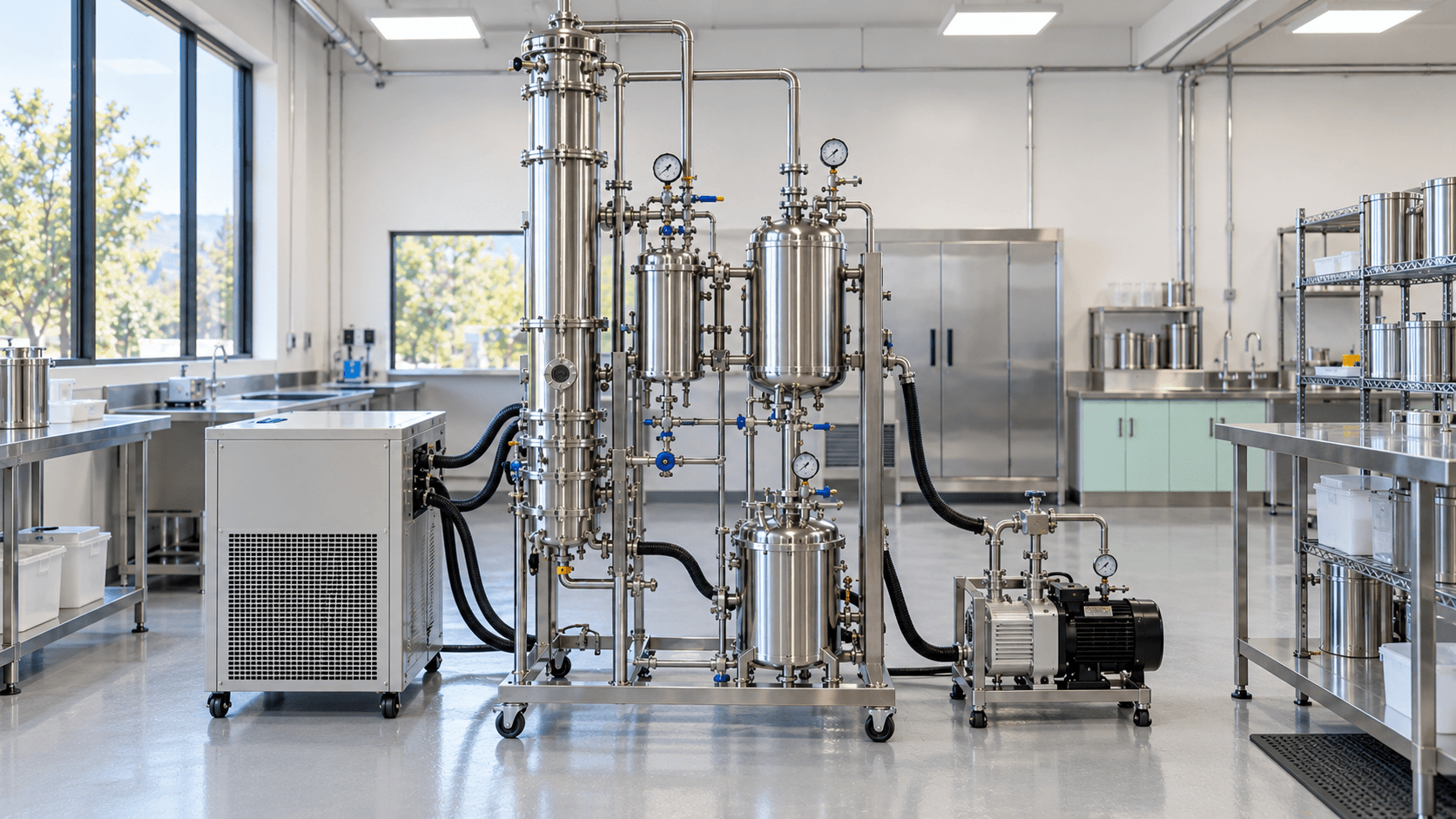
A closed loop extractor may be the centerpiece of a BHO operation, but it isn't the entire extraction lab. Commercial hydrocarbon processing depends on an interconnected system of extraction, temperature control, solvent recovery, vacuum equipment, supporting components, and professionally engineered safety infrastructure.
That makes planning BHO extraction equipment less about buying one impressive machine and more about making sure every stage of the workflow can keep up with the others.
GreenLabGear supplies professional cannabis extraction and laboratory equipment, including closed-loop extractors, chillers, and solvent recovery systems. For a new facility, planning the complete equipment package before purchasing individual machines can prevent expensive capacity mismatches later.
This guide covers the major BHO extraction equipment categories involved in a professional closed-loop workflow and what to consider when matching them together.
TLDR – Quick Guide
- A properly specified closed loop extractor is the core piece of BHO extraction equipment.
- Appropriate solvent storage and handling components are necessary for the intended hydrocarbon process.
- Temperature-control equipment supports extraction, condensation, and solvent recovery.
- Solvent recovery equipment must be sized to keep pace with extraction throughput.
- Vacuum equipment may be required for evacuation, process support, or downstream processing depending on system design.
- Hoses, valves, fittings, seals, instrumentation, and compatible replacement parts are critical supporting components.
- Post-processing equipment depends on the type of concentrate or refined product being manufactured.
- Hydrocarbon processing requires professionally engineered ventilation, gas detection, electrical, fire-protection, and other safety systems as applicable.
- Equipment should be selected as a complete workflow rather than as isolated machines.
Detailed Breakdown
1. Closed Loop Extractor
The obvious starting point for a BHO lab is the closed loop extractor itself.
Professional Closed Loop Extractors are designed to contain, transfer, and recover hydrocarbon solvent within an interconnected processing system during intended operation.
Configurations vary, but a system can include functional components such as:
- Solvent storage vessels
- Material columns
- Collection vessels
- Valves
- Fittings and connections
- Instrumentation
- Recovery-related components
System capacity should be selected according to realistic biomass throughput rather than simply purchasing the largest extractor within budget.
For example, a larger material column may reduce the number of batches required each day. But if recovery or temperature-control equipment can't support the additional load, the larger extractor won't deliver its theoretical productivity.
The extractor sets the pace only when everything around it can keep up.
2. Solvent Storage and Handling Components
BHO—short for butane hash oil—uses hydrocarbon solvent extraction. Depending on the validated process and equipment, professional systems may use butane, propane, or specified blends.
These solvents are highly flammable.
Solvent storage and transfer equipment therefore must be specifically appropriate for the material and intended operating conditions. Facilities also need to follow applicable requirements for storage quantities, approved containers or vessels, handling, ventilation, fire protection, and other safeguards.
Never improvise solvent-storage or transfer equipment.
The exact configuration should come from the closed-loop system design, manufacturer requirements, qualified facility professionals, and applicable codes.
3. Recirculating Chillers and Temperature Control
Temperature control is one of the easiest pieces of BHO extraction equipment to underestimate.
Hydrocarbon extraction and recovery workflows can require controlled cooling and heating at different process stages. A Recirculating Chiller can provide controlled cooling fluid to compatible process equipment.
Chiller selection shouldn't be based on temperature alone.
Important specifications can include:
- Cooling capacity at the required temperature
- Operating temperature range
- Fluid compatibility
- Pump flow and pressure
- Reservoir capacity
- Connection requirements
- Process heat load
This distinction matters because a chiller may advertise an impressively low minimum temperature while providing insufficient cooling capacity at that temperature for your actual process.
When comparing systems, evaluate cooling power at the intended operating condition, not simply the lowest number on the specification sheet.
4. Solvent Recovery Equipment
Solvent recovery is fundamental to a closed-loop workflow.
After hydrocarbon solvent contacts the biomass and carries extractable compounds into the collection stage, the solvent needs to be separated from the collected material and recovered appropriately.
GreenLabGear's Solvent Recovery equipment category provides a starting point for evaluating this stage of the workflow.
Recovery capacity needs to match extraction capacity.
If extraction takes one hour but recovery consistently becomes a multi-hour bottleneck, adding another extractor won't necessarily increase useful daily production.
When sizing recovery, consider:
- Expected solvent load
- Desired recovery time
- Number of daily batches
- Recovery method
- Heating and cooling requirements
- Solvent compatibility
- Planned production growth
The goal isn't maximum recovery capacity for bragging rights. It's enough recovery capacity to keep the complete production line moving.
5. Vacuum Equipment
Vacuum equipment may play several roles in a cannabis extraction facility depending on the specific closed-loop system and downstream process.
Potential uses can include system evacuation, leak-checking procedures specified by the manufacturer, vacuum-assisted processing, and downstream solvent removal.
Pump selection must reflect the intended application.
Important considerations include:
- Required vacuum range
- Pumping speed
- Chemical compatibility
- Vapor exposure
- Pump design
- Required traps or protection
- Maintenance requirements
Don't automatically connect a general-purpose laboratory vacuum pump to hydrocarbon process equipment. Components interacting with flammable solvent or vapor must be specifically suitable for their intended use and installation.
6. Hoses, Valves, Fittings, and Seals
The smaller components of a closed-loop system don't get glamorous product photos, but they can determine whether the expensive equipment actually performs correctly.
Supporting BHO extraction equipment can include manufacturer-specified:
- Hoses
- Tubing
- Valves
- Clamps
- Fittings
- Gaskets
- O-rings
- Seals
- Pressure or vacuum instrumentation
Material compatibility is critical.
A gasket that physically fits isn't necessarily compatible with the solvent, temperature, or operating conditions. Likewise, a valve intended for a completely different application shouldn't be treated as interchangeable simply because the connection size matches.
Maintain a list of approved replacement parts for every critical system.
A ten-dollar seal should never be allowed to shut down a six-figure workflow because nobody remembered to order another one.
7. Instrumentation and Process Monitoring
Professional processing requires knowing what's happening inside the system.
Depending on equipment design, appropriate instrumentation can monitor variables such as pressure and temperature. Additional controls may support temperature-control equipment, recovery systems, or other stages of processing.
Instrumentation helps operators confirm that equipment is functioning within established procedures rather than relying on intuition.
When selecting an extractor, determine which instruments and controls are included and which need to be purchased separately.
Also consider calibration and maintenance requirements. A gauge that hasn't been maintained according to applicable procedures isn't much of a process-control strategy.
8. Post-Processing Equipment
Extraction isn't necessarily the end of production.
The appropriate downstream equipment depends heavily on what the facility intends to manufacture. Different concentrate and refined-product workflows can require different post-processing steps.
Potential equipment categories can include:
- Vacuum ovens or other appropriate drying systems
- Filtration equipment
- Centrifugation equipment
- Distillation systems
- Homogenization or mixing equipment
- Additional solvent recovery equipment
This is another reason equipment planning should begin with the final product.
If the business intends to produce material requiring extensive downstream refinement, the extraction system should be sized around the capacity of those later stages.
9. Safety Infrastructure Is Part of the Equipment Plan
A list of BHO extraction equipment isn't complete without discussing facility safety.
Butane and propane can form highly flammable mixtures with air. Closed-loop equipment is designed to contain solvent during intended operation, but leaks, failures, incorrect connections, and abnormal conditions remain possible.
Depending on the jurisdiction and process, a compliant commercial facility may need professionally engineered systems involving:
- Hazardous-location electrical design
- Mechanical ventilation
- Gas detection
- Fire detection and protection
- Emergency controls
- Approved solvent storage
- Appropriate extraction-room construction
- Equipment certifications or listings
- Permitting and inspections
Exact requirements vary significantly by jurisdiction.
Facility owners should involve qualified engineers, fire and building authorities, equipment manufacturers, and other relevant professionals before purchasing and installing hydrocarbon processing equipment.
The phrase "closed loop" does not mean "no hazards."
10. Don't Forget Replacement Parts
Preventive maintenance becomes easier when critical spares are already on-site.
Your inventory should reflect the exact extractor and supporting equipment, but useful categories may include approved seals, O-rings, gaskets, hoses, clamps, filters, and manufacturer-specified service components.
Prioritize parts based on three factors:
Failure likelihood + downtime impact + replacement lead time
If an inexpensive component commonly wears out and takes two weeks to replace, keeping a spare makes sense.
For specialized expensive components with low failure rates and fast supplier availability, stocking extras may not be necessary.
Hydrocarbon vs Ethanol Equipment
Before building a BHO facility, make sure hydrocarbon extraction is actually the correct method for your business.
Hydrocarbon and ethanol extraction require different equipment ecosystems and can suit different production strategies. GreenLabGear's Hydrocarbon vs Ethanol Extraction guide provides a deeper comparison.
At a high level, the decision can influence:
Factor
Hydrocarbon Extraction
Ethanol Extraction
Primary Solvent
Hydrocarbons such as butane/propane
Ethanol
Core Equipment
Closed-loop hydrocarbon extractor
Ethanol extraction system
Solvent Recovery
Required
Required
Temperature Control
Important
Important
Facility Requirements
Significant due to flammable solvent
Also requires solvent-specific safety planning
Downstream Workflow
Depends on final concentrate
Depends on final product
Neither method should be selected because it appears simpler in a single equipment advertisement.
Start with desired products, production volume, operating economics, facility requirements, and local regulations.
How to Size a Complete BHO Equipment Package
A common mistake is sizing each machine independently.
Instead, create a production model for the entire workflow.
For example:
Daily biomass target → Extraction batches → Solvent load → Recovery requirement → Post-processing volume → Finished output
Then evaluate how long each stage takes.
Suppose the extractor can support six theoretical batches per shift, but recovery equipment can only support three. Your realistic production capacity is much closer to three batches than six.
The same principle applies to chilling and downstream processing.
Before ordering equipment, document:
Now you have an equipment plan instead of a shopping list.
Common BHO Equipment Buying Mistakes
One of the biggest mistakes is spending most of the budget on the extractor and treating everything else as accessories.
The supporting systems aren't accessories in the everyday sense. If the chiller can't manage the thermal load or recovery can't handle production volume, the extractor cannot perform as expected.
Other mistakes include:
- Buying based on extractor capacity alone
- Undersizing temperature control
- Ignoring solvent recovery throughput
- Purchasing incompatible vacuum equipment
- Forgetting replacement parts
- Underbudgeting facility engineering
- Ignoring maintenance access
- Failing to plan downstream capacity
- Purchasing before verifying compliance requirements
- Dramatically oversizing equipment for hypothetical growth
The best system isn't necessarily the one with the most stainless steel. It's the one whose components are properly matched.
Key Takeaways
- A complete BHO extraction equipment package includes much more than the closed loop extractor.
- The closed loop extractor should be sized around realistic daily biomass requirements.
- Solvent storage and handling equipment must be suitable for the specific hydrocarbon process.
- Recirculating chillers and other temperature-control systems should be sized according to actual thermal loads.
- Solvent recovery capacity needs to keep pace with extraction to prevent bottlenecks.
- Vacuum equipment should be selected specifically for its intended application and chemical environment.
- Hoses, valves, fittings, seals, and instrumentation are critical parts of the complete system.
- Downstream equipment should be planned according to the finished products the facility intends to manufacture.
- Replacement parts and preventive maintenance should be considered during initial purchasing.
- Hydrocarbon extraction requires professionally engineered safety infrastructure and compliance with applicable regulations.
- Size the complete workflow as one interconnected production system rather than buying individual machines independently.
FAQs
What equipment do you need for BHO extraction?
A professional BHO operation generally requires an appropriate closed loop extractor plus temperature-control, solvent-management, recovery, instrumentation, and supporting equipment. Additional vacuum and post-processing equipment may be necessary depending on the extractor design and finished product. The facility itself also requires professionally designed safety infrastructure appropriate for flammable hydrocarbon solvents.
Do you need a chiller for a closed loop extractor?
Temperature-control equipment is commonly an important part of professional hydrocarbon extraction and recovery workflows. The required chiller specifications depend on the extractor, process temperatures, heat load, fluid requirements, and production capacity. Choose cooling equipment according to manufacturer requirements and cooling capacity at the actual operating temperature.
What does solvent recovery equipment do in a BHO lab?
Solvent recovery equipment supports separation and capture of hydrocarbon solvent from extracted material within the designed processing workflow. Recovery allows solvent to be appropriately managed and can support reuse where permitted by the equipment design and operating procedures. Recovery capacity should be matched with extraction throughput to avoid production bottlenecks.
Can I use any vacuum pump with BHO extraction equipment?
No, vacuum equipment should be selected according to the exact application, equipment requirements, chemical exposure, and facility classification. Equipment that may encounter flammable solvent or vapor needs to be specifically suitable for its intended service and installation. Follow manufacturer requirements and qualified professional guidance when designing the vacuum system.
How do I choose between BHO and ethanol extraction equipment?
Start with desired finished products, production volume, facility requirements, operating economics, and applicable regulations. Hydrocarbon and ethanol extraction use different processing workflows and supporting equipment, so switching methods affects far more than the extractor itself. Evaluate the complete production system before committing to either extraction method.