Closed Loop Extractor Cost: What Affects the Price of a System?
Learn what affects closed loop extractor cost, including system size, materials, recovery equipment, certification, support, and lab setup.
Introduction
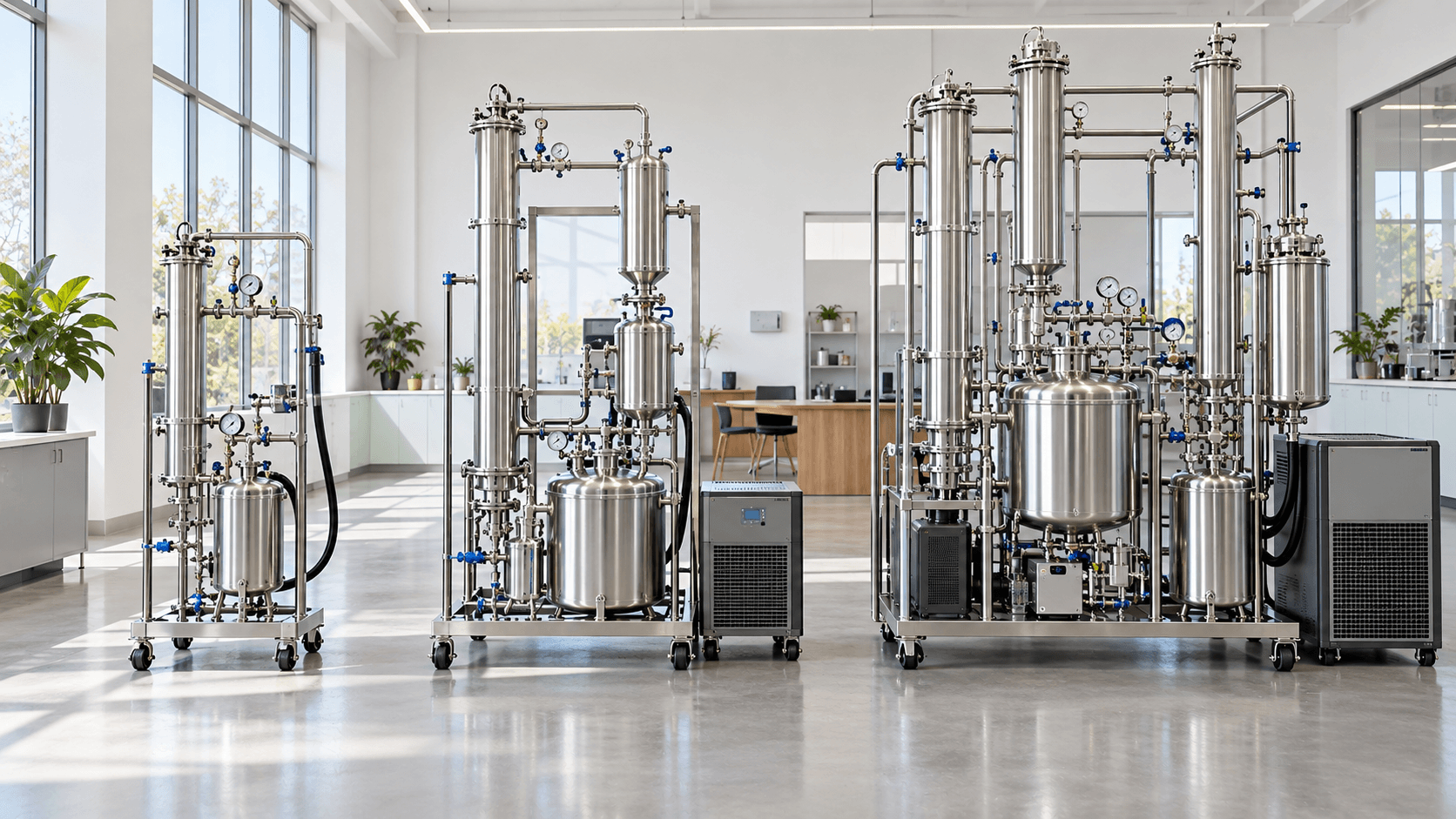
Shopping for a closed-loop extraction system can produce some serious sticker-price whiplash. Two systems may look similar in photos while carrying dramatically different prices because capacity is only one part of the equation.
Closed loop extractor cost can be influenced by system size, materials of construction, vessel design, certifications, solvent recovery configuration, temperature-control requirements, automation, included accessories, manufacturer support, and plenty more.
And then there's the bigger issue: buying the extractor isn't the same as paying for a functioning extraction lab.
GreenLabGear supplies professional cannabis extraction and laboratory equipment across different capacities and processing requirements. For a new or expanding facility, the smartest approach is to compare the total installed workflow rather than simply hunting for the lowest extractor price.
Here's what actually drives closed loop extractor cost—and where cannabis businesses should be careful about cutting corners.
TLDR – Quick Guide
- Closed loop extractor cost generally increases with capacity, system complexity, and included equipment.
- Vessel construction, materials, manufacturing quality, and applicable certifications can significantly affect price.
- Passive and active recovery configurations can have different equipment requirements and costs.
- Chillers, heaters, vacuum equipment, recovery equipment, and other supporting systems may not be included in the base extractor price.
- Facility engineering and compliance can represent a substantial portion of the overall extraction-lab investment.
- Larger isn't automatically better; unused capacity can become expensive overhead.
- Replacement parts, maintenance, technical support, and equipment downtime should be considered alongside purchase price.
- Compare complete system scope and long-term operating requirements before choosing the cheapest option.
Detailed Breakdown
Why Closed Loop Extractor Prices Vary So Much
A closed loop extractor isn't one standardized product.
Professional Closed Loop Extractors can vary substantially in vessel size, configuration, recovery method, instrumentation, construction, and supporting components.
That makes comparing two prices without comparing equipment specifications risky.
One quote might include little more than the central extraction system, while another could include additional components needed to integrate it into a larger processing workflow.
Before comparing prices, establish exactly what each quote includes.
A useful equipment comparison should consider:
- Nominal biomass capacity
- Vessel specifications
- Materials of construction
- Recovery configuration
- Valves and connections
- Instrumentation
- Included accessories
- Required supporting equipment
- Documentation and applicable certifications
- Warranty
- Technical support
- Shipping and installation requirements
A cheaper quote stops being cheaper pretty quickly when half the equipment required to operate the workflow is missing.
System Size Is a Major Cost Factor
Capacity is one of the most obvious factors affecting closed loop extractor cost.
A system intended for small-batch processing doesn't require the same vessel capacity and overall configuration as equipment designed for substantially larger production volumes.
As size increases, manufacturers may need larger vessels, additional hardware, more substantial structural support, greater solvent capacity, and larger supporting systems.
But don't select capacity based on price per pound alone.
A larger extractor may also require:
- Greater chilling capacity
- More heating capacity
- Additional solvent-management capability
- Higher recovery capacity
- More floor space
- Larger supporting equipment
- Increased maintenance inventory
The most cost-effective extractor is the one that matches realistic production—not necessarily the cheapest or largest available system.
Materials and Construction Quality Affect Price
Extraction equipment handling volatile solvents needs to be evaluated as professional process equipment, not generic laboratory hardware.
Materials, vessel fabrication, weld quality, seals, valves, fittings, instrumentation, and manufacturing standards can all influence equipment cost.
A low initial price shouldn't outweigh questions such as:
What materials contact the process?
What documentation comes with the equipment?
Is the equipment appropriate for the intended solvent and operating conditions?
What applicable certifications or approvals are required for installation?
Those questions become particularly important when flammable hydrocarbons are involved.
Equipment suitability and facility compliance aren't sensible places for a race to the bottom.
Active vs Passive Recovery Can Change Equipment Cost
Recovery configuration can also influence closed loop extractor cost.
Passive recovery generally relies on controlled temperature and pressure differentials to move solvent through the recovery process. Active configurations add suitable mechanical recovery equipment.
That additional equipment can increase initial investment and maintenance requirements, but it may provide operational advantages where recovery speed is important.
Passive systems can have fewer mechanical recovery components, but they still depend on appropriately sized thermal equipment and system design.
When comparing costs, evaluate:
- Recovery method
- Expected recovery capacity
- Required thermal equipment
- Mechanical recovery equipment
- Maintenance requirements
- Complete cycle time
Paying less for recovery isn't a bargain if it prevents the lab from meeting its daily production target.
Temperature-Control Equipment Is Part of the Real Budget
A closed-loop extractor doesn't operate in isolation.
Temperature management can be central to hydrocarbon extraction and solvent recovery. Depending on the system, the workflow may require chillers, heaters, circulators, heat exchangers, or other thermal equipment.
Larger extraction systems can place greater loads on these supporting components.
When requesting an equipment quote, determine whether required temperature-control equipment is:
- Included
- Optional
- Sold separately
- Already available in your facility
Then verify that its capacity matches the selected extractor.
Buying a larger extractor while keeping undersized supporting equipment is a remarkably efficient way to spend more money without gaining the throughput you expected.
Solvent Recovery Capacity Affects Total Investment
Recovery deserves its own budget line.
Solvent must be separated from extracted material and appropriately recovered within the designed workflow. If recovery can't keep pace with extraction, it can become a production bottleneck.
For cost planning, ask:
- How much solvent is associated with each batch?
- What recovery configuration does the system use?
- How long does recovery take under relevant conditions?
- What additional equipment is required?
- Can recovery support the desired number of batches per shift?
These questions matter because closed loop extractor cost should ultimately be evaluated against usable daily output.
A system that costs more but properly matches production requirements may provide better economics than cheaper equipment that continually limits throughput.
Certification and Compliance Can Influence Price
Hydrocarbon extraction involves flammable solvents and significant safety considerations.
Depending on the equipment, jurisdiction, and installation, facilities may need to address requirements involving equipment certifications, fire and building codes, classified electrical areas, ventilation, gas detection, solvent storage, fire suppression, permits, and inspections.
These requirements can affect both equipment selection and project cost.
A lower-cost extractor that can't satisfy the requirements for your intended installation may ultimately be far more expensive if it needs to be replaced or prevents approval.
Before purchasing equipment, confirm requirements with the relevant authorities, qualified engineers, and safety professionals.
The extraction system should fit the compliant facility design—not the other way around.
The Extractor Is Only Part of Cannabis Extraction Lab Cost
This is one of the biggest budgeting mistakes new operators make.
They find an extractor price online and begin treating that figure as the extraction budget.
In reality, a professional lab may also require extraction support systems, recovery equipment, temperature control, vacuum equipment, downstream processing equipment, facility construction, engineering, safety systems, installation, and testing.
GreenLabGear's Cannabis Extraction Lab Cost guide provides a broader framework for thinking about the total facility investment.
Your budget should separate at least three categories:
That produces a much more realistic number than the extractor purchase price alone.
Automation and Instrumentation Can Increase Cost
Basic systems and highly instrumented systems shouldn't be expected to cost the same.
Depending on equipment design, additional monitoring, controls, sensors, or automation may increase the initial purchase price.
The important question is whether those features create value for your workflow.
For some operations, additional process monitoring may support consistency, documentation, or operator efficiency. Smaller operations may determine that certain features aren't necessary for their current production requirements.
Don't pay for complexity simply because it looks impressive.
At the same time, don't strip away useful controls just to hit the lowest possible purchase price.
Evaluate features according to their contribution to safe, repeatable, efficient processing.
Replacement Parts, Maintenance, and Support Matter
Initial closed loop extractor cost is only part of ownership cost.
Extraction equipment contains components that require inspection, maintenance, and eventual replacement. Seals, gaskets, valves, hoses, instrumentation, and other components may need attention depending on the system.
Before buying, ask:
- Are replacement parts readily available?
- How quickly can common components be shipped?
- What does the warranty cover?
- Is technical support available?
- What preventive maintenance is required?
- Are service instructions and documentation provided?
Equipment downtime has a cost.
Saving money upfront becomes much less impressive when the lab loses multiple production days waiting for a specialized component nobody can source.
Shipping, Installation, and Commissioning
Large laboratory equipment doesn't teleport itself into position.
Shipping, freight handling, placement, installation, utility connections, inspection, and commissioning can all add to project cost.
Some systems may require professional installation or specific facility connections. Larger vessels and supporting equipment may also create logistical challenges that smaller systems don't.
Before signing a purchase order, determine which costs are included and which remain the facility's responsibility.
That includes checking doorway dimensions, equipment access, floor space, utility requirements, and service clearances before delivery.
Discovering that your extractor doesn't fit where you planned to install it is not the kind of extraction experiment anyone wants to run.
How to Save Money Without Buying the Wrong Equipment
Reducing costs doesn't have to mean buying questionable equipment.
The better strategy is eliminating unnecessary capacity and features while protecting the components essential to the process.
GreenLabGear's Affordable Cannabis Lab Equipment guide explores broader equipment-planning strategies for startup facilities.
Useful cost-control tactics include:
- Size equipment around realistic throughput.
- Prioritize bottleneck equipment.
- Avoid unnecessary automation.
- Compare complete packages instead of base prices.
- Plan supporting equipment before purchasing the extractor.
- Consider future growth without dramatically oversizing.
- Budget for maintenance and replacement parts.
- Evaluate warranty and technical support.
Buying correctly once is usually cheaper than buying incorrectly twice.
See Equipment Before Making the Investment
Specification sheets are essential, but physically seeing equipment can make comparisons easier.
Vessel size, overall footprint, connection locations, accessibility, component quality, and maintenance clearances can be difficult to understand from a product image alone.
For buyers able to visit Southern California, the GreenLabGear Showroom provides an opportunity to see laboratory and processing equipment in person and discuss equipment requirements.
That can be especially useful when comparing larger systems or planning a complete facility layout.
Before visiting, confirm current showroom availability and whether the specific equipment you want to evaluate is available to view.
Think in Cost per Usable Output, Not Purchase Price
The cheapest extractor isn't automatically the lowest-cost extractor to own.
A more useful financial question is how much the complete system costs relative to the usable output it supports over time.
Consider:
Total ownership cost = purchase + supporting equipment + installation + maintenance + consumables + downtime + operating costs
Then compare that against realistic production.
For example, a lower-priced system requiring excessive batches, operator time, or recovery delays may eventually cost more than appropriately sized equipment.
Likewise, an enormous extractor running at a fraction of capacity can tie up capital without creating proportional revenue.
Efficiency comes from matching equipment to the workflow.
Common Closed Loop Extractor Cost Mistakes
A few purchasing mistakes appear repeatedly.
The biggest is comparing equipment based only on headline price. Another is buying the largest extractor within budget without verifying whether the rest of the lab can support it.
Other mistakes include:
- Ignoring recovery requirements
- Underbudgeting temperature control
- Forgetting installation and freight
- Failing to investigate certification requirements
- Ignoring maintenance costs
- Overlooking replacement-part availability
- Assuming all similarly sized systems are equivalent
- Failing to account for facility modifications
- Buying equipment before finalizing the process workflow
A realistic budget may look less exciting than the cheapest online price.
It's also much more likely to survive contact with the real world.
Key Takeaways
- Closed loop extractor cost depends on more than nominal biomass capacity.
- Larger systems generally involve more equipment, supporting capacity, space, and infrastructure.
- Materials, construction, documentation, and applicable certifications can affect price.
- Active and passive recovery configurations have different equipment and maintenance requirements.
- Chilling and heating systems should be included when calculating the real extraction-equipment budget.
- Solvent recovery capacity can directly affect practical throughput and equipment economics.
- Facility engineering, compliance, installation, and safety systems can add substantially to total project cost.
- Automation and instrumentation should be evaluated according to actual operational value.
- Replacement parts, maintenance, warranty, and technical support influence long-term ownership costs.
- Compare complete equipment packages rather than base extractor prices.
- The most economical system is usually the one properly sized for the entire workflow—not simply the system with the lowest purchase price.
FAQs
How much does a closed loop extractor cost?
Closed loop extractor cost varies substantially according to capacity, configuration, materials, recovery method, included components, certifications, and manufacturer support. Supporting equipment such as temperature-control and recovery systems can add to the total investment. Request a complete equipment quote based on your actual processing requirements rather than relying on a generic price range.
Why are some closed loop extractors more expensive than others?
Systems can differ in capacity, vessel construction, components, instrumentation, recovery configuration, documentation, certifications, and included accessories. Two extractors with similar nominal biomass capacities may therefore have very different equipment scopes. Compare detailed specifications and what's included before judging either system by price.
Is a bigger closed loop extractor more cost-effective?
A larger extractor can reduce the number of batches required when a facility has enough biomass and supporting capacity to use it efficiently. However, oversized equipment can increase purchase, infrastructure, temperature-control, and recovery requirements while leaving expensive capacity unused. Size the extractor around realistic daily throughput and future growth.
What additional equipment affects closed loop extractor cost?
Temperature-control systems, solvent recovery equipment, vacuum equipment, controls, supporting hardware, and downstream processing equipment can all influence the complete project budget. Facility engineering, safety systems, installation, and compliance requirements should also be considered. Always calculate the cost of a functioning workflow rather than the extractor alone.
Should I buy the cheapest closed loop extractor available?
Purchase price should be evaluated alongside equipment suitability, applicable certifications, construction, support, maintenance, replacement parts, and expected downtime. A cheaper system can become more expensive if it doesn't meet production or facility requirements. Compare total ownership cost and usable production capacity before making the final decision.