Do You Need a Gas Generator for Your Cannabis Laboratory?
Learn when a gas generator for laboratory use is the right investment for cannabis testing, research, and analytical workflows.
Meta Title: Gas Generator for Laboratory: Does Your Cannabis Lab Need One?
Meta Description: Learn when a gas generator for laboratory use is the right investment for cannabis testing, research, and analytical workflows.
URL Slug: /gas-generator-for-laboratory
Reliable gas supplies are essential for many laboratory applications, particularly in cannabis testing, quality control, and research. Whether you're operating analytical instruments or supporting specialized laboratory workflows, an uninterrupted gas source can improve efficiency, reduce downtime, and enhance overall laboratory performance. That's why many facilities eventually ask whether investing in a gas generator for laboratory use makes sense.
While gas cylinders remain common in many labs, they require regular deliveries, storage space, and manual handling. Gas generators offer an alternative by producing high-purity gases on demand, helping laboratories improve operational efficiency while reducing dependence on external suppliers.
Many cannabis laboratories partner with GreenLabGear when selecting laboratory equipment that supports long-term growth and reliable operations. This guide explains how gas generators work, their benefits, and how to determine if they're the right solution for your cannabis laboratory.
TLDR – Quick Guide
- Gas generators produce laboratory-grade gases on demand.
- They reduce reliance on delivered gas cylinders.
- Many cannabis labs use them for analytical testing and research.
- Gas generators can improve safety, efficiency, and workflow.
- They provide a continuous gas supply for laboratory instruments.
- Supporting laboratory equipment helps create a reliable work environment.
- Consider your testing volume before investing.
- Long-term operating costs may be lower than using gas cylinders.
Detailed Breakdown
What Is a Laboratory Gas Generator?
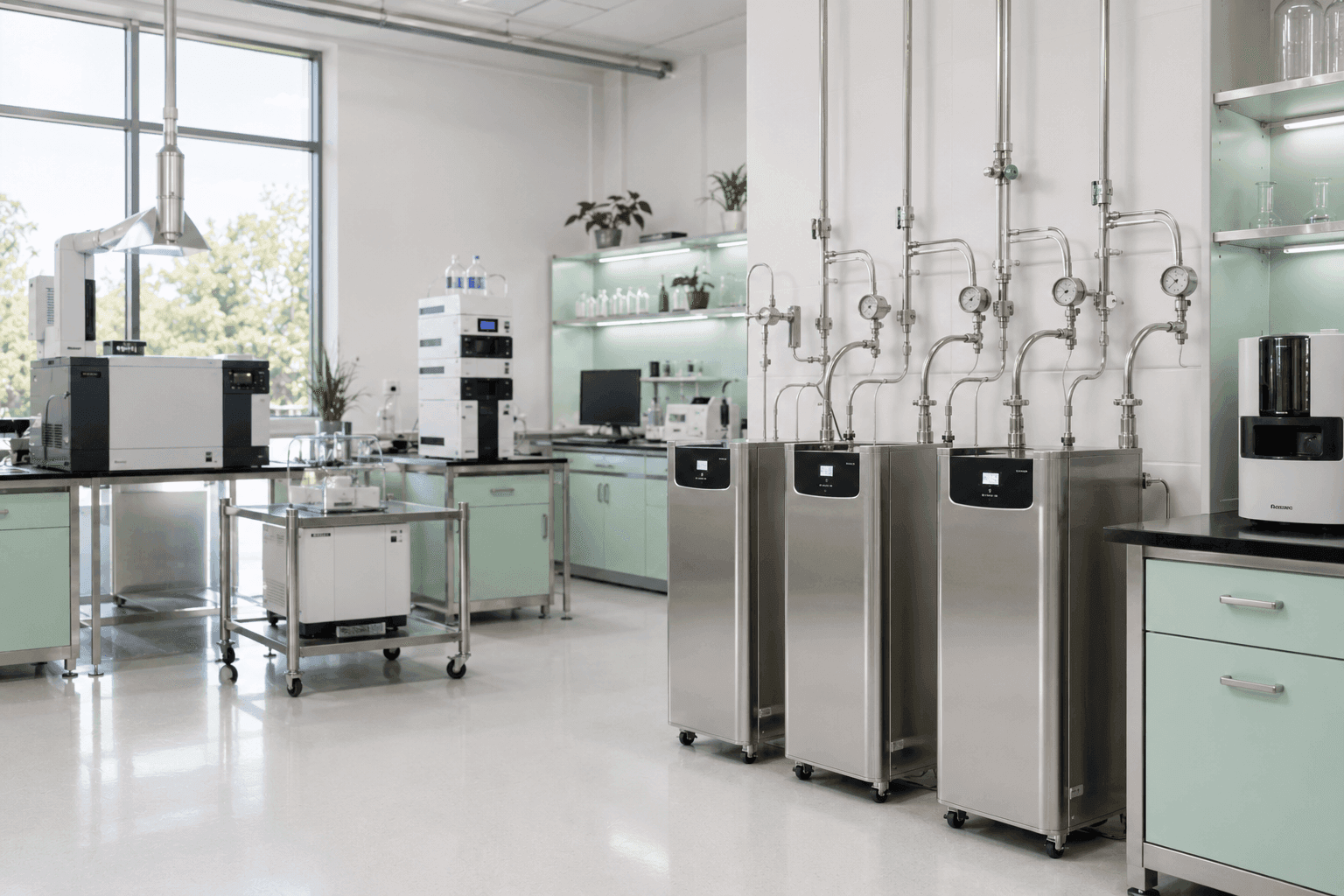
A gas generator for laboratory use is a system that produces gases such as nitrogen, hydrogen, or zero air directly within the laboratory. Instead of relying on compressed gas cylinders, these systems generate gas continuously as needed.
Modern Gas Generators are commonly used in pharmaceutical laboratories, research facilities, environmental testing labs, and cannabis laboratories because they provide a dependable gas supply while simplifying day-to-day operations.
By generating gas on-site, laboratories can reduce interruptions caused by delayed cylinder deliveries or depleted gas supplies.
Why Cannabis Laboratories Use Gas Generators
Although extraction equipment often receives the most attention, laboratory testing is equally important for maintaining product quality and regulatory compliance.
Gas generators are commonly used to support:
- Analytical testing
- Quality assurance
- Research and development
- Laboratory instrumentation
- Product validation
- Method development
A dependable gas supply helps ensure laboratory instruments operate consistently and minimizes workflow interruptions.
As testing demands increase, many laboratories find that on-site gas generation becomes more practical than managing multiple gas cylinders.
Benefits of Using a Gas Generator
A gas generator can provide several operational advantages over traditional gas cylinders.
Continuous Gas Supply
One of the biggest benefits is uninterrupted operation.
Instead of scheduling cylinder replacements or worrying about running out of gas during testing, laboratories can generate gas whenever it's needed.
This improves productivity and reduces unexpected downtime.
Improved Laboratory Safety
Handling compressed gas cylinders presents certain safety considerations.
By generating gas on-site, laboratories can reduce:
- Cylinder handling
- Storage requirements
- Transportation risks
- Frequent cylinder changes
While all laboratory equipment should be operated according to manufacturer guidelines, reducing cylinder management can simplify daily operations.
Lower Long-Term Operating Costs
Although purchasing a gas generator requires an initial investment, many laboratories reduce recurring costs associated with:
- Cylinder rentals
- Gas deliveries
- Transportation fees
- Inventory management
Facilities with high gas usage often find that on-site generation becomes more cost-effective over time.
Is a Gas Generator Right for Your Cannabis Lab?
Not every cannabis laboratory requires a gas generator.
The decision depends on several operational factors.
A gas generator may be a worthwhile investment if your laboratory:
- Performs routine analytical testing
- Operates laboratory instruments daily
- Uses large quantities of laboratory gases
- Wants to reduce reliance on gas cylinder deliveries
- Plans to expand testing capacity
Smaller laboratories with occasional gas requirements may continue using cylinders effectively.
Evaluating your current and future laboratory needs is the best place to start.
Supporting Equipment for a Complete Laboratory
Gas generators are most effective when integrated into a well-equipped laboratory environment.
Biosafety Cabinets
Many testing and research facilities utilize Biosafety Cabinets to create controlled work environments that help protect personnel and sensitive laboratory materials.
Benefits include:
- Reduced contamination risks
- Improved sample handling
- Better laboratory cleanliness
- Enhanced workflow consistency
For laboratories performing microbiological or analytical work, biosafety cabinets are often an important part of the overall laboratory setup.
Support Equipment
Reliable laboratory operations also depend on quality Support Equipment.
Examples include:
- Laboratory carts
- Workstations
- Storage solutions
- Utility equipment
- General laboratory accessories
These tools improve organization, reduce manual handling, and help create a safer and more efficient working environment.
Factors to Consider Before Buying
Before investing in a laboratory gas generator, evaluate your facility's operational requirements.
Important considerations include:
- Daily gas consumption
- Laboratory testing volume
- Instrument compatibility
- Available installation space
- Maintenance requirements
- Utility availability
- Future laboratory expansion
Choosing equipment that aligns with long-term production and testing goals typically provides the greatest return on investment.
Common Mistakes When Choosing a Gas Generator
Selecting the wrong system can increase costs and reduce efficiency.
Avoid these common mistakes:
- Purchasing equipment without calculating actual gas demand.
- Selecting a generator that cannot support future laboratory growth.
- Ignoring maintenance requirements.
- Overlooking compatibility with existing laboratory instruments.
- Focusing only on upfront purchase price instead of long-term operating costs.
Taking the time to evaluate laboratory workflows before purchasing equipment can help avoid unnecessary upgrades later.
When to Consult an Equipment Specialist
Every cannabis laboratory has unique testing requirements, equipment configurations, and production goals.
If you're unsure whether a gas generator is the right investment, speaking with an equipment specialist can help you evaluate your options and identify a solution that fits your workflow.
You can also reach out through the Contact Us page to discuss laboratory equipment, testing requirements, and system recommendations.
Professional guidance can help ensure your investment supports both current operations and future growth.
Key Takeaways
- A gas generator for laboratory use provides a reliable on-demand supply of laboratory gases.
- On-site gas generation reduces dependence on delivered gas cylinders.
- Gas generators are commonly used in cannabis testing, research, and analytical laboratories.
- Continuous gas supply helps minimize downtime and improve laboratory efficiency.
- Biosafety cabinets support contamination control during laboratory procedures.
- Support equipment helps improve laboratory organization and workflow.
- Equipment selection should be based on current gas usage and future growth plans.
- Evaluating long-term operating costs is just as important as comparing purchase prices.
FAQs
What is a gas generator for laboratory use?
A gas generator is a system that produces laboratory-grade gases on demand rather than relying on compressed gas cylinders. It provides a continuous gas supply for analytical instruments and laboratory processes. Many research and testing laboratories use gas generators to improve efficiency and reduce operational interruptions.
Do cannabis laboratories need a gas generator?
Not every cannabis laboratory requires one. Facilities with frequent analytical testing or high gas consumption often benefit the most from on-site gas generation. The decision depends on laboratory workload, equipment requirements, and future growth plans.
What are the benefits of replacing gas cylinders with a gas generator?
Gas generators provide a continuous gas supply, reduce cylinder handling, and can lower long-term operating costs. They also simplify inventory management and reduce reliance on scheduled gas deliveries. For many laboratories, these advantages improve both efficiency and workflow.
How do biosafety cabinets complement laboratory gas generators?
Biosafety cabinets help provide a controlled environment for handling laboratory samples, while gas generators supply gases for analytical instruments. Together, they support safe, reliable laboratory operations. Each serves a different but complementary role in the laboratory.
What should I consider before purchasing a laboratory gas generator?
Evaluate your laboratory's daily gas usage, testing volume, instrument compatibility, available space, and future expansion plans. It's also important to consider maintenance requirements and total cost of ownership. Selecting equipment based on long-term needs helps maximize the value of your investment.