What Centrifuge Size Is Best for Cannabis Extraction?
Learn how to choose the right centrifuge size for cannabis extraction based on throughput, solvent volume, and production goals.
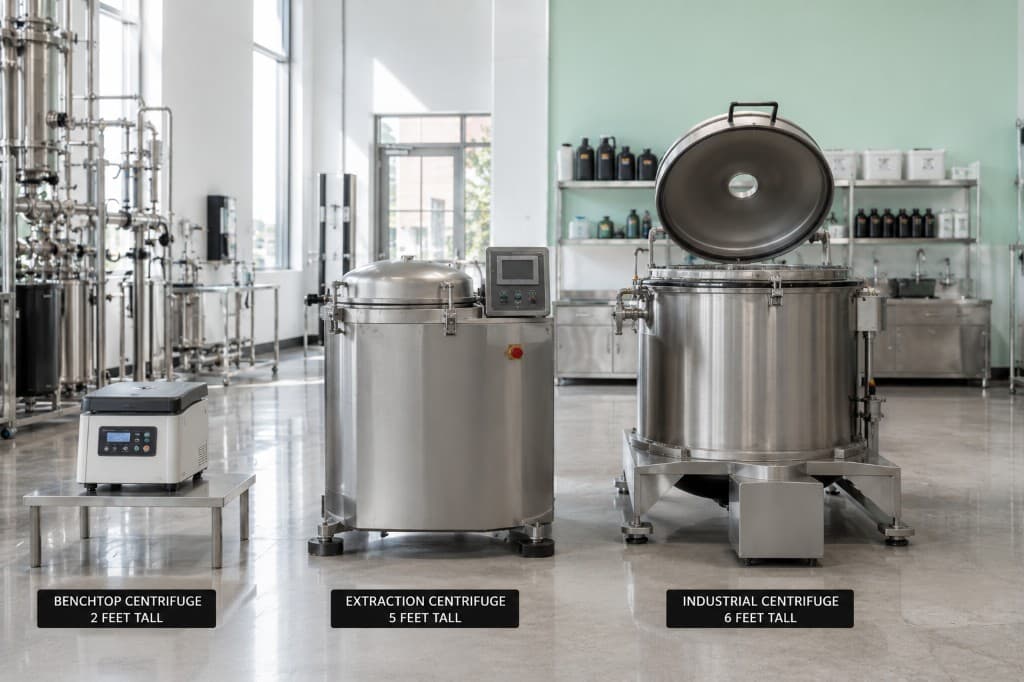
Selecting the right centrifuge size for cannabis extraction can significantly impact production efficiency, solvent recovery performance, and overall facility profitability. While extraction systems often receive most of the attention during equipment planning, centrifuges play a critical role in separating cannabinoids from biomass and supporting high-throughput extraction workflows.
Choosing a centrifuge that's too small can create production bottlenecks and limit daily processing capacity. On the other hand, oversized equipment may increase capital costs without delivering meaningful operational benefits. The ideal centrifuge size should align with your extraction volume, production goals, facility layout, and future growth plans.
Many operators work with experienced suppliers like GreenLabGear to determine the most appropriate centrifuge configuration for their specific workflow and production requirements.
In this guide, we'll explain how centrifuges are sized, the factors that influence capacity requirements, and how to determine the best centrifuge size for cannabis extraction.
TLDR – Quick Guide
- The best centrifuge size for cannabis extraction depends on daily biomass throughput.
- Processing volume should drive equipment selection.
- Larger centrifuges are not always more efficient.
- Extraction capacity and centrifuge capacity should remain balanced.
- Solvent recovery capabilities should be considered during planning.
- Future growth should influence sizing decisions.
- Workflow efficiency is just as important as equipment capacity.
- Proper sizing helps maximize ROI and production efficiency.
Detailed Breakdown
Why Centrifuge Size Matters in Cannabis Extraction
Centrifuges are commonly used in ethanol extraction workflows to separate cannabinoid-rich solvent from plant material.
An appropriately sized centrifuge helps facilities:
- Increase throughput
- Improve extraction efficiency
- Reduce processing time
- Minimize labor requirements
- Improve solvent recovery workflows
- Support scalable production
Selecting the wrong centrifuge size can create operational challenges that affect the entire extraction process.
A properly sized centrifuge should complement extraction equipment rather than limit production capacity.
What Does a Centrifuge Do?
A centrifuge uses high-speed rotation to separate liquids from solids.
In cannabis extraction, centrifuges are commonly used to:
- Separate ethanol from biomass
- Improve extraction efficiency
- Reduce manual handling
- Accelerate production cycles
Many facilities integrate Centrifuges into larger extraction workflows to streamline processing and increase daily output.
The faster and more efficiently biomass can be processed, the more productive the entire operation becomes.
Start With Daily Biomass Throughput
The most important factor when determining the best centrifuge size for cannabis extraction is understanding how much biomass your facility processes each day.
Questions to consider include:
- How many pounds of biomass are processed daily?
- How many extraction cycles occur per shift?
- How many shifts run each day?
- What are your future production goals?
For example:
Small-Scale Operations
Typical throughput:
- Less than 50 pounds per day
Focus areas:
- Lower capital investment
- Smaller footprint
- Flexible operation
Mid-Scale Operations
Typical throughput:
- 50–500 pounds per day
Focus areas:
- Increased efficiency
- Higher throughput
- Scalable production
Large-Scale Operations
Typical throughput:
- 500+ pounds per day
Focus areas:
- Continuous processing
- Maximum throughput
- Automated workflows
Production volume should always guide equipment selection.
Match Centrifuge Capacity to Extraction Capacity
One of the most common equipment planning mistakes is creating an imbalance between extraction and separation systems.
For example:
If your Extractors (Closed Loop) can process significantly more material than your centrifuge can handle, production bottlenecks may occur.
Similarly, an oversized centrifuge paired with a smaller extraction system may leave expensive equipment underutilized.
The goal is to create balanced production capacity throughout the facility.
Benefits include:
- Consistent workflow
- Improved efficiency
- Better resource utilization
- Reduced downtime
Consider Batch Size and Cycle Time
Centrifuge sizing is not solely about capacity.
Operators should also evaluate:
Batch Volume
Larger batches may reduce the number of processing cycles required each day.
Advantages include:
- Reduced labor
- Faster throughput
- Improved operational efficiency
Cycle Duration
Faster cycle times allow facilities to process more material without necessarily increasing equipment size.
When evaluating centrifuge options, consider:
- Loading time
- Separation time
- Unloading time
- Cleaning requirements
Cycle efficiency often has a major impact on overall productivity.
Evaluate Solvent Recovery Requirements
Many ethanol extraction facilities integrate centrifuges directly into solvent recovery workflows.
Efficient separation helps improve downstream performance for Solvent Recovery systems.
Benefits include:
- Faster recovery cycles
- Reduced solvent loss
- Improved processing efficiency
- Lower operating costs
Facilities should evaluate centrifuge sizing alongside solvent recovery capacity to maintain balanced production flow.
Consider Other Separation Equipment
Centrifuges are often part of a larger processing ecosystem.
Additional Separation Equipment may be used to support:
- Filtration
- Clarification
- Product refinement
- Biomass handling
When planning capacity, operators should evaluate how centrifuges interact with other processing systems.
An efficient workflow depends on all equipment working together effectively.
Future Growth Should Influence Equipment Selection
Many facilities quickly outgrow their original equipment investments.
When selecting a centrifuge size, consider:
Future Production Goals
Ask:
- Will production double in the next few years?
- Are additional extraction systems planned?
- Will product demand continue increasing?
Facility Expansion Plans
Additional capacity may require:
- More floor space
- Increased utility capacity
- Expanded solvent recovery systems
Planning for growth helps avoid premature equipment replacement.
Common Centrifuge Sizing Mistakes
Avoid these common errors.
Buying Based Solely on Price
The lowest-cost option may not provide adequate throughput.
Ignoring Production Growth
Many operators underestimate future demand.
Oversizing Equipment
Larger equipment is not always more productive or cost-effective.
Failing to Balance Workflow
Extraction, separation, and solvent recovery should be sized together.
Underestimating Labor Requirements
Cycle times and operator workload affect actual processing capacity.
Proper planning helps avoid expensive equipment mistakes.
How to Determine the Best Centrifuge Size
The best centrifuge size for cannabis extraction depends on several factors working together:
Production Volume
How much biomass do you process daily?
Throughput Goals
How quickly must material move through production?
Extraction Capacity
Can the centrifuge keep pace with extraction output?
Solvent Recovery Capacity
Can downstream equipment support increased throughput?
Future Expansion
Will production requirements increase over time?
Answering these questions helps operators select equipment that delivers both immediate value and long-term scalability.
Key Takeaways
- The ideal centrifuge size for cannabis extraction depends on daily throughput and production goals.
- Centrifuges play a critical role in ethanol extraction workflows.
- Equipment sizing should align with extraction and solvent recovery capacity.
- Batch size and cycle time significantly impact productivity.
- Larger centrifuges are not always the best solution.
- Future expansion plans should influence equipment selection.
- Balanced workflows improve operational efficiency.
- Proper centrifuge sizing helps maximize ROI and production output.
- Separation equipment should be evaluated as part of the entire process.
- Strategic planning helps prevent costly equipment upgrades later.
FAQs
What is the best centrifuge size for cannabis extraction?
The best centrifuge size depends on your facility's daily biomass throughput, extraction capacity, and production goals. Small operations may require compact systems, while larger facilities often need higher-capacity equipment. The goal is selecting a centrifuge that supports workflow efficiency without creating bottlenecks.
How does centrifuge size affect extraction efficiency?
A properly sized centrifuge helps process material efficiently and supports smooth production flow. Undersized equipment can slow operations and limit throughput. Proper sizing helps maximize productivity and equipment utilization.
Should centrifuge capacity match extraction capacity?
Yes. Centrifuge capacity should be balanced with extraction and solvent recovery systems. Matching capacities helps prevent bottlenecks and improves overall workflow efficiency. A balanced system supports more consistent production.
Why is solvent recovery important when sizing a centrifuge?
Centrifuges often support solvent recovery workflows by separating solvent-rich liquid from biomass. If solvent recovery equipment cannot handle increased throughput, production efficiency may suffer. Both systems should be evaluated together during planning.
Should I plan for future growth when purchasing a centrifuge?
Absolutely. Many facilities increase production over time and quickly outgrow their original equipment. Selecting a centrifuge that can support future expansion often reduces long-term capital costs and operational disruptions.