How to Choose the Right Laboratory Furnace for Your Cannabis Lab
Learn how to choose the best laboratory furnace for your cannabis lab based on applications, temperature requirements, and workflow.
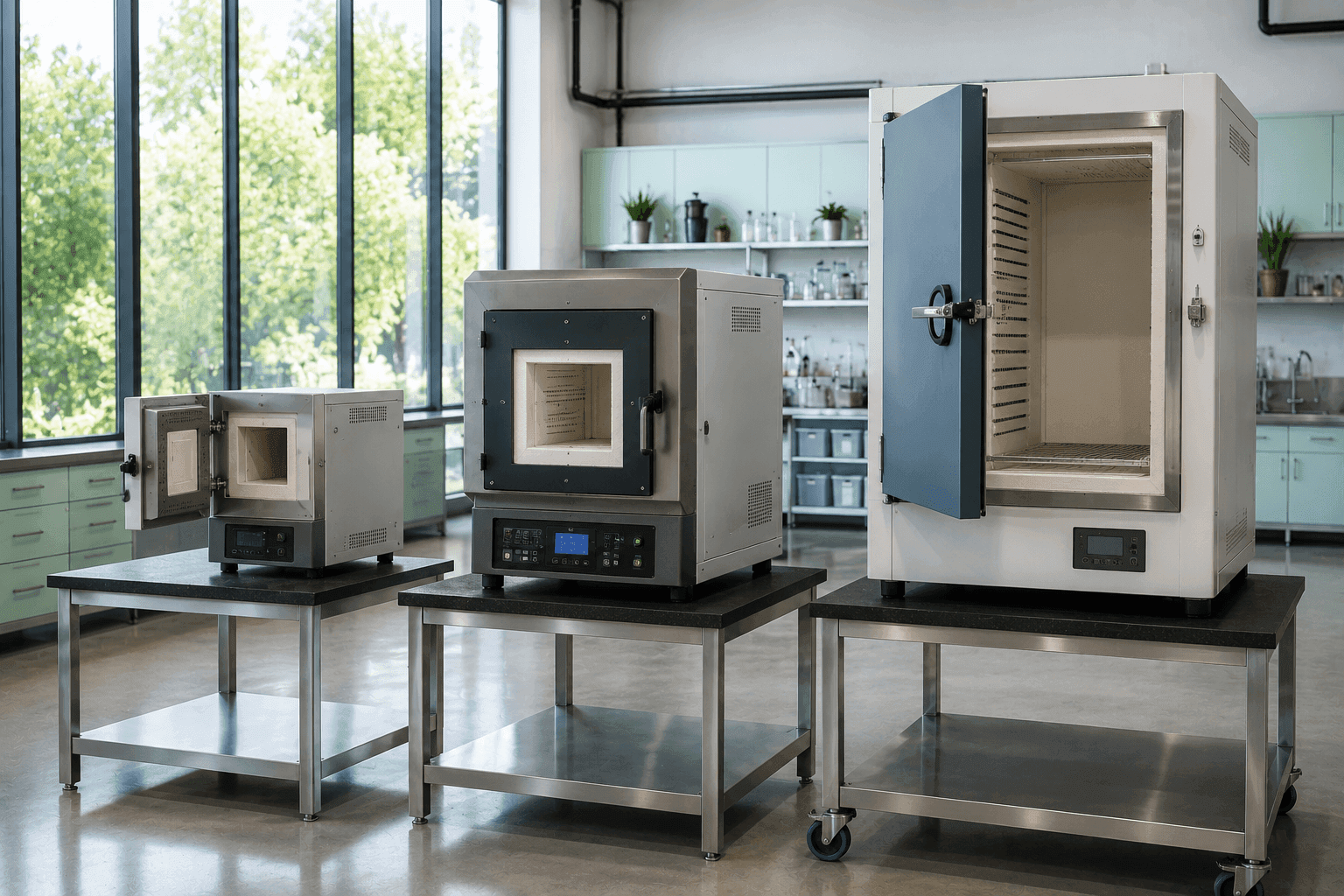
Meta Title: Laboratory Furnace Guide: Choosing the Right Furnace for Your Cannabis Lab
Meta Description: Learn how to choose the best laboratory furnace for your cannabis lab based on applications, temperature requirements, and workflow.
URL Slug: /laboratory-furnace-guide
Introduction
Not every cannabis laboratory requires a laboratory furnace, but for facilities performing advanced research, material testing, analytical work, or specialized processing, selecting the right furnace can improve accuracy, consistency, and operational efficiency. Choosing the appropriate laboratory furnace depends on much more than reaching high temperatures—it requires understanding your applications, temperature requirements, chamber size, and long-term production goals.
Laboratory furnaces are commonly found in pharmaceutical, chemical, and research laboratories where controlled high-temperature environments are essential. In cannabis facilities, they may be used for analytical testing, material preparation, equipment validation, and research applications rather than mainstream extraction.
Many laboratories work with GreenLabGear to identify laboratory equipment that supports both current operations and future expansion. This guide explains how laboratory furnaces are used, the features to evaluate, and how to determine whether one is the right investment for your cannabis lab.
TLDR – Quick Guide
- Laboratory furnaces are designed for controlled high-temperature laboratory applications.
- They are commonly used for research, testing, and material preparation.
- Temperature range should match your intended application.
- Chamber size affects throughput and sample capacity.
- Uniform heating improves consistency and testing accuracy.
- Supporting heating and drying equipment can enhance laboratory workflows.
- Energy efficiency helps reduce long-term operating costs.
- Purchase equipment based on laboratory requirements rather than maximum temperature alone.
Detailed Breakdown
What Is a Laboratory Furnace?
A laboratory furnace is a high-temperature heating system designed for applications that require temperatures well beyond the capabilities of conventional laboratory ovens.
Unlike standard drying ovens, laboratory furnaces provide precise temperature control for specialized laboratory processes involving elevated temperatures.
Modern Ovens & Furnaces are widely used in research laboratories, universities, pharmaceutical manufacturing, material science, and analytical testing because they deliver reliable and repeatable heating performance.
While not essential for every cannabis extraction facility, they can be valuable in laboratories focused on research, quality assurance, and specialized analytical work.
Common Applications in Cannabis Laboratories
Laboratory furnaces are generally used in support of laboratory analysis rather than extraction itself.
Potential applications include:
- Material testing
- Sample preparation
- Laboratory research
- Equipment validation
- Heat treatment of laboratory materials
- Quality control procedures
Facilities involved in research and development often benefit the most from furnace technology.
If your operation primarily focuses on extraction and post-processing, a furnace may not be necessary for everyday production.
Factors to Consider When Choosing a Laboratory Furnace
Choosing the right furnace starts with understanding your laboratory's specific needs.
Temperature Range
The first consideration is maximum operating temperature.
Different laboratory applications require different heating capabilities.
Rather than purchasing the highest-temperature furnace available, choose one that comfortably meets your expected operating range.
An oversized temperature range may increase purchase costs without providing additional value.
Chamber Size
The internal chamber determines how many samples can be processed at one time.
When evaluating capacity, consider:
- Sample dimensions
- Batch frequency
- Future laboratory growth
- Available workspace
Selecting the right chamber size helps improve efficiency while avoiding unnecessary energy consumption.
Temperature Uniformity
Uniform heating is essential for accurate and repeatable laboratory work.
Look for equipment that provides:
- Even heat distribution
- Stable temperature control
- Minimal temperature fluctuations
Consistent heating contributes to reliable testing results and improved process repeatability.
Supporting Equipment for Laboratory Workflows
Laboratory furnaces are often part of a broader temperature-controlled workflow.
Heaters, Stirrers & Hot Plates
Many cannabis laboratories also utilize Heaters, Stirrers & Hot Plates for lower-temperature heating, sample preparation, and solution mixing.
These systems are commonly used for:
- Preparing formulations
- Heating laboratory samples
- Mixing chemicals
- Supporting analytical procedures
Together with laboratory furnaces, they provide greater flexibility for a wide range of laboratory applications.
Drying Equipment
Some processes require controlled drying before high-temperature testing.
Modern Drying Equipment can help:
- Remove moisture
- Prepare samples
- Improve consistency
- Support analytical workflows
Using dedicated drying equipment before furnace processing helps produce more reliable laboratory results.
Processing Equipment
Many laboratories integrate furnaces with additional Processing Equipment used during research, formulation, and product development.
Combining compatible systems creates a more efficient laboratory environment while reducing unnecessary sample handling.
Energy Efficiency Matters
Although laboratory furnaces are not always operated continuously, energy efficiency remains an important consideration.
Modern systems often include features such as:
- Improved insulation
- Programmable temperature controls
- Efficient heating elements
- Rapid heat recovery
These features help:
- Reduce operating costs
- Improve heating consistency
- Lower energy consumption
- Extend equipment lifespan
Evaluating long-term operating expenses is just as important as comparing purchase prices.
Safety Features to Look For
High-temperature equipment should include safety features that protect both operators and laboratory samples.
Important features may include:
- Over-temperature protection
- Automatic shutoff systems
- Digital temperature monitoring
- Insulated exterior surfaces
- Secure door latching mechanisms
Proper operator training and routine maintenance are equally important for maintaining safe operation.
Common Mistakes When Choosing a Laboratory Furnace
Purchasing the wrong furnace can increase costs without improving laboratory performance.
Avoid these common mistakes:
- Buying the highest-temperature model without a practical need.
- Selecting a chamber that's too small for future workloads.
- Ignoring temperature uniformity specifications.
- Overlooking energy efficiency and operating costs.
- Failing to consider compatibility with existing laboratory equipment.
A well-planned equipment purchase provides greater long-term value than selecting a furnace based solely on technical specifications.
Is a Laboratory Furnace Right for Your Cannabis Lab?
The answer depends on your facility's focus.
A laboratory furnace may be a worthwhile investment if your operation performs:
- Advanced laboratory research
- Material analysis
- Quality assurance testing
- Product development
- Specialized analytical procedures
However, facilities focused primarily on extraction, solvent recovery, and post-processing may rely more heavily on ovens, drying systems, and other temperature-controlled equipment instead.
Understanding your laboratory's workflow will help determine whether a furnace is necessary.
Key Takeaways
- A laboratory furnace provides precise high-temperature heating for research and laboratory applications.
- Not every cannabis facility requires a laboratory furnace for daily operations.
- Temperature range and chamber size should match your laboratory needs.
- Uniform heating improves testing accuracy and repeatability.
- Heaters, stirrers, and hot plates complement furnace workflows for lower-temperature applications.
- Drying equipment helps prepare samples before high-temperature processing.
- Energy-efficient designs can reduce long-term operating costs.
- Choosing equipment based on actual laboratory requirements delivers the best long-term value.
FAQs
What is a laboratory furnace used for?
A laboratory furnace is used for high-temperature laboratory applications such as material testing, research, sample preparation, and analytical procedures. It provides precise temperature control beyond the capabilities of standard laboratory ovens. These systems are commonly used in research and quality control laboratories.
Does every cannabis laboratory need a laboratory furnace?
No. Many cannabis extraction facilities do not require a laboratory furnace for routine production. Furnaces are generally more valuable for laboratories involved in research, analytical testing, and specialized product development.
What's the difference between a laboratory oven and a laboratory furnace?
Laboratory ovens are typically used for drying, curing, and lower-temperature heating, while laboratory furnaces are designed for significantly higher operating temperatures. Furnaces are better suited for specialized laboratory applications that require intense and controlled heat. The right choice depends on the intended use.
What features should I look for in a laboratory furnace?
Important considerations include temperature range, chamber size, temperature uniformity, energy efficiency, and built-in safety features. These factors influence both performance and long-term operating costs. Selecting equipment that matches your workflow helps maximize efficiency.
Can a laboratory furnace be integrated with other laboratory equipment?
Yes. Laboratory furnaces are often used alongside heaters, stirrers, drying equipment, and other processing systems to support research and analytical workflows. Integrating compatible equipment improves laboratory efficiency and helps maintain consistent results.