Biosafety Cabinet Size Guide: What Size Does Your Laboratory Need?
Learn how to choose the right biosafety cabinet size based on workspace, equipment, workflow, clearance, and future laboratory needs.
Introduction
Choosing the right biosafety cabinet size sounds straightforward until you start accounting for instruments, samples, operator movement, airflow, room dimensions, and future growth. A cabinet that is too small can create a cramped workspace, while an unnecessarily large unit can consume valuable laboratory space and increase equipment and operating costs.
Width alone doesn't tell the whole story. Laboratories also need to consider internal work-area dimensions, cabinet depth and height, required installation clearances, workflow, and the equipment technicians will routinely use inside the cabinet.
Green Lab Gear provides biosafety cabinets and other laboratory equipment for facilities with different space and workflow requirements. Before choosing a cabinet, however, laboratories should evaluate what will happen inside the enclosure and how the unit will fit into the room as a whole.
This biosafety cabinet size guide explains the major dimensions and planning considerations so you can select a cabinet that fits both your laboratory and your work.
TLDR – Quick Guide
- 4-foot biosafety cabinets are a common choice for routine laboratory workflows where space and work-area requirements are moderate.
- 3-foot cabinets can work well when laboratory space is limited and procedures require relatively little equipment.
- 5- and 6-foot cabinets provide more working room for larger equipment, multiple materials, or demanding workflows.
- Don't select a biosafety cabinet based on external width alone.
- Measure the instruments, racks, containers, and supplies that must fit inside the work zone.
- Account for manufacturer-required clearance around and above the cabinet.
- Consider doors, HVAC vents, personnel traffic, and other potential airflow disturbances.
- Select enough capacity for realistic growth without buying a cabinet substantially larger than your workflow requires.
Detailed Breakdown
What Sizes Do Biosafety Cabinets Come In?
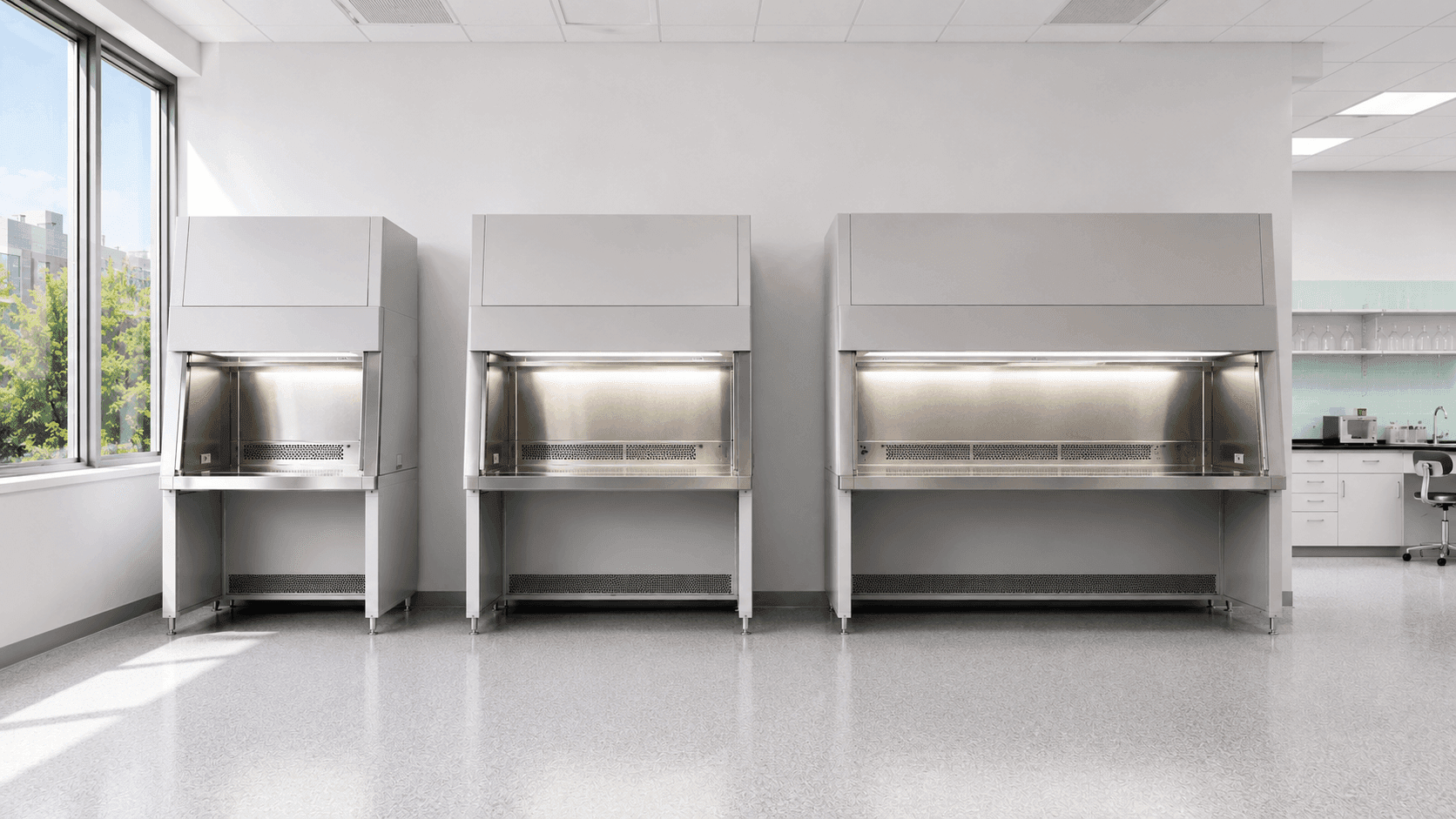
Biosafety cabinets are available in multiple sizes, with nominal widths commonly described in feet. Depending on manufacturer and model, laboratories may encounter configurations around 3, 4, 5, or 6 feet wide.
The best biosafety cabinet size isn't necessarily the biggest one your laboratory can accommodate. It is the size that provides sufficient working room while maintaining an efficient facility layout.
When comparing Biosafety Cabinets, distinguish between nominal cabinet width and usable internal workspace. Exterior dimensions can include structural components, filters, controls, and other hardware, so a cabinet described as four feet wide doesn't necessarily provide four feet of unobstructed work surface.
Always check the specifications for the individual model you're considering.
Comparing Common Biosafety Cabinet Sizes
The following ranges provide a useful starting point, but exact dimensions and suitability vary by manufacturer and configuration.
Nominal Size
Typical Fit
Key Consideration
3-foot
Compact laboratories and focused procedures
Limited space for equipment
4-foot
General laboratory applications
Good balance of workspace and footprint
5-foot
Workflows requiring additional equipment or materials
Requires more floor and installation space
6-foot
Larger or equipment-intensive procedures
Higher space, utility, and planning requirements
A smaller cabinet may be perfectly adequate for a technician performing straightforward sample-handling procedures. If that same procedure requires multiple racks, instruments, waste containers, and other equipment, additional workspace may be justified.
The goal is usable space—not bragging rights measured in feet.
How to Calculate the Biosafety Cabinet Size You Need
The best way to select a cabinet is to map the procedure before shopping.
Start by listing everything that needs to enter the cabinet during a normal procedure. That could include pipettes, racks, sample containers, waste containers, small instruments, disinfectants, and other required materials.
Measure the largest equipment rather than estimating it. Then arrange those measurements on a mock work surface using tape or cardboard to see how much room an operator actually needs.
Your calculation should consider four things:
A cabinet that technically holds everything but leaves no usable working room is undersized.
Why a 4-Foot Cabinet Is Often a Practical Starting Point
For many general laboratory applications, a four-foot unit provides a useful balance between workspace and overall footprint. It can accommodate common laboratory procedures without occupying as much space as larger configurations.
That doesn't mean four feet should become the automatic choice.
A compact testing lab performing limited procedures might operate more efficiently with a smaller cabinet. A laboratory using larger instruments or more complex workflows may quickly find a four-foot work zone restrictive.
Rather than starting with "Which standard size should we buy?" start with "How much usable work area does this procedure require?"
That question produces a much better equipment decision.
When Should You Consider a Larger Biosafety Cabinet?
A five- or six-foot cabinet may make sense when procedures require substantial equipment, numerous sample containers, or greater separation between materials within the work zone.
Larger cabinets can provide benefits such as:
- More usable work-surface area
- Better organization for equipment-intensive procedures
- Additional flexibility as workflows change
- Space for larger laboratory instruments
However, larger cabinets also require more facility space. They may affect room circulation, installation clearances, utility planning, and operating costs.
If the extra work area will routinely be used, the investment may be justified. If most of the cabinet will remain empty, you're sacrificing laboratory space for little operational benefit.
Don't Forget Height, Depth, and Clearance
Width gets most of the attention in a biosafety cabinet size discussion, but height and depth can be equally important.
Check the cabinet's complete exterior dimensions before purchasing. Confirm that the unit can be transported through building entrances, elevators, hallways, and laboratory doors before installation.
You should also evaluate:
- Ceiling height
- Required overhead clearance
- Rear and side clearances
- Electrical access
- Exhaust connections, when applicable
- Service access
- Stand or base dimensions
- Operator seating and legroom
Manufacturer-required installation clearances should always take priority over generic spacing recommendations.
If you're building a new laboratory, planning Laboratory Support Equipment alongside the biosafety cabinet can help prevent overcrowding later.
Room Layout Can Affect Cabinet Performance
Finding a wall where the cabinet physically fits isn't enough. Biosafety cabinets depend on controlled airflow, so placement within the laboratory matters.
Potential airflow disturbances can include doors opening and closing, high personnel traffic, HVAC supply diffusers, fans, and nearby equipment.
A technically perfect cabinet can become a poor installation choice if positioned in a problematic part of the room.
Laboratory planners should therefore evaluate the cabinet and room together. Consider where technicians enter, where samples arrive, where waste leaves, and how people move during normal operations.
A good laboratory layout minimizes unnecessary movement around the cabinet while supporting a logical workflow.
Consider the Rest of Your Laboratory Equipment
A biosafety cabinet shouldn't consume so much room that every other laboratory function becomes difficult.
Before selecting a size, map the footprint of other Laboratory Equipment, including refrigerators, freezers, autoclaves, worktables, storage cabinets, incubators, and analytical instruments.
Also leave sufficient room for:
- Staff circulation
- Cleaning
- Equipment servicing
- Sample transfer
- Emergency access
- Future equipment
This is especially important for growing laboratories. Space that looks generous on opening day can disappear quickly as testing capabilities expand.
Plan for Growth Without Oversizing
Future-proofing is sensible. Buying twice as much cabinet as you need "just in case" usually isn't.
Consider your expected workload over the next few years. If you anticipate adding procedures that genuinely require more internal workspace, choosing a larger cabinet now may prevent an early replacement.
But additional procedures may be better served by a second cabinet rather than one oversized work zone. Separate cabinets can also help laboratories organize workflows when procedures have different contamination-control requirements.
When possible, compare physical equipment and layout options before committing. The Green Lab Gear Showroom can be useful when evaluating laboratory equipment dimensions and considering how different systems may fit into a planned workspace.
Common Biosafety Cabinet Sizing Mistakes
One of the easiest mistakes is choosing based solely on nominal width. Usable internal dimensions, equipment placement, and required clearances matter just as much.
Other common problems include failing to measure equipment, overlooking overhead space, placing a cabinet near airflow disturbances, and filling the work zone with more materials than necessary.
Another mistake is assuming a larger cabinet automatically increases productivity. If the procedure only requires a compact working area, a larger unit may simply increase costs and consume space that could be used elsewhere.
Finally, don't forget installation and service access. Equipment that fits perfectly between two walls may become a maintenance headache if technicians can't reach components that require inspection or servicing.
Key Takeaways
- The right biosafety cabinet size depends on procedures, equipment, workflow, and facility dimensions.
- Common nominal widths include approximately 3, 4, 5, and 6 feet, depending on manufacturer and model.
- A four-foot cabinet can be a practical starting point for many general laboratory applications, but it isn't automatically the correct size.
- Measure actual equipment and materials before choosing cabinet width.
- External dimensions and usable internal workspace aren't the same thing.
- Height, depth, overhead clearance, and service access should be included in facility planning.
- Cabinet placement should account for doors, HVAC airflow, personnel traffic, and other disturbances.
- Consider surrounding laboratory equipment when determining the overall footprint.
- Plan for realistic growth without automatically oversizing the cabinet.
- Always verify final dimensions and clearance requirements against the specific manufacturer's specifications.
FAQs
What is the most common biosafety cabinet size?
Four-foot biosafety cabinets are commonly encountered in general laboratory environments because they provide a practical balance between working space and facility footprint. However, cabinet availability and dimensions vary by manufacturer and model. Your procedures and equipment should determine the final size rather than popularity alone.
How do I determine what biosafety cabinet size I need?
List and measure everything that must routinely fit inside the cabinet, then account for operator workspace and unobstructed airflow openings. You should also measure the room and check installation, service, and overhead clearance requirements. Comparing these measurements with the manufacturer's specifications will help identify an appropriate size.
Is a larger biosafety cabinet always better?
No, because additional width only provides value when the workflow actually requires the extra work area. Oversized cabinets can consume valuable floor space and may increase purchase and operating costs. The best cabinet provides sufficient working room without unnecessarily compromising the rest of the laboratory.
Can a biosafety cabinet be placed anywhere it physically fits?
No, because nearby doors, HVAC vents, personnel traffic, and other airflow disturbances may affect cabinet performance. Installation must also provide the clearances and utility connections required by the manufacturer. Room layout should therefore be evaluated alongside cabinet dimensions.
Should I size a biosafety cabinet for future laboratory growth?
Yes, reasonable future growth should be included in the decision so the cabinet doesn't immediately become a bottleneck. However, dramatically oversizing equipment for hypothetical future requirements can waste both budget and laboratory space. Select a configuration that supports your current workflow plus realistic expansion plans.