Biosafety Cabinet vs Fume Hood: What's the Difference and Which Do You Need?
Compare a biosafety cabinet vs fume hood, including protection, airflow, applications, and which option is right for your cannabis lab.
Introduction
Choosing between a biosafety cabinet vs fume hood isn't simply a matter of picking whichever piece of equipment fits your laboratory. These systems are designed to control very different hazards, and using the wrong one can leave personnel, samples, or the surrounding laboratory inadequately protected.
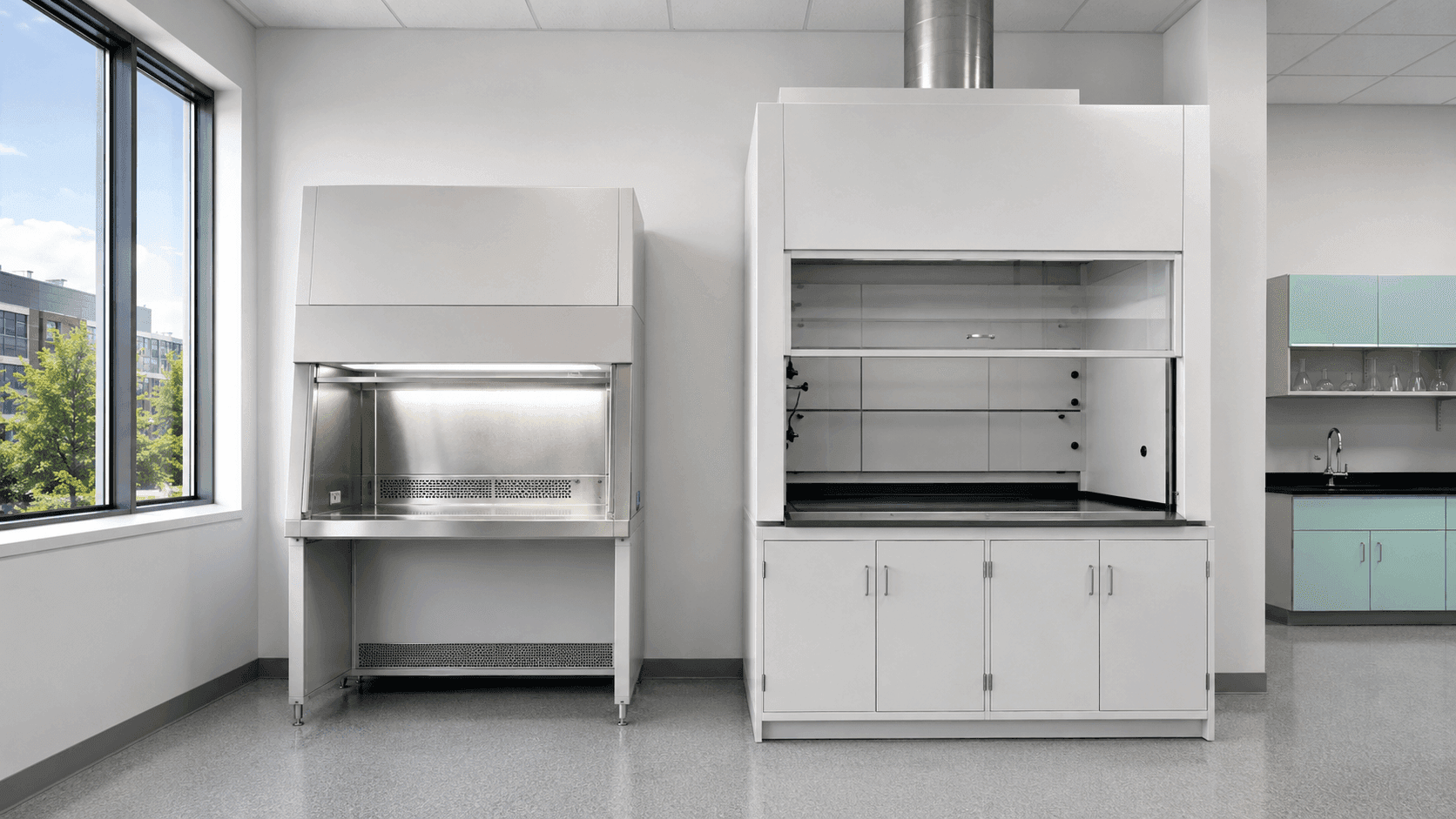
A biosafety cabinet is primarily designed for biological work and contamination control. A chemical fume hood, meanwhile, is designed to capture and exhaust hazardous chemical fumes, vapors, and gases away from the operator. That distinction matters in cannabis laboratories, where activities can range from microbiological testing to analytical sample preparation and solvent-related procedures.
Green Lab Gear supplies laboratory equipment for cannabis, research, and processing facilities with different workflow requirements. Before investing in either system, labs should identify the hazards they actually handle, understand the type of protection required, and verify that the equipment fits applicable safety requirements.
This biosafety cabinet vs fume hood guide breaks down the differences so you can make a more informed equipment decision.
TLDR – Quick Guide
- Biosafety cabinets are primarily used for biological materials and contamination-sensitive procedures.
- Chemical fume hoods are designed to capture hazardous chemical fumes and vapors.
- A biosafety cabinet may protect personnel, samples, and the environment depending on its class and configuration.
- A fume hood primarily protects personnel by exhausting hazardous airborne chemicals.
- A standard biosafety cabinet should not automatically be treated as a substitute for a chemical fume hood.
- Cannabis testing labs performing microbiological work may require a biosafety cabinet.
- Labs handling volatile or hazardous chemicals may require an appropriately designed fume hood.
- Some facilities need both because biological and chemical hazards require different controls.
Detailed Breakdown
What Is a Biosafety Cabinet?
A biosafety cabinet (BSC) is a ventilated laboratory enclosure designed for work involving biological materials. Depending on the cabinet class, airflow design, and installation, it can provide personnel, environmental, and product protection.
Many cabinets use HEPA filtration to control biological aerosols and airborne particles. This makes them particularly useful when samples need protection from contamination while personnel also need protection from biological exposure.
Cannabis laboratories may use Biosafety Cabinets for applications such as microbiological testing, sample preparation, culture work, and other contamination-sensitive procedures.
Biosafety cabinets are commonly divided into Classes I, II, and III. Class II cabinets are particularly common in laboratory environments because they are designed to provide personnel, product, and environmental protection when properly selected, installed, certified, and operated.
What Is a Chemical Fume Hood?
A chemical fume hood is a ventilated enclosure intended to protect personnel from hazardous airborne chemicals. Air is pulled through the hood opening and typically exhausted away from the laboratory through a dedicated ventilation system.
Fume hoods are used when procedures may generate:
- Hazardous chemical vapors
- Solvent fumes
- Irritating gases
- Volatile compounds
- Potentially harmful airborne chemical contaminants
Unlike a typical biosafety cabinet, a conventional chemical fume hood isn't intended to create a sterile workspace or protect samples from environmental contamination. Its primary job is controlling chemical exposure.
This is the fundamental difference when comparing a biosafety cabinet vs fume hood: one is primarily associated with biological containment and contamination control, while the other is designed around chemical vapor containment.
Biosafety Cabinet vs Fume Hood: Key Differences
Factor
Biosafety Cabinet
Chemical Fume Hood
Primary Hazard
Biological materials and aerosols
Chemical fumes and vapors
Personnel Protection
Yes, when appropriately selected and operated
Yes, from appropriate airborne chemical hazards
Sample Protection
Available with certain BSC classes
Generally no
HEPA Filtration
Common
Not the primary control method
Chemical Vapor Control
Limited and configuration-dependent
Primary purpose
Common Cannabis Lab Use
Microbial testing and contamination-sensitive work
Chemical and solvent-related laboratory procedures
Air Handling
Filtered and/or exhausted depending on design
Generally exhausted from the work area
The correct system should always be determined through a hazard assessment rather than by equipment appearance or available bench space.
When Does a Cannabis Lab Need a Biosafety Cabinet?
A biosafety cabinet may be appropriate when a cannabis laboratory performs microbiological or biological testing where aerosols or sample contamination are concerns.
For example, cannabis quality laboratories may conduct testing related to microbial contaminants. In these environments, controlled airflow can help protect both the operator and the integrity of the sample.
A BSC may also make sense when your workflow requires:
- A controlled work zone
- Protection from biological aerosols
- Sample contamination control
- Repeatable microbiological procedures
The cabinet class matters. Facilities should select equipment according to the biological agents, procedures, and applicable laboratory safety standards involved rather than assuming every BSC provides identical protection.
When Does a Cannabis Lab Need a Fume Hood?
A chemical fume hood may be required when laboratory procedures involve hazardous volatile chemicals or produce fumes and vapors that shouldn't enter the general laboratory environment.
Cannabis testing and processing laboratories can use various solvents, reagents, and chemicals during analytical or sample-preparation workflows. Whether a fume hood is appropriate depends on the chemical, concentration, quantity, procedure, ventilation design, and applicable safety requirements.
A fume hood may be appropriate for tasks involving volatile solvents, corrosive chemicals, hazardous reagents, or procedures capable of releasing harmful vapors.
This is also why equipment selection shouldn't be based solely on a generic "cannabis lab" equipment list. A testing laboratory and an extraction facility can have dramatically different hazards.
Can You Use a Biosafety Cabinet Instead of a Fume Hood?
Generally, you should not assume a standard biosafety cabinet can replace a chemical fume hood.
HEPA filters are designed to capture particles; they don't inherently remove chemical vapors. Some specialized BSC configurations can accommodate limited chemical work when specifically designed and exhausted for that purpose, but suitability depends on the exact cabinet and application.
The reverse is also true. A conventional fume hood isn't a replacement for a biosafety cabinet when product protection or biological aerosol containment is required.
When evaluating a biosafety cabinet vs fume hood, start with the hazard—not the equipment.
What If Your Cannabis Lab Needs Both?
A cannabis laboratory conducting both microbiological testing and chemical analysis may need separate containment systems.
A sensible workflow could include a biosafety cabinet in an area dedicated to biological sample handling and a chemical fume hood in a separate zone intended for chemical procedures. Additional Laboratory Support Equipment can help build an organized workflow around these primary engineering controls.
Sterilization should also be considered when reusable laboratory materials are involved. Sterilizers & Autoclaves can support appropriate decontamination workflows for compatible materials.
The objective isn't to collect more equipment. It's to create a laboratory in which each hazard has the appropriate control.
How to Choose Between a Biosafety Cabinet and Fume Hood
Before purchasing either system, document what will actually happen inside the enclosure. Identify the materials being handled, their hazards, quantities, potential routes of exposure, and whether sample protection is necessary.
Then consider practical facility requirements such as:
- Required cabinet or hood dimensions
- Exhaust and HVAC requirements
- Available laboratory space
- Electrical and utility requirements
- Certification and inspection needs
- Cleaning and decontamination procedures
- Anticipated testing volume
- Future laboratory expansion
Installation deserves particular attention. Ventilated laboratory equipment can interact with a building's HVAC system, and incorrect placement or airflow conditions can compromise containment.
If the appropriate system isn't obvious, Contact Green Lab Gear to discuss equipment options and your facility requirements. Final selection and installation should also reflect applicable regulations, manufacturer specifications, and a qualified laboratory safety assessment.
Common Selection Mistakes to Avoid
One costly mistake is assuming that all ventilated enclosures perform essentially the same job. They don't.
Another is buying equipment before completing a hazard assessment. A laboratory may purchase a biosafety cabinet because biological testing is planned, only to discover that separate chemical containment is also necessary for another procedure.
Other problems include placing too much equipment inside the work area, obstructing airflow, neglecting certification requirements, or failing to account for the building's ventilation capacity.
Finally, don't choose based on price alone. The less expensive option isn't a bargain if it doesn't control the hazard your laboratory actually has.
Key Takeaways
- A biosafety cabinet vs fume hood comparison starts with the type of hazard being controlled.
- Biosafety cabinets are primarily designed for biological materials, aerosols, and contamination-sensitive work.
- Chemical fume hoods are designed to capture and exhaust hazardous chemical fumes and vapors.
- HEPA filtration doesn't automatically make a biosafety cabinet suitable for volatile chemical work.
- A conventional fume hood generally doesn't provide the product protection offered by certain biosafety cabinets.
- Cannabis microbiology laboratories may benefit from biosafety cabinets, while chemical and solvent procedures may require fume hoods.
- Some cannabis laboratories legitimately need both systems.
- Hazard assessment, ventilation requirements, certification, and facility layout should all be considered before purchasing.
FAQs
What is the main difference between a biosafety cabinet and a fume hood?
A biosafety cabinet is primarily designed to control biological hazards and, depending on its class, may also protect samples from contamination. A chemical fume hood is designed to capture hazardous chemical fumes and vapors and exhaust them away from personnel. The correct choice depends on the materials and procedures used in your laboratory.
Can I use a biosafety cabinet for chemical solvents?
A standard biosafety cabinet shouldn't automatically be used for volatile chemical solvents because HEPA filtration is intended for particles rather than chemical vapors. Certain specialized cabinet configurations may support limited chemical applications when specifically designed and exhausted appropriately. Always verify the cabinet specifications and complete a hazard assessment before using chemicals inside it.
Do cannabis testing labs need biosafety cabinets?
Cannabis laboratories performing microbiological testing or other biological procedures may require a biosafety cabinet depending on their methods and hazards. The cabinet can help control biological aerosols while certain classes also provide product protection. Requirements should be determined by the laboratory's procedures, risk assessment, and applicable standards.
Does a cannabis extraction facility need a fume hood?
A facility may need a chemical fume hood when laboratory procedures generate hazardous fumes or involve volatile chemicals, but extraction equipment itself can have different ventilation and code requirements. The correct engineering controls depend on the solvent, quantities, equipment, and processes involved. A qualified safety and facility assessment should determine the appropriate ventilation strategy.
Can a cannabis laboratory have both a biosafety cabinet and a fume hood?
Yes, and laboratories performing both biological and chemical procedures may need both. Each enclosure should be dedicated to tasks compatible with its intended protection and airflow design. Using separate systems helps ensure biological contamination control and chemical vapor control are addressed appropriately.