What Does a Cannabis Centrifuge Do and When Should You Use One?
Learn what a cannabis centrifuge does, how it improves extraction efficiency, and when cannabis labs should use one.
Introduction
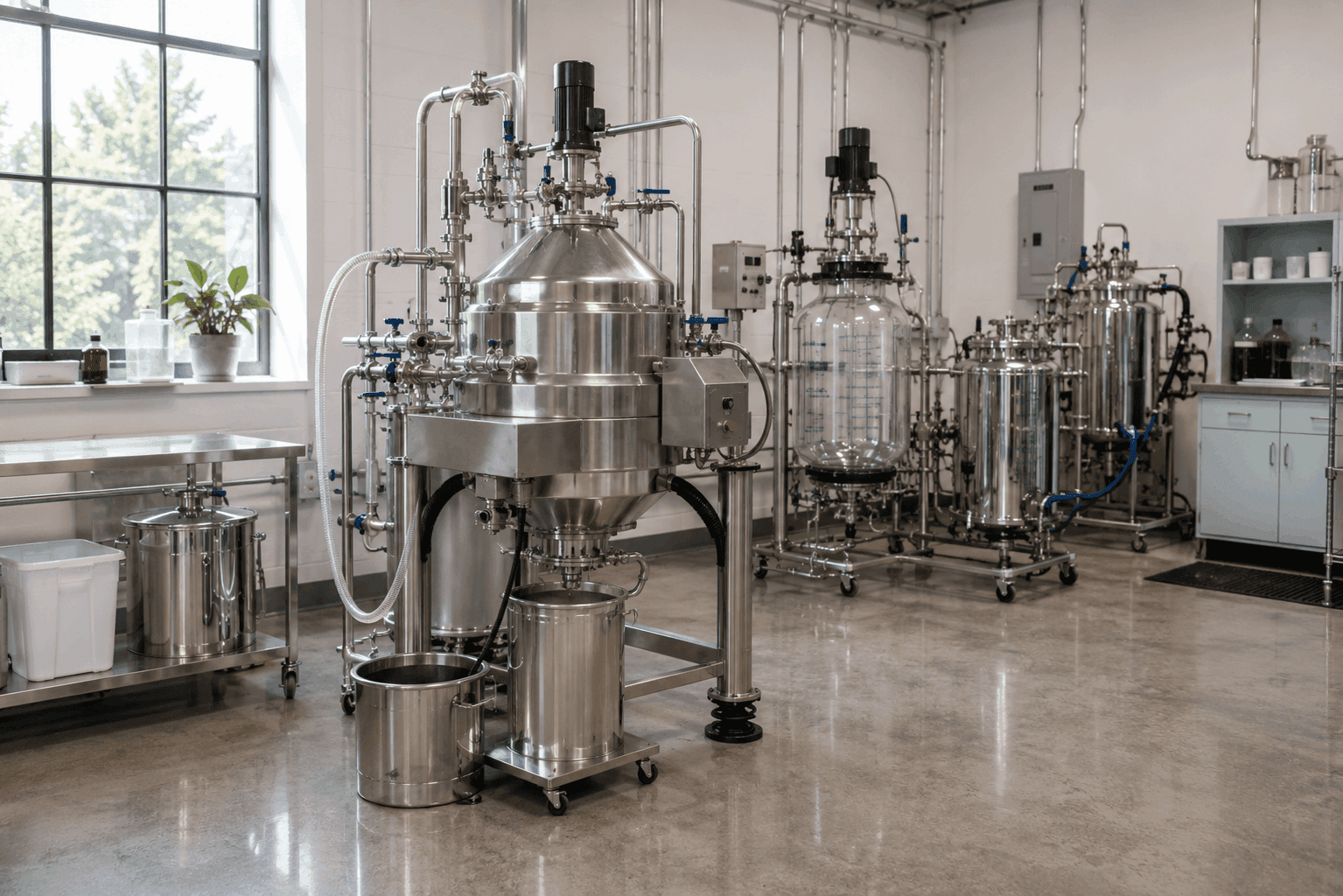
As cannabis extraction workflows become more advanced, processors are constantly looking for ways to improve throughput, increase solvent recovery, and reduce production bottlenecks. One piece of equipment that plays a major role in achieving those goals is the cannabis centrifuge.
Many new extraction labs underestimate how important biomass separation becomes during high-volume production. Without efficient separation systems, extraction workflows can slow down dramatically, creating delays in solvent recovery, post-processing, and downstream refinement.
A cannabis centrifuge helps streamline this process by rapidly separating solvents from extracted biomass after extraction is complete. This improves workflow speed, reduces solvent waste, and helps extraction labs operate more efficiently at scale.
At Green Lab Gear, our extraction equipment ecosystem is designed to support scalable processing environments with practical workflow integration and dependable operational efficiency.
Understanding how centrifuges work and when to use them can help cannabis processors build faster, more reliable extraction workflows while improving long-term production scalability.
TLDR Guide
A cannabis centrifuge is used to separate solvents from extracted biomass after the extraction process is complete.
Cannabis labs use centrifuges to:
- improve extraction throughput
- recover more solvent
- reduce processing time
- improve operational efficiency
- streamline post-processing workflows
Centrifuges are especially useful for:
- ethanol extraction
- high-volume biomass processing
- solvent recovery workflows
- scalable production environments
Supporting equipment commonly integrated with centrifuges includes:
- extractors
- solvent recovery systems
Labs processing larger biomass volumes often benefit significantly from centrifuge-assisted workflows because they reduce bottlenecks and improve production speed.
Detailed Breakdown
What Is a Cannabis Centrifuge?
A Cannabis Centrifuge is a separation system designed to rapidly remove solvents from extracted biomass using centrifugal force.
After cannabinoids and terpenes are extracted from cannabis plant material, the remaining biomass still contains residual solvent. Instead of relying on slower gravity-based draining methods, centrifuges spin the biomass at high speeds to force solvents outward and separate them more efficiently.
This process helps cannabis labs:
- recover more solvent
- reduce extraction cycle time
- improve throughput
- minimize waste
- streamline production
Centrifuges are commonly used in ethanol extraction workflows where rapid biomass separation is critical for maintaining operational efficiency.
How Cannabis Centrifuges Work
The process begins after extraction is completed.
Biomass saturated with solvent is loaded into the centrifuge basket. As the machine spins at high speeds, centrifugal force pushes the solvent outward through filtration surfaces while retaining the plant material inside.
The recovered solvent is then collected for reuse or further processing.
This separation process helps:
- reduce solvent retention
- improve extraction efficiency
- accelerate production cycles
- improve solvent recovery integration
Compared to manual draining methods, centrifuges dramatically increase workflow speed and operational consistency.
Why Cannabis Labs Use Centrifuges
Faster Extraction Throughput
One of the biggest advantages of centrifuges is improved production speed.
Without centrifuges, solvent removal from biomass can take significant time and slow the entire extraction workflow.
Centrifuge-assisted separation helps labs:
- process more biomass daily
- reduce extraction downtime
- improve scheduling efficiency
- maintain smoother workflows
As production volume increases, these efficiency gains become increasingly important.
Improved Solvent Recovery
Residual solvent trapped inside biomass represents lost operational value.
Centrifuges help recover additional solvent before the biomass is discarded, improving:
- solvent efficiency
- operating margins
- recovery performance
- overall workflow sustainability
This becomes especially valuable in high-volume extraction environments where solvent costs can become substantial over time.
Reduced Manual Labor
Manual biomass handling slows production and increases labor requirements.
Centrifuges help automate separation stages and reduce:
- manual draining
- material handling time
- operator workload
- workflow interruptions
More automated workflows typically improve:
- consistency
- throughput
- operational reliability
When Should You Use a Cannabis Centrifuge?
During Ethanol Extraction
Centrifuges are most commonly used in ethanol extraction workflows because ethanol processing often involves large solvent volumes and high biomass throughput.
Labs using ethanol extraction frequently rely on centrifuges to:
- accelerate separation
- recover solvent faster
- improve production efficiency
High-volume ethanol workflows benefit heavily from rapid biomass processing.
When Scaling Production
Small batch extraction labs may initially operate without centrifuges.
However, as throughput increases, manual separation workflows often create:
- bottlenecks
- slower cycle times
- inefficient solvent recovery
- increased labor costs
Centrifuges help support scalable production environments by streamlining material handling and solvent separation.
When Solvent Recovery Efficiency Matters
Labs focused on improving solvent recovery often integrate centrifuges alongside dedicated recovery systems.
Solvent Recovery Systems work more efficiently when upstream biomass separation is optimized.
By removing more solvent before recovery processing begins, centrifuges help:
- reduce recovery load
- improve solvent reuse
- shorten processing cycles
Workflow integration between centrifuges and solvent recovery systems creates stronger operational efficiency.
How Centrifuges Fit Into the Extraction Workflow
Centrifuges are not standalone systems. They work as part of a larger extraction ecosystem.
A typical workflow may include:
- extraction
- biomass separation
- solvent recovery
- post-processing
- refinement
Extractors perform the initial cannabinoid separation from biomass, while centrifuges improve downstream solvent handling efficiency.
Integrated workflows help labs maintain:
- stable throughput
- faster processing cycles
- reduced downtime
- more efficient solvent management
Balanced system integration is critical for large-scale production environments.
Benefits of Cannabis Centrifuges for Commercial Labs
Better Workflow Scalability
As production demand grows, centrifuges help facilities:
- process larger biomass volumes
- maintain workflow speed
- reduce production bottlenecks
This supports smoother scaling without requiring major workflow redesigns.
Improved Operational Consistency
Automated separation creates more repeatable processing conditions.
Consistent workflows help improve:
- solvent recovery rates
- production predictability
- extraction efficiency
- operational stability
Consistency becomes increasingly important for commercial cannabis operations.
Lower Long-Term Operating Costs
While centrifuges require upfront investment, they often reduce:
- labor expenses
- solvent waste
- production delays
- workflow inefficiencies
Over time, improved throughput and solvent recovery can significantly improve operational economics.
Common Mistakes Cannabis Labs Make
Waiting Too Long to Add a Centrifuge
Many facilities continue using manual separation workflows long after production demand has outgrown them.
This often creates:
- bottlenecks
- inconsistent cycle times
- excessive labor demands
Centrifuges are frequently one of the most impactful throughput upgrades available for growing extraction labs.
Ignoring Workflow Integration
Adding a centrifuge alone does not automatically solve workflow inefficiencies.
Labs should evaluate:
- extraction speed
- solvent recovery capacity
- downstream processing
- material handling logistics
Balanced workflows always outperform isolated equipment upgrades.
Underestimating Solvent Recovery Losses
Residual solvent trapped in biomass can become a major hidden operational expense over time.
Efficient separation systems help reduce unnecessary solvent loss and improve production sustainability.
Key Takeaways
A cannabis centrifuge helps extraction labs improve solvent separation, increase throughput, and reduce workflow bottlenecks during post-extraction processing.
Centrifuges are especially valuable for:
- ethanol extraction
- high-volume biomass processing
- scalable production environments
- solvent recovery optimization
When integrated with extractors and solvent recovery systems, centrifuges help create more efficient and reliable extraction workflows.
At Green Lab Gear, our extraction equipment ecosystem is designed to support scalable cannabis processing with practical workflow integration and dependable operational performance.
FAQs
What does a cannabis centrifuge do?
A cannabis centrifuge separates solvents from extracted biomass using centrifugal force. The system spins biomass at high speeds to recover residual solvent more efficiently than manual draining methods. This helps improve throughput and solvent recovery performance.
Why are centrifuges important in ethanol extraction?
Ethanol extraction workflows often process large biomass volumes and require efficient solvent separation. Centrifuges help accelerate post-extraction processing and reduce solvent retention inside biomass. This improves production speed and workflow efficiency.
Can a cannabis lab operate without a centrifuge?
Yes, smaller labs can operate without centrifuges during early production stages. However, as throughput increases, manual separation methods often create bottlenecks and labor inefficiencies. Many growing facilities eventually add centrifuges to improve scalability.
How do centrifuges improve solvent recovery?
Centrifuges remove more residual solvent from biomass before disposal or downstream processing. This reduces solvent waste and improves recovery efficiency. Better solvent recovery can also lower long-term operating costs.
What equipment is commonly used alongside cannabis centrifuges?
Centrifuges are commonly integrated with extractors and solvent recovery systems. Extractors separate cannabinoids from biomass, while centrifuges improve solvent separation after extraction. Solvent recovery systems then help recycle solvents for future production cycles.