Cannabis Extraction Lab Requirements: Equipment, Safety, and Workflow Basics
Learn the essential cannabis extraction lab requirements including equipment, safety systems, workflow planning, and processing efficiency.
Introduction
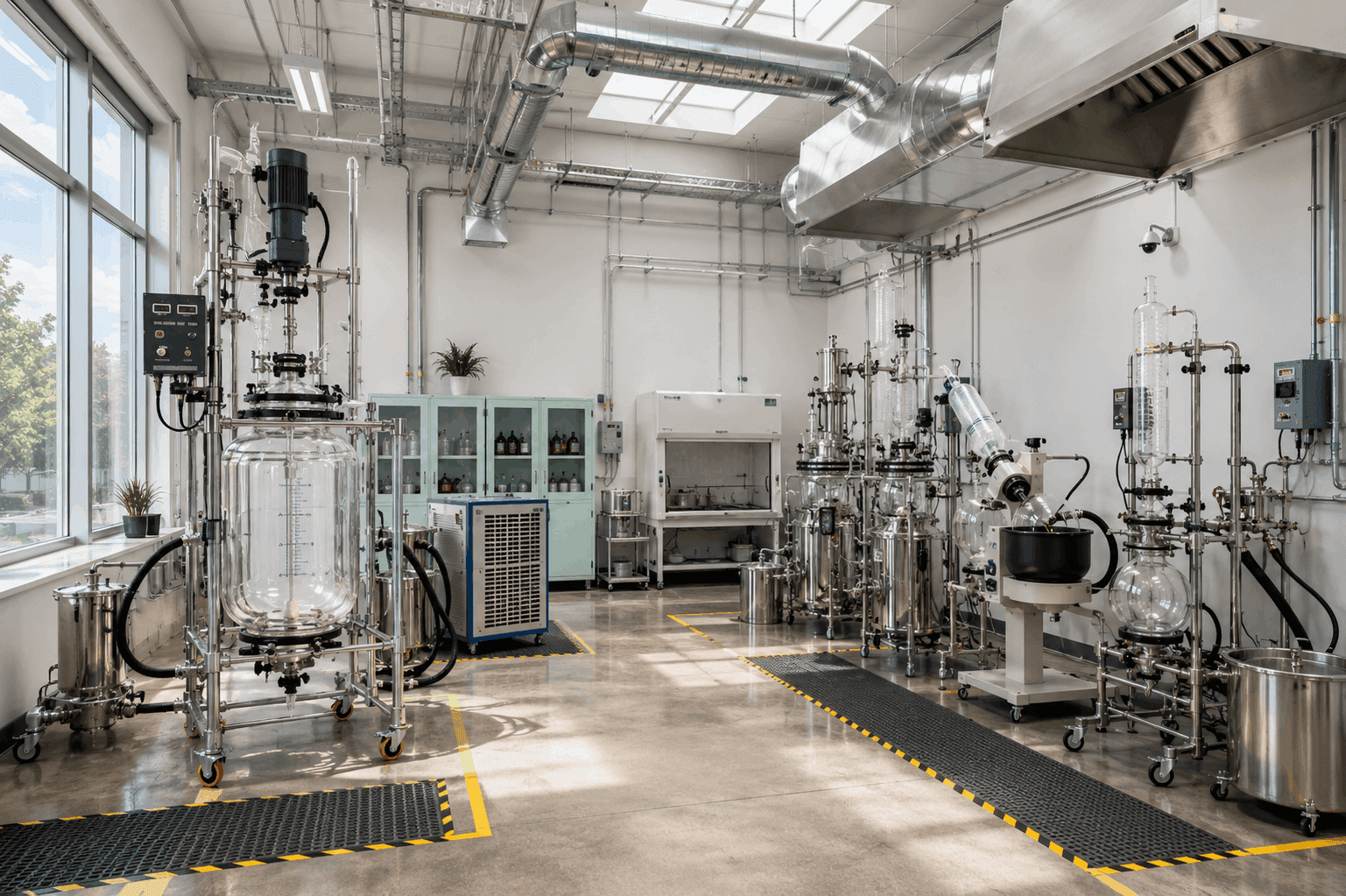
Building a cannabis extraction facility involves far more than purchasing extraction equipment and starting production. Modern cannabis labs require carefully planned workflows, proper safety systems, reliable temperature control, and integrated processing infrastructure that can support long-term operational efficiency.
Many new operators underestimate how complex cannabis extraction lab requirements actually are. A facility may have high-quality equipment, but without proper workflow planning and environmental controls, production bottlenecks, safety issues, and inconsistent extraction quality can quickly become major operational problems.
Cannabis extraction environments must balance:
- production efficiency
- worker safety
- temperature stability
- solvent management
- workflow scalability
- compliance readiness
At Green Lab Gear, our extraction equipment ecosystem is designed to support practical lab workflows with scalable processing infrastructure built around real-world production demands.
Whether launching a small extraction facility or scaling toward commercial production, understanding the core requirements of a cannabis extraction lab is essential before investing in equipment or designing workflows.
TLDR Guide
Cannabis extraction lab requirements include much more than extraction machines alone. Labs must create integrated systems that support safe solvent handling, efficient workflow movement, stable temperature control, and scalable post-processing.
Key areas every cannabis extraction lab should plan for include:
- extraction equipment
- solvent recovery systems
- temperature management
- ventilation and safety
- workflow efficiency
- storage infrastructure
- post-processing capacity
Core equipment categories often include:
- extractors
- reactors
- rotary evaporators
- vacuum pumps
- refrigerators and freezers
Labs that build around complete workflow integration typically experience:
- improved production consistency
- safer operations
- reduced downtime
- better scalability
- stronger long-term efficiency
Proper planning before purchasing equipment can prevent expensive redesigns and operational bottlenecks later.
Detailed Breakdown
Understanding Cannabis Extraction Lab Requirements
Cannabis extraction labs are specialized production environments designed to separate cannabinoids and terpenes from plant material while maintaining product quality and operational safety.
A properly designed extraction lab must support:
- solvent-based processing
- controlled temperatures
- safe chemical handling
- post-processing workflows
- efficient material movement
Extraction workflows often involve multiple stages, including:
- biomass preparation
- extraction
- filtration
- solvent recovery
- winterization
- distillation
- formulation
Each stage requires compatible equipment and properly coordinated infrastructure.
Labs that fail to plan around workflow integration often encounter:
- production bottlenecks
- inconsistent extraction quality
- excessive solvent waste
- inefficient labor usage
- limited scalability
Building around long-term operational goals creates more reliable production environments.
Essential Extraction Equipment
Extractors
Extractors form the foundation of most cannabis extraction labs. These systems are responsible for separating cannabinoids and terpenes from raw plant material using solvents such as ethanol or hydrocarbons.
Extraction systems vary depending on:
- production scale
- solvent type
- throughput goals
- workflow design
Processors should evaluate:
- batch capacity
- cycle speed
- solvent compatibility
- automation capabilities
- scalability potential
Choosing the correct extraction system is critical because upstream extraction speed affects every downstream process.
Reactors
Reactors are commonly used during post-processing and refinement stages.
Cannabis labs use reactors for:
- winterization
- cannabinoid isolation
- formulation work
- chemical processing
- temperature-controlled mixing
Reactors help improve:
- process consistency
- thermal stability
- formulation precision
- production flexibility
Temperature-controlled reactor systems are especially important in cannabinoid refinement workflows.
Rotary Evaporators
Rotary Evaporators play a major role in solvent recovery and post-processing efficiency.
These systems help:
- recover ethanol
- remove solvents from extracts
- improve operational efficiency
- reduce solvent waste
Efficient solvent recovery directly impacts:
- operating costs
- throughput speed
- extraction consistency
Many labs underestimate how important solvent recovery becomes as production scales.
Vacuum Pumps
Vacuum Pumps support multiple stages of cannabis processing by lowering system pressure and improving thermal efficiency.
Vacuum-assisted workflows help:
- reduce boiling points
- protect sensitive cannabinoids
- improve solvent recovery
- increase purification efficiency
Vacuum systems are often integrated into:
- rotary evaporators
- distillation systems
- reactors
- filtration setups
Stable vacuum performance is essential for consistent extraction quality.
Refrigerators & Freezers
Refrigerators & Freezers are critical for temperature-sensitive storage and winterization workflows.
Cannabis labs rely on cold storage systems for:
- biomass preservation
- solvent chilling
- extract stabilization
- terpene protection
- winterization preparation
Proper refrigeration infrastructure helps maintain:
- product integrity
- extraction consistency
- solvent performance
- workflow stability
Temperature management becomes increasingly important as production volume increases.
Safety Requirements for Cannabis Extraction Labs
Ventilation and Airflow
Extraction labs must maintain proper airflow and ventilation systems to reduce solvent vapor accumulation.
Poor ventilation can create:
- safety hazards
- solvent exposure risks
- unstable working environments
Facilities should evaluate:
- air exchange rates
- exhaust systems
- vapor containment
- environmental monitoring
Safe solvent handling is one of the most important operational priorities in extraction environments.
Temperature Control
Temperature fluctuations can negatively affect:
- solvent performance
- extraction consistency
- terpene preservation
- cannabinoid stability
Labs should maintain controlled processing temperatures across all workflow stages.
Stable temperature management improves:
- extraction efficiency
- product quality
- operational reliability
Cooling systems and environmental controls play major roles in workflow consistency.
Equipment Layout and Workflow Planning
Poor equipment placement can create unnecessary workflow inefficiencies.
Extraction labs should optimize:
- material movement
- operator access
- solvent handling paths
- storage accessibility
- cleaning workflows
Efficient layouts help reduce:
- downtime
- contamination risks
- labor inefficiencies
- production delays
Workflow planning should always happen before purchasing equipment.
Workflow Basics Every Cannabis Lab Should Understand
Biomass Intake and Preparation
The workflow begins with receiving and preparing cannabis biomass.
Labs must establish systems for:
- storage
- weighing
- preparation
- material handling
- contamination prevention
Consistent preparation improves downstream extraction efficiency.
Extraction and Solvent Handling
During extraction, cannabinoids are separated using controlled solvent interaction.
Labs should monitor:
- solvent ratios
- extraction timing
- temperature conditions
- pressure stability
Proper solvent management directly impacts extraction quality and operational safety.
Solvent Recovery and Post-Processing
After extraction, solvents must be removed efficiently and safely.
This stage often includes:
- rotary evaporation
- filtration
- winterization
- distillation
Efficient solvent recovery improves:
- operating margins
- throughput speed
- workflow sustainability
Storage and Product Stability
Finished extracts and intermediate materials require proper storage conditions.
Labs should maintain:
- temperature stability
- contamination control
- inventory organization
- product traceability
Improper storage can reduce product quality and create workflow disruptions.
Common Mistakes New Extraction Labs Make
Buying Equipment Before Planning Workflow
Many facilities purchase equipment before calculating:
- throughput needs
- utility requirements
- production flow
- scaling goals
This often leads to expensive redesigns later.
Ignoring Solvent Recovery Capacity
Some labs focus heavily on extraction speed while underestimating solvent recovery requirements.
Poor recovery integration creates:
- bottlenecks
- increased operating costs
- slower production cycles
Balanced workflows are essential for efficient scaling.
Underestimating Temperature Management
Temperature instability affects:
- extraction consistency
- cannabinoid preservation
- solvent performance
Reliable cooling and refrigeration infrastructure should never be treated as secondary equipment.
Building a Scalable Cannabis Extraction Lab
Scalable extraction environments are built around workflow integration rather than isolated equipment purchases.
Successful facilities typically prioritize:
- balanced throughput
- modular scalability
- solvent efficiency
- stable temperature control
- operational flexibility
Planning for future production growth helps labs avoid:
- workflow redesigns
- equipment replacement
- production downtime
Facilities that invest in properly integrated systems usually achieve stronger long-term operational efficiency.
Key Takeaways
Understanding cannabis extraction lab requirements is critical for building safe, scalable, and efficient processing environments.
Modern extraction labs require more than extraction machines alone. Facilities must integrate:
- extraction systems
- post-processing equipment
- solvent recovery infrastructure
- temperature control
- workflow planning
- storage systems
Equipment such as extractors, reactors, rotary evaporators, vacuum pumps, and refrigeration systems all play important roles in maintaining operational stability and extraction consistency.
At Green Lab Gear, our processing equipment ecosystem is designed to support real-world extraction workflows with scalable infrastructure and dependable operational performance.
FAQs
What equipment is required for a cannabis extraction lab?
Most cannabis extraction labs require extractors, reactors, rotary evaporators, vacuum pumps, and refrigeration systems. Additional equipment may include filtration systems, chillers, centrifuges, and distillation equipment. The exact setup depends on production scale and extraction method.
Why are vacuum pumps important in cannabis extraction?
Vacuum pumps help lower system pressure during extraction and post-processing workflows. This improves solvent recovery efficiency and protects sensitive cannabinoids from excessive heat exposure. Stable vacuum performance also supports more consistent processing outcomes.
What role do refrigerators and freezers play in extraction labs?
Refrigerators and freezers help maintain temperature stability during biomass storage, solvent chilling, and winterization workflows. Proper cooling helps preserve cannabinoids and terpenes while improving extraction consistency. Temperature control is essential for stable processing conditions.
Why is workflow planning important in cannabis extraction labs?
Workflow planning helps labs avoid bottlenecks, downtime, and inefficient material movement. Proper equipment placement and throughput balancing improve operational efficiency and scalability. Labs that plan workflows early often reduce costly redesigns later.
How can cannabis labs improve extraction efficiency?
Labs can improve efficiency by integrating properly sized equipment, optimizing solvent recovery, maintaining stable temperatures, and balancing throughput across all processing stages. Efficient workflows reduce downtime and improve production consistency. Scalable infrastructure also supports long-term operational growth.