Cannabis Extraction Workflow Explained: From Biomass to Distillate
Learn the complete cannabis extraction workflow from biomass processing to distillate production and post-processing efficiency.
Introduction
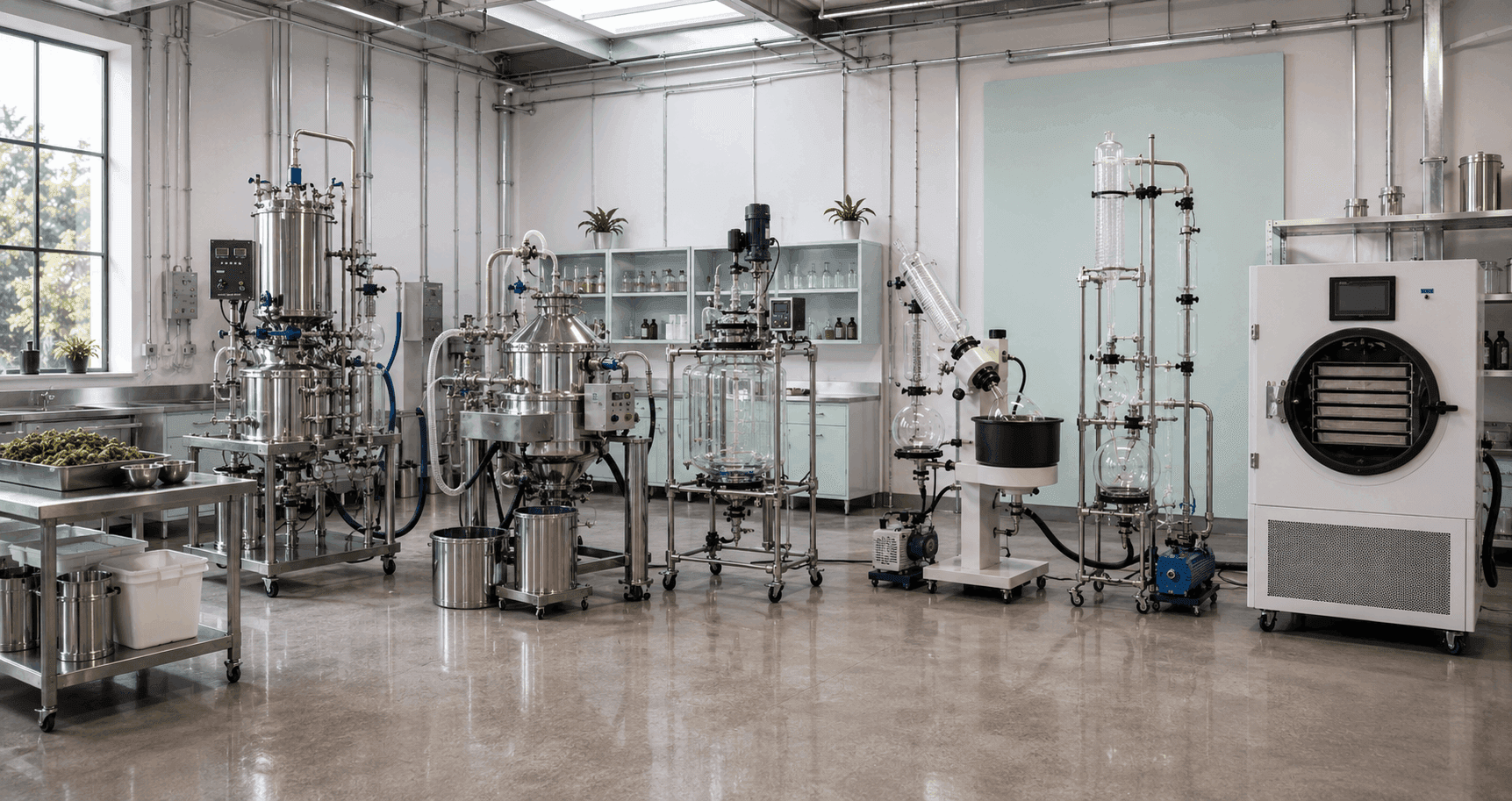
Modern cannabis extraction is far more than simply pulling cannabinoids from plant material. Today’s extraction facilities rely on carefully integrated systems that move biomass through multiple processing stages before producing refined oils, concentrates, and distillates.
Understanding the cannabis extraction workflow is critical for building efficient production environments, choosing the right equipment, and avoiding operational bottlenecks that can slow growth and increase costs.
From initial extraction to final purification, every stage of the workflow affects:
- throughput efficiency
- solvent recovery
- cannabinoid preservation
- terpene retention
- final product consistency
Many new extraction labs focus heavily on one machine while overlooking how every processing stage connects together. In reality, successful extraction facilities are built around balanced workflows instead of isolated equipment purchases.
At Green Lab Gear, our extraction and post-processing equipment ecosystem is designed to support scalable cannabis workflows with dependable operational integration across every stage of production.
Whether you are launching a new extraction facility or optimizing an existing operation, understanding the full extraction process can help improve efficiency, scalability, and long-term production stability.
TLDR Guide
The cannabis extraction workflow involves multiple connected stages that transform raw biomass into refined cannabinoid products such as distillates and concentrates.
The general workflow includes:
- biomass preparation
- extraction
- solvent separation
- solvent recovery
- refinement
- distillation
- post-processing
Key equipment commonly used throughout the process includes:
- extractors
- centrifuges
- rotary evaporators
- distillation equipment
- freeze dryers
Each stage affects:
- throughput
- extraction quality
- operational efficiency
- solvent recovery
- final product consistency
Balanced workflow integration is essential for maintaining stable production and scalable operations.
Detailed Breakdown
Step 1: Biomass Preparation
Every cannabis extraction workflow begins with biomass preparation.
Before extraction starts, cannabis material must be:
- stored properly
- inspected
- prepared consistently
- organized for throughput efficiency
Biomass quality directly affects:
- cannabinoid yield
- extraction efficiency
- terpene preservation
- downstream processing consistency
Proper preparation may include:
- grinding
- moisture stabilization
- freezing
- batch organization
Labs that maintain consistent biomass handling procedures typically achieve more predictable extraction results.
Environmental control during storage is also critical because excessive moisture or temperature instability can negatively affect extraction quality later in the workflow.
Step 2: Cannabinoid Extraction
The next stage involves separating cannabinoids and terpenes from the plant material.
Extractors are responsible for performing this primary separation process using solvents such as ethanol or hydrocarbons.
Extraction systems help processors:
- isolate cannabinoids
- preserve terpene profiles
- maximize yield efficiency
- support scalable throughput
Extraction speed and efficiency depend on:
- solvent selection
- temperature control
- extraction cycle timing
- biomass preparation quality
This stage forms the foundation of the entire production workflow.
Poor extraction consistency often creates downstream problems during:
- solvent recovery
- distillation
- refinement
- formulation
Efficient extraction systems help stabilize the entire processing pipeline.
Step 3: Biomass Separation and Solvent Removal
After extraction is complete, the remaining biomass still contains residual solvent that must be separated efficiently.
Centrifuges help automate this process by rapidly separating solvents from extracted biomass using centrifugal force.
This stage improves:
- throughput speed
- solvent recovery efficiency
- operational consistency
- workflow scalability
Without efficient separation systems, production bottlenecks can quickly develop during high-volume processing.
Centrifuges help labs:
- reduce manual labor
- improve solvent recovery
- accelerate cycle times
- streamline extraction workflows
As production scales, separation efficiency becomes increasingly important for maintaining operational flow.
Step 4: Solvent Recovery
Once cannabinoids are separated from biomass, the extracted solution still contains large amounts of solvent that must be recovered before refinement.
Rotary Evaporators are commonly used during solvent recovery workflows.
These systems help:
- recover ethanol
- remove residual solvents
- reduce operational waste
- improve extraction economics
Rotary evaporation relies on:
- controlled heating
- vacuum pressure
- condensation systems
- stable temperature regulation
Efficient solvent recovery directly affects:
- operating costs
- throughput speed
- workflow consistency
- scalability
Many extraction facilities underestimate how much production efficiency depends on properly integrated recovery systems.
Step 5: Winterization and Refinement
After solvent recovery, crude oil often contains:
- fats
- waxes
- lipids
- chlorophyll
- unwanted compounds
These impurities must be removed before final distillation.
Winterization and refinement workflows help improve:
- oil clarity
- cannabinoid purity
- formulation consistency
- final product quality
Temperature control and filtration become especially important during this stage.
Proper refinement helps create:
- cleaner concentrates
- more stable formulations
- higher-quality distillates
Workflow precision becomes increasingly important as products move closer to final refinement.
Step 6: Distillation and Cannabinoid Purification
Distillation Equipment is used to purify cannabinoids and separate them from remaining impurities.
Distillation helps processors produce:
- THC distillate
- CBD distillate
- refined concentrates
- purified cannabinoid oils
The process uses:
- vacuum pressure
- controlled heat
- vapor separation
- condensation
Distillation systems help improve:
- cannabinoid concentration
- product purity
- formulation consistency
- final product stability
Stable temperature and vacuum control are essential during purification because excessive heat exposure can degrade cannabinoids and terpenes.
Efficient distillation workflows also help maintain:
- repeatable production standards
- scalable throughput
- consistent formulation quality
Step 7: Freeze Drying and Post-Processing Stabilization
Some cannabis workflows also include post-processing stabilization stages.
Freeze Dryers help remove moisture under controlled low-temperature conditions while preserving sensitive compounds.
Freeze drying supports:
- terpene preservation
- moisture stabilization
- product consistency
- long-term storage quality
This stage helps reduce:
- degradation risks
- oxidation
- environmental instability
Controlled drying workflows improve overall product quality and downstream formulation reliability.
Freeze drying is especially valuable for:
- concentrates
- terpene-sensitive products
- post-processing stabilization
Why Workflow Integration Matters
Many extraction labs focus too heavily on individual machines instead of total workflow efficiency.
In reality, the cannabis extraction workflow is only as strong as its slowest stage.
For example:
- a fast extractor means little if solvent recovery is slow
- efficient distillation cannot compensate for poor refinement
- large throughput systems fail if separation creates bottlenecks
Balanced workflow integration helps facilities maintain:
- stable production speed
- operational consistency
- scalable infrastructure
- predictable throughput
Facilities that prioritize system coordination often experience:
- lower downtime
- improved extraction quality
- stronger scalability
- better long-term operational efficiency
Common Cannabis Extraction Workflow Mistakes
Oversizing One Stage of Production
Many facilities invest heavily in extraction capacity while neglecting:
- solvent recovery
- separation systems
- post-processing infrastructure
Balanced throughput matters more than isolated machine size.
Ignoring Temperature Stability
Temperature fluctuations can affect:
- cannabinoid preservation
- solvent performance
- terpene retention
- refinement quality
Reliable cooling and thermal management remain critical throughout the workflow.
Underestimating Solvent Recovery Importance
Poor solvent recovery often creates:
- operational inefficiencies
- increased costs
- production slowdowns
Efficient recovery systems help stabilize the entire extraction process.
Key Takeaways
The cannabis extraction workflow involves multiple connected stages that transform raw biomass into refined distillates and concentrates.
A successful workflow typically includes:
- extraction
- biomass separation
- solvent recovery
- refinement
- distillation
- post-processing stabilization
Equipment such as extractors, centrifuges, rotary evaporators, distillation systems, and freeze dryers all play important roles in maintaining efficient and scalable production environments.
At Green Lab Gear, our extraction and post-processing equipment ecosystem is designed to support practical cannabis workflows with dependable operational integration and scalable infrastructure planning.
FAQs
What is the cannabis extraction workflow?
The cannabis extraction workflow refers to the complete process of converting raw cannabis biomass into refined concentrates and distillates. This includes extraction, solvent recovery, refinement, distillation, and post-processing stages. Each stage affects overall production efficiency and product quality.
Why are centrifuges important in cannabis extraction?
Centrifuges help separate solvents from extracted biomass after extraction is complete. This improves throughput speed and solvent recovery efficiency. Automated separation also reduces manual labor and workflow bottlenecks.
What role do rotary evaporators play in extraction workflows?
Rotary evaporators help recover solvents from extracted cannabis oil during post-processing. Efficient solvent recovery reduces waste and improves operational economics. Stable recovery workflows also support better throughput consistency.
Why is distillation important in cannabis processing?
Distillation helps purify cannabinoids and remove remaining impurities from crude oil. This process creates higher-purity cannabinoid concentrates and distillates. Controlled distillation workflows improve product consistency and formulation quality.
How do freeze dryers improve cannabis post-processing?
Freeze dryers remove moisture under low-temperature vacuum conditions to preserve sensitive cannabinoids and terpenes. This improves product stability and long-term storage quality. Controlled freeze drying also helps maintain better formulation consistency.