10 Common Cannabis Lab Equipment Mistakes First-Time Operators Make
Learn the most common cannabis lab equipment mistakes new extraction operators make and how to avoid costly workflow problems.
Introduction
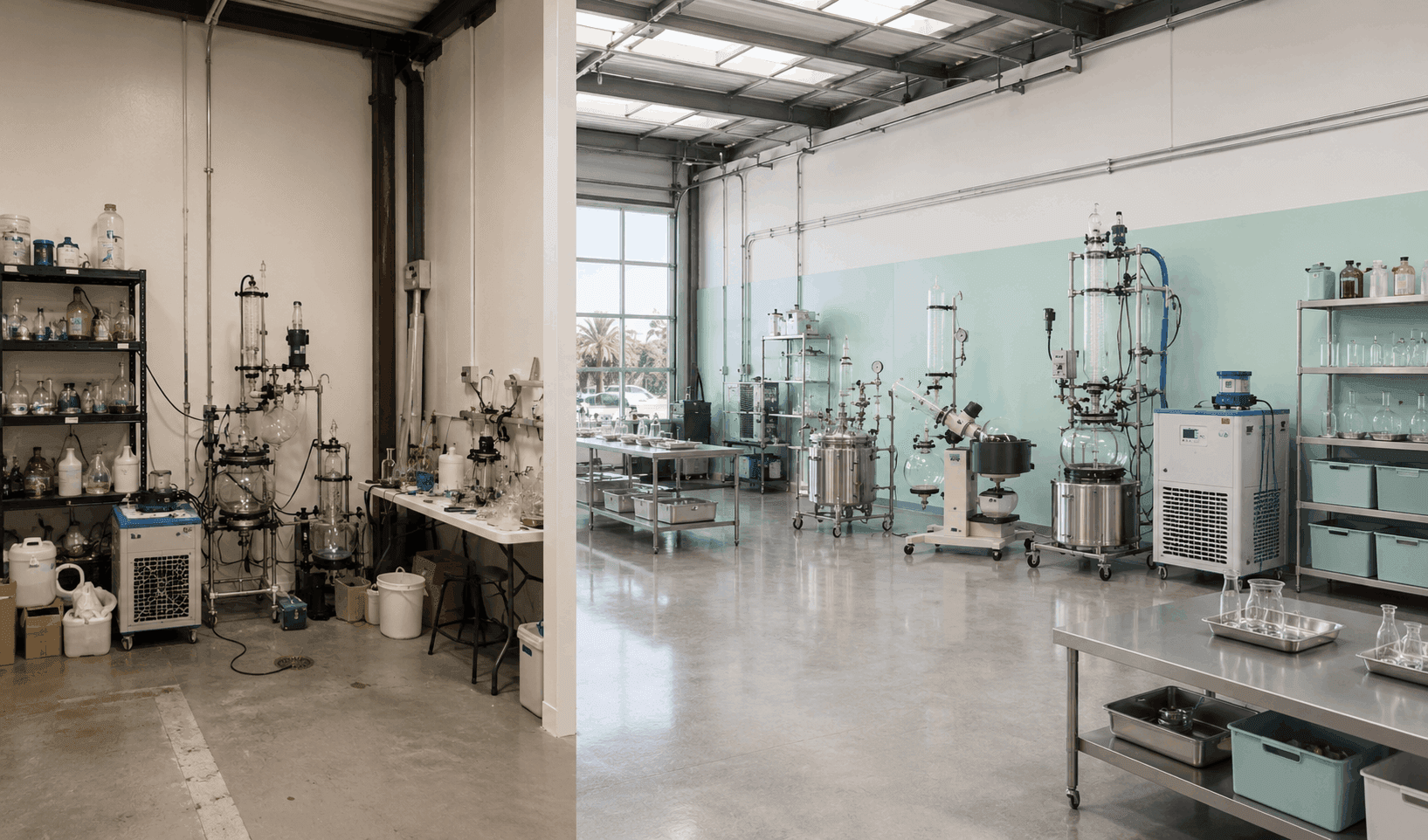
Launching a cannabis extraction lab is a major investment, but many first-time operators quickly discover that buying equipment is only one part of building a successful production environment. Workflow efficiency, solvent recovery, cooling infrastructure, scalability, and post-processing integration all play critical roles in long-term operational performance.
Unfortunately, many new facilities make the same cannabis lab equipment mistakes during the early planning stages. These mistakes often lead to:
- production bottlenecks
- inconsistent extraction quality
- expensive redesigns
- excessive operating costs
- workflow instability
- delayed scaling
In many cases, the issue is not the quality of the equipment itself. The problem is poor workflow planning and unrealistic production assumptions.
At Green Lab Gear, our extraction and post-processing equipment ecosystem is designed to support scalable cannabis workflows with dependable operational integration and practical infrastructure planning.
Understanding the most common equipment mistakes can help new operators build more efficient extraction environments while avoiding costly operational setbacks later.
TLDR – Quick Guide
- Avoid buying equipment before finalizing your production workflow.
- Don't size equipment based solely on future growth projections.
- Budget for infrastructure, utilities, and compliance—not just machinery.
- Ensure all equipment capacities work together to prevent bottlenecks.
- Invest in operator training as early as possible.
- The most expensive mistake is replacing poorly planned equipment later.
Detailed Breakdown
Mistake #1: Buying the Biggest Equipment Immediately
One of the most common first-time operator mistakes is purchasing oversized extraction equipment before actual production demand justifies it.
Many new labs assume:
- larger machines automatically improve profitability
- maximum throughput guarantees success
- industrial systems are always better
In reality, oversized equipment often creates:
- underutilized infrastructure
- excessive utility costs
- increased maintenance complexity
- inefficient workflows
Smaller, balanced systems frequently provide:
- easier operation
- better workflow control
- more manageable scaling
- lower operational risk
The goal should be building stable workflows first before aggressively expanding production capacity.
Mistake #2: Ignoring Solvent Recovery Bottlenecks
Many operators focus heavily on extraction speed while underestimating how important solvent recovery becomes during production.
Rotary Evaporators play a critical role in maintaining efficient post-processing workflows and solvent recycling.
Poor recovery planning often creates:
- production backups
- delayed extraction cycles
- excessive solvent waste
- throughput limitations
A fast extractor means little if recovery systems cannot keep pace.
Balanced throughput between extraction and solvent recovery is essential for efficient production.
Mistake #3: Underestimating Cooling Requirements
Temperature control is one of the most overlooked parts of cannabis extraction workflow planning.
Recirculating Chillers help maintain stable operating temperatures during:
- extraction
- solvent recovery
- refinement
- condensation
- post-processing
Without reliable cooling infrastructure, facilities may experience:
- unstable extraction conditions
- poor solvent performance
- terpene degradation
- inconsistent product quality
As production scales, cooling demand increases significantly.
Many facilities discover too late that insufficient thermal infrastructure limits throughput more than extraction equipment itself.
Mistake #4: Treating Vacuum Infrastructure as Secondary Equipment
Vacuum Pumps support multiple stages of cannabis extraction and purification workflows.
Vacuum-assisted processing helps:
- lower boiling points
- improve solvent recovery
- reduce thermal degradation
- stabilize distillation workflows
Some first-time operators purchase inexpensive or undersized vacuum systems without considering:
- workflow demand
- chemical resistance
- recovery speed
- long-term reliability
Poor vacuum performance often creates:
- slower processing
- inconsistent refinement
- reduced throughput
- unstable extraction conditions
Vacuum infrastructure should always be treated as core production equipment rather than optional support equipment.
Mistake #5: Failing to Plan Around Workflow Integration
Many operators purchase equipment individually instead of planning how each stage interacts with the full extraction workflow.
For example:
- extraction may outpace solvent recovery
- refinement may slow downstream processing
- cooling infrastructure may not support increased throughput
Efficient cannabis extraction environments require balanced coordination between:
- extraction
- separation
- solvent recovery
- refinement
- temperature control
- post-processing
The slowest stage usually determines total production efficiency.
Workflow integration matters more than isolated machine performance.
Mistake #6: Choosing Equipment Without Future Scalability
Some facilities build workflows based only on immediate production demand.
This often creates:
- workflow redesigns
- expensive equipment replacement
- scaling limitations
- operational downtime
Reactors are a good example of equipment that should support future workflow flexibility.
Reactors commonly assist with:
- winterization
- formulation
- refinement
- cannabinoid isolation
Choosing scalable systems early helps facilities:
- expand gradually
- avoid production disruptions
- maintain operational consistency
Planning moderate future growth usually creates stronger long-term ROI.
Mistake #7: Ignoring Utility and Infrastructure Demands
Extraction equipment requires more than floor space alone.
Many first-time operators underestimate:
- electrical requirements
- cooling load
- ventilation needs
- plumbing infrastructure
- solvent storage requirements
As equipment size increases, utility demand often increases rapidly.
Ignoring infrastructure planning can create:
- installation delays
- compliance issues
- workflow instability
- expensive facility upgrades
Infrastructure planning should happen before purchasing major equipment systems.
Mistake #8: Focusing Only on Upfront Cost
The cheapest equipment is not always the most affordable long-term option.
Low-quality systems may create:
- inconsistent performance
- increased downtime
- higher maintenance costs
- reduced workflow efficiency
Reliable equipment often improves:
- operational consistency
- production speed
- solvent efficiency
- workflow stability
Long-term operational value matters more than lowest upfront pricing.
Mistake #9: Underestimating Post-Processing Complexity
Extraction is only one stage of cannabis manufacturing.
Many facilities fail to account for:
- winterization
- refinement
- distillation
- formulation
- stabilization
Post-processing often requires just as much planning as extraction itself.
Without balanced downstream infrastructure, production bottlenecks become inevitable.
Facilities should evaluate:
- throughput coordination
- thermal stability
- vacuum integration
- workflow timing
before scaling extraction aggressively.
Mistake #10: Expanding Too Fast Without Operational Stability
Some facilities attempt aggressive scaling before stabilizing:
- workflows
- staffing
- throughput coordination
- production consistency
Scaling unstable workflows usually increases:
- downtime
- waste
- operational inefficiencies
Successful extraction environments typically scale gradually while optimizing:
- recovery efficiency
- workflow integration
- operational consistency
Controlled scaling often creates more sustainable long-term growth.
Key Takeaways
Most cannabis lab equipment mistakes happen because facilities prioritize machine size over workflow balance and operational planning.
Common issues include:
- oversized equipment purchases
- weak solvent recovery infrastructure
- insufficient cooling systems
- poor vacuum integration
- limited scalability planning
Equipment such as rotary evaporators, reactors, recirculating chillers, and vacuum pumps all play essential roles in creating stable and scalable extraction environments.
Facilities that prioritize workflow integration, throughput balance, and long-term infrastructure planning usually achieve:
- stronger production consistency
- lower downtime
- improved scalability
- better operational efficiency
At Green Lab Gear, our extraction and post-processing equipment ecosystem is designed to support practical cannabis workflows with dependable operational integration and scalable production planning.
FAQs
What is the most common cannabis lab equipment mistake?
One of the most common mistakes is buying oversized equipment before actual production demand justifies it. This often increases operating costs and creates underutilized infrastructure. Balanced workflow planning is usually more important than maximum machine size.
Why is solvent recovery important in cannabis extraction?
Efficient solvent recovery helps reduce waste, improve throughput, and stabilize extraction workflows. Poor recovery systems often create production bottlenecks and increase operating costs. Rotary evaporators play a major role in maintaining recovery efficiency.
Why are recirculating chillers important in extraction labs?
Recirculating chillers help maintain stable temperatures during extraction and post-processing workflows. Temperature instability can affect solvent performance, terpene preservation, and extraction consistency. Cooling infrastructure becomes increasingly important as production scales.
How do vacuum pumps affect cannabis extraction workflows?
Vacuum pumps improve solvent recovery, distillation efficiency, and temperature-sensitive processing. Poor vacuum performance can slow workflows and reduce product consistency. Reliable vacuum infrastructure is essential for stable extraction environments.
How can first-time cannabis operators avoid workflow bottlenecks?
Facilities should focus on balancing throughput across extraction, recovery, cooling, refinement, and post-processing stages. Planning around total workflow integration helps prevent downstream production delays. Gradual scaling and infrastructure coordination usually create better long-term operational efficiency.