Ethanol Extraction Equipment List: Everything You Need to Start a Cannabis Lab
Discover the essential ethanol extraction equipment needed to build a scalable and efficient cannabis extraction lab.
Introduction
Ethanol extraction remains one of the most popular and scalable methods for cannabis processing because it offers high throughput, efficient cannabinoid recovery, and flexible production capabilities. However, building a successful ethanol extraction lab involves much more than simply purchasing an extractor.
Modern cannabis facilities require fully integrated workflows that support:
- biomass processing
- solvent handling
- temperature control
- solvent recovery
- refinement
- post-processing efficiency
Many new operators underestimate how interconnected extraction systems become once production begins. A fast extractor alone cannot create an efficient workflow if solvent recovery, cooling, or post-processing equipment cannot keep pace.
Understanding the complete ethanol extraction equipment ecosystem is essential for building a stable and scalable cannabis lab.
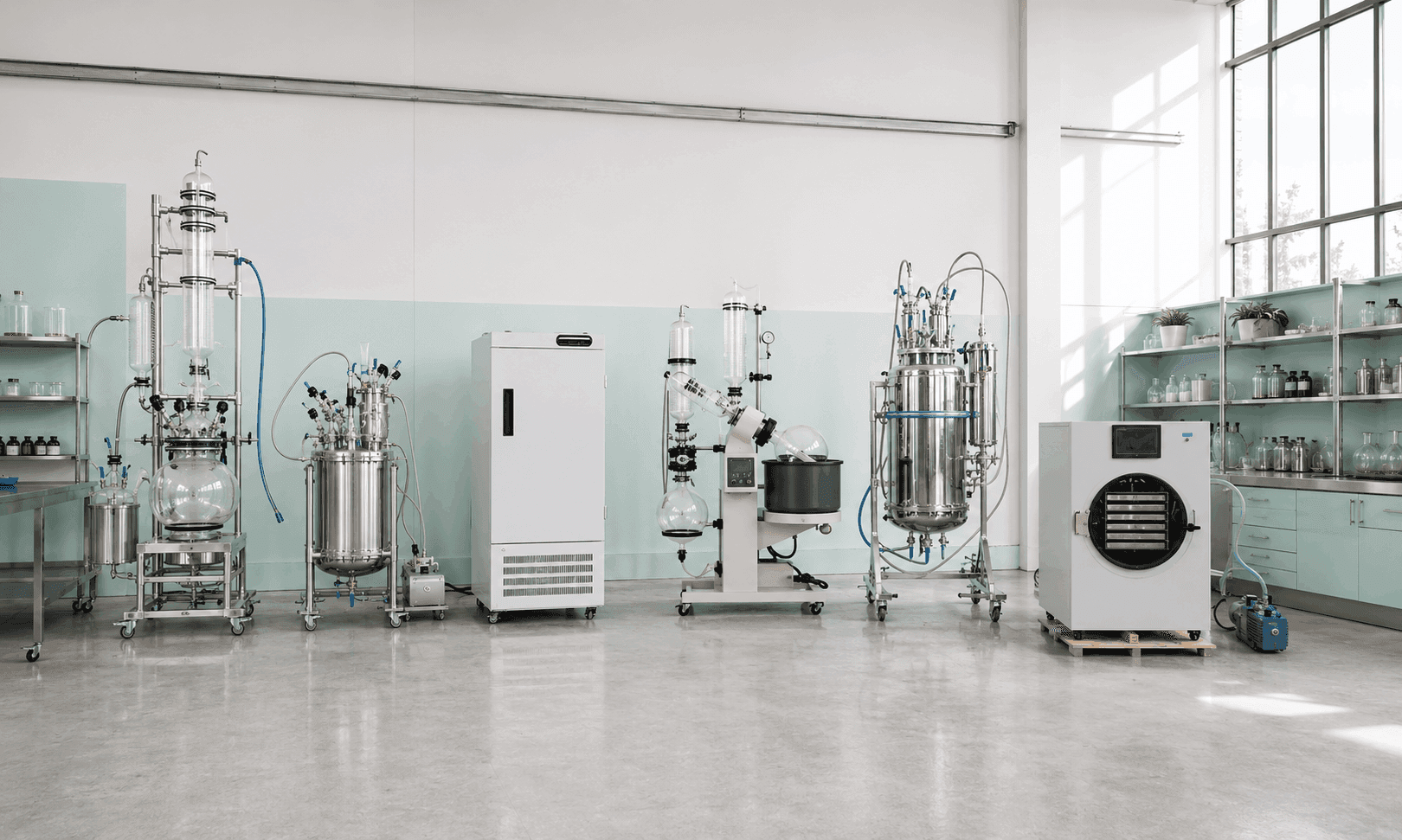
At Green Lab Gear, our extraction and post-processing equipment lineup is designed to support practical ethanol extraction workflows with dependable operational integration and scalable infrastructure planning.
Whether launching a startup extraction lab or scaling toward commercial production, choosing the right equipment from the beginning can dramatically improve workflow efficiency and long-term operational performance.
TLDR – Quick Guide
- A complete ethanol extraction workflow requires more than just an extractor.
- Core equipment includes a chiller, extraction vessel, filtration system, rotovap, and distillation equipment.
- Cold ethanol processing improves extract quality and reduces unwanted compounds.
- Production volume should determine equipment sizing.
- Solvent recovery efficiency has a major impact on operating costs.
- Build a workflow where every piece of equipment supports the next stage of production.
Detailed Breakdown
Extractors: The Foundation of Ethanol Extraction
Extractors are the core systems responsible for separating cannabinoids and terpenes from cannabis biomass using ethanol as the extraction solvent.
Extraction systems directly affect:
- throughput speed
- cannabinoid yield
- solvent efficiency
- workflow scalability
When selecting extraction equipment, labs should evaluate:
- batch capacity
- extraction cycle time
- solvent compatibility
- automation features
- future production goals
Efficient extraction workflows depend on balancing extraction speed with downstream processing capacity.
Oversized extraction systems without sufficient recovery infrastructure often create operational bottlenecks rather than improving production.
Centrifuges: Improving Biomass Separation and Throughput
Centrifuges help separate ethanol from extracted biomass after the extraction process is complete.
Instead of relying on slower manual draining methods, centrifuges use centrifugal force to rapidly recover solvent trapped inside plant material.
This improves:
- solvent recovery efficiency
- throughput speed
- operational consistency
- labor efficiency
Centrifuges become increasingly important in high-volume ethanol extraction environments where:
- large biomass loads
- fast extraction cycles
- efficient solvent recovery
are essential for maintaining workflow stability.
As facilities scale, separation efficiency often becomes one of the biggest drivers of overall production performance.
Refrigerators & Freezers: Temperature Control for Ethanol Workflows
Refrigerators & Freezers play a major role in ethanol extraction because temperature control directly affects extraction quality and solvent performance.
Cold ethanol extraction helps reduce:
- chlorophyll pickup
- unwanted plant compounds
- wax extraction
- post-processing complexity
Labs commonly use refrigeration systems for:
- chilled ethanol storage
- biomass freezing
- winterization workflows
- extract stabilization
Temperature stability improves:
- extraction consistency
- cannabinoid preservation
- terpene retention
- workflow efficiency
Reliable cold storage infrastructure becomes increasingly important as production throughput increases.
Rotary Evaporators: Solvent Recovery Systems for Ethanol Processing
Rotary Evaporators are one of the most important pieces of ethanol extraction equipment because they help recover ethanol from extracted oil during post-processing.
Efficient solvent recovery helps labs:
- reduce operating costs
- recycle ethanol
- improve throughput
- stabilize production workflows
Rotary evaporators rely on:
- controlled heating
- vacuum pressure
- condensation systems
- thermal stability
Poor recovery infrastructure often creates:
- workflow bottlenecks
- delayed extraction cycles
- increased solvent waste
As production volume increases, solvent recovery becomes one of the most important factors affecting operational efficiency.
Glass Reactors: Refinement and Post-Processing Support
Glass Reactors are commonly used during winterization, refinement, and cannabinoid processing workflows.
These systems support:
- temperature-controlled mixing
- formulation development
- cannabinoid isolation
- post-processing precision
Glass reactors are especially useful because operators can visually monitor:
- solvent behavior
- reaction consistency
- crystallization
- processing stages
This visibility improves workflow control during refinement and formulation work.
Many ethanol extraction labs integrate glass reactors to improve:
- post-processing flexibility
- refinement consistency
- production accuracy
Freeze Dryers: Post-Processing Stabilization
Freeze Dryers help stabilize cannabis products by removing moisture under controlled low-temperature vacuum conditions.
Freeze drying supports:
- terpene preservation
- moisture control
- product consistency
- long-term storage stability
Traditional drying methods may expose products to excessive heat and oxidation, which can negatively affect cannabinoids and terpene profiles.
Freeze drying helps preserve:
- cannabinoid integrity
- flavor quality
- formulation consistency
This stage becomes especially valuable for:
- concentrates
- post-processing workflows
- terpene-sensitive products
Why Workflow Integration Matters in Ethanol Extraction
Many extraction labs focus too heavily on individual machine capacity instead of overall workflow coordination.
In reality, ethanol extraction efficiency depends on balancing:
- extraction speed
- solvent recovery
- cooling infrastructure
- post-processing throughput
- labor management
For example:
- fast extraction systems become inefficient if recovery workflows are too slow
- strong recovery systems cannot compensate for poor temperature control
- large throughput equipment may create bottlenecks if post-processing cannot keep pace
Facilities that optimize total workflow integration usually achieve:
- lower downtime
- stronger production consistency
- improved scalability
- better operational efficiency
Balanced infrastructure planning creates more sustainable extraction environments.
Common Ethanol Extraction Equipment Mistakes
Oversizing Extraction Capacity Too Early
Many startup labs invest heavily in large extraction systems before workflow demand justifies the expense.
This often creates:
- underutilized infrastructure
- increased utility costs
- unnecessary maintenance complexity
Scalable workflows matter more than maximum machine size alone.
Ignoring Solvent Recovery Bottlenecks
Some facilities focus entirely on extraction throughput while underestimating recovery requirements.
Poor recovery integration often slows the entire workflow.
Efficient ethanol recovery is essential for maintaining stable production speed and operational profitability.
Underestimating Temperature Management
Cold extraction environments require reliable thermal infrastructure.
Poor temperature control may affect:
- cannabinoid preservation
- extraction consistency
- solvent performance
- post-processing stability
Temperature management should always be treated as core infrastructure.
Key Takeaways
Building an efficient ethanol extraction lab requires much more than purchasing an extraction machine alone.
A complete workflow often includes:
- extractors
- centrifuges
- refrigerators and freezers
- rotary evaporators
- glass reactors
- freeze dryers
Each stage supports different parts of the extraction and post-processing ecosystem, helping maintain:
- throughput efficiency
- solvent recovery
- product consistency
- operational scalability
Facilities that prioritize workflow integration instead of isolated equipment purchases usually achieve stronger long-term performance.
At Green Lab Gear, our extraction and post-processing equipment ecosystem is designed to support scalable ethanol extraction workflows with dependable operational integration and practical infrastructure planning.
FAQs
What equipment is needed for ethanol extraction?
Most ethanol extraction labs require extractors, centrifuges, rotary evaporators, reactors, refrigeration systems, and freeze dryers. Each piece of equipment supports a different stage of the workflow. Balanced system integration is essential for efficient production.
Why are centrifuges important in ethanol extraction?
Centrifuges help separate ethanol from extracted biomass after extraction is complete. This improves solvent recovery efficiency and accelerates production cycles. Automated separation also reduces manual labor and workflow bottlenecks.
What role do rotary evaporators play in ethanol extraction?
Rotary evaporators help recover ethanol from extracted oil during post-processing. Efficient solvent recovery reduces waste and improves operational economics. Stable recovery workflows also support higher throughput consistency.
Why do ethanol extraction labs need refrigerators and freezers?
Cold storage systems help maintain stable temperatures for ethanol chilling, biomass freezing, and winterization workflows. Lower temperatures improve extraction quality and reduce unwanted compound pickup. Temperature stability also supports better cannabinoid preservation.
How do freeze dryers improve cannabis post-processing?
Freeze dryers remove moisture under low-temperature vacuum conditions to preserve cannabinoids and terpenes. This improves product stability, consistency, and long-term storage quality. Controlled freeze drying also helps reduce degradation during post-processing.