Freeze Dryer vs Vacuum Oven: Which Produces Better Cannabis Concentrates?
Compare freeze dryer vs vacuum oven workflows for cannabis concentrates, terpene preservation, consistency, and post-processing efficiency.
Introduction
As cannabis extraction and post-processing workflows continue to evolve, processors are constantly looking for ways to improve concentrate quality, preserve terpene profiles, and create more consistent products. One of the most common post-processing debates in modern extraction labs is freeze dryer vs vacuum oven.
Both technologies are widely used in cannabis processing, but they serve different purposes and produce different results depending on the workflow and final product goals.
Some processors prioritize:
- terpene preservation
- texture quality
- low-temperature processing
Others focus more on:
- solvent removal
- throughput efficiency
- operational simplicity
- scalable production
The right solution depends on:
- concentrate type
- extraction method
- production volume
- post-processing goals
- workflow integration
At Green Lab Gear, our extraction and post-processing equipment ecosystem is designed to support scalable cannabis workflows with dependable operational integration and practical production planning.
Understanding the differences between freeze dryers and vacuum ovens can help cannabis labs choose the right post-processing strategy while improving long-term workflow efficiency and concentrate quality.
TLDR – Quick Guide
- Freeze dryers excel at preserving cannabinoids, terpenes, and product appearance.
- Vacuum ovens are commonly used for hydrocarbon concentrate post-processing.
- Freeze drying is often preferred for solventless products and hash.
- Vacuum ovens generally offer lower upfront costs.
- Product type should determine which technology you invest in.
- Many commercial operators ultimately use both systems for different applications.
Detailed Breakdown
What Is a Freeze Dryer?
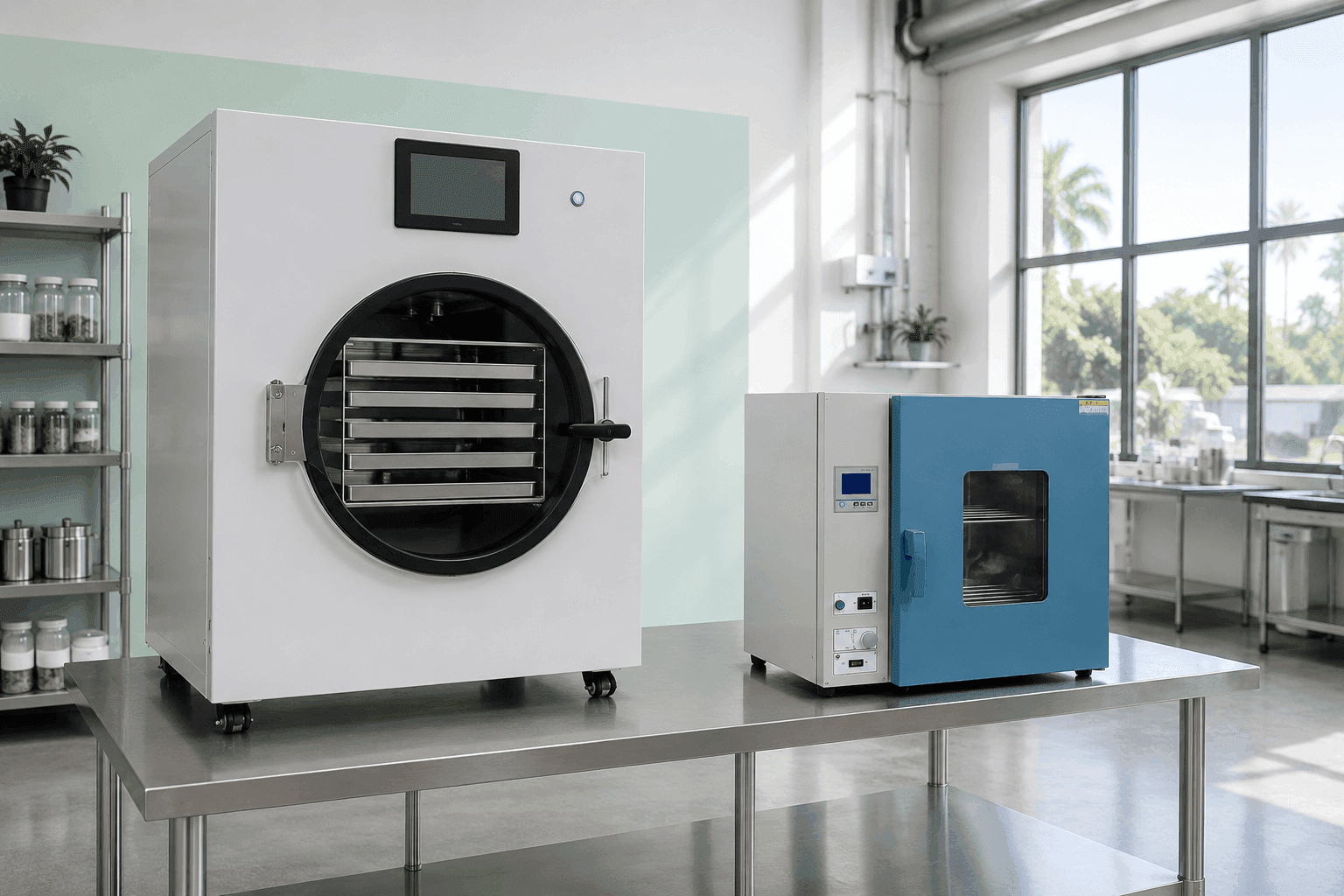
Freeze Dryers remove moisture from cannabis products using low temperatures and vacuum-assisted sublimation.
Instead of using heat to evaporate moisture, freeze dryers convert frozen moisture directly into vapor under controlled vacuum conditions.
This process helps preserve:
- cannabinoids
- terpene profiles
- product texture
- formulation stability
Freeze drying is commonly used for:
- concentrate stabilization
- terpene-sensitive products
- moisture control
- post-processing refinement
Low-temperature processing helps reduce:
- oxidation
- thermal degradation
- terpene loss
This makes freeze dryers especially valuable in workflows where flavor and cannabinoid preservation are major priorities.
What Is a Vacuum Oven?
Ovens & Furnaces used in cannabis extraction workflows often function as vacuum ovens for solvent purging and concentrate refinement.
Vacuum ovens combine:
- controlled heat
- reduced pressure
- vacuum-assisted evaporation
These systems help remove residual solvents from cannabis concentrates after extraction.
Vacuum ovens are especially common in hydrocarbon extraction workflows involving:
- butane
- propane
- live resin processing
- concentrate refinement
By lowering pressure, vacuum ovens reduce solvent boiling points and help processors purge concentrates more efficiently without exposing products to excessive temperatures.
Vacuum ovens are commonly used for:
- solvent removal
- concentrate purging
- post-extraction refinement
- scalable concentrate production
Freeze Dryer vs Vacuum Oven: The Core Difference
The biggest difference between freeze dryers and vacuum ovens is the processing objective.
Freeze dryers primarily focus on:
- moisture removal
- product stabilization
- low-temperature preservation
Vacuum ovens primarily focus on:
- solvent purging
- post-extraction refinement
- concentrate finishing
While both systems use vacuum-assisted processing, they are designed for very different workflow functions.
Many advanced cannabis facilities actually use both systems together depending on:
- extraction method
- product goals
- concentrate type
- post-processing strategy
Terpene Preservation Comparison
Why Freeze Dryers Excel at Preservation
Freeze dryers are widely preferred for preserving sensitive terpene profiles because they operate at extremely low temperatures.
Low-temperature sublimation helps reduce:
- terpene evaporation
- oxidation
- cannabinoid degradation
- flavor loss
This often results in:
- stronger aroma profiles
- improved concentrate stability
- better product consistency
Freeze drying is especially useful for:
- terpene-rich concentrates
- premium formulations
- delicate cannabinoid products
Processors focused on preserving natural compound profiles often favor freeze drying workflows.
Vacuum Oven Terpene Considerations
Vacuum ovens still reduce heat exposure compared to traditional heating methods, but they generally operate at higher temperatures than freeze dryers.
This may increase the risk of:
- terpene degradation
- aroma loss
- minor cannabinoid changes
However, vacuum ovens remain highly effective for solvent removal and are widely used across commercial concentrate production environments.
For many hydrocarbon extraction workflows, vacuum ovens remain an industry-standard post-processing tool.
Solvent Removal Efficiency
Vacuum Ovens for Solvent Purging
Vacuum ovens are specifically designed to help remove residual solvents from concentrates efficiently.
This is especially important in hydrocarbon extraction workflows where products require controlled purging after extraction.
Vacuum ovens help processors:
- reduce residual solvent levels
- improve concentrate stability
- maintain operational throughput
- support scalable production
For many labs, vacuum ovens provide:
- practical workflow simplicity
- repeatable solvent removal
- commercial production flexibility
Freeze Dryers and Solvent Removal
Freeze dryers are not typically used as primary solvent purging systems for hydrocarbon concentrates.
Their primary focus remains:
- moisture stabilization
- product preservation
- low-temperature drying
While freeze dryers excel at preserving sensitive compounds, vacuum ovens are generally more practical for dedicated solvent removal workflows.
The Role of Vacuum Pumps
Vacuum Pumps are essential for both freeze dryers and vacuum ovens.
Vacuum-assisted processing helps:
- lower boiling points
- improve evaporation efficiency
- stabilize processing conditions
- reduce thermal stress
Reliable vacuum infrastructure is critical for:
- solvent removal
- moisture sublimation
- temperature control
- workflow consistency
Poor vacuum performance can negatively affect:
- drying quality
- purge efficiency
- processing speed
- concentrate stability
As production scales, vacuum reliability becomes increasingly important.
Which System Is Better for Cannabis Concentrates?
The answer depends on product goals and extraction workflows.
Freeze Dryers Are Often Better For:
- terpene preservation
- moisture-sensitive products
- low-temperature stabilization
- premium concentrate workflows
- cannabinoid preservation
Vacuum Ovens Are Often Better For:
- hydrocarbon concentrate purging
- solvent removal
- scalable post-processing
- operational simplicity
- commercial concentrate production
Some processors integrate both systems into the same workflow for maximum flexibility.
Workflow and Scalability Considerations
Freeze Dryer Workflow Considerations
Freeze dryers often require:
- longer processing cycles
- stable vacuum conditions
- careful moisture management
These workflows prioritize:
- product quality
- compound preservation
- controlled stabilization
Facilities focused on premium concentrate production may find the slower workflow worthwhile.
Vacuum Oven Workflow Considerations
Vacuum ovens often support:
- faster processing
- simpler workflows
- scalable concentrate purging
Commercial extraction facilities frequently prioritize vacuum ovens because they integrate efficiently into high-throughput production environments.
Workflow efficiency becomes increasingly important as production volume grows.
Common Post-Processing Mistakes
Choosing Based Only on Price
Some labs purchase post-processing equipment based solely on upfront cost instead of workflow compatibility.
The right system depends on:
- extraction method
- product goals
- throughput requirements
- concentrate type
Ignoring Vacuum Quality
Both freeze dryers and vacuum ovens rely heavily on stable vacuum performance.
Weak vacuum infrastructure often creates:
- inconsistent processing
- reduced efficiency
- unstable product quality
Vacuum systems should always be treated as critical infrastructure.
Using One System for Every Workflow
Different concentrates require different post-processing strategies.
Facilities that tailor workflows to specific product goals usually achieve:
- stronger consistency
- improved concentrate quality
- better operational efficiency
Key Takeaways
The freeze dryer vs vacuum oven decision depends on extraction method, product goals, and post-processing priorities.
Freeze dryers are commonly preferred for:
- terpene preservation
- low-temperature stabilization
- moisture-sensitive workflows
Vacuum ovens are often better suited for:
- solvent purging
- hydrocarbon concentrate processing
- scalable production environments
Both systems rely heavily on dependable vacuum infrastructure for efficient processing and workflow stability.
At Green Lab Gear, our extraction and post-processing equipment ecosystem is designed to support scalable cannabis workflows with dependable operational integration and practical infrastructure planning.
FAQs
What is the difference between a freeze dryer and a vacuum oven?
Freeze dryers remove moisture using low-temperature sublimation under vacuum conditions, while vacuum ovens primarily remove residual solvents using controlled heat and reduced pressure. The two systems serve different post-processing purposes. Freeze dryers focus more on preservation, while vacuum ovens focus more on solvent purging.
Which system preserves terpenes better?
Freeze dryers are generally better for terpene preservation because they operate at much lower temperatures. Low-temperature processing helps reduce oxidation and terpene loss during post-processing. This makes freeze dryers popular for premium concentrate workflows.
Why are vacuum ovens used in hydrocarbon extraction?
Vacuum ovens help remove residual butane or propane solvents from concentrates after extraction. Controlled heat and vacuum pressure improve solvent evaporation while reducing thermal stress. These systems are widely used for concentrate purging and refinement.
Do freeze dryers and vacuum ovens both need vacuum pumps?
Yes, both systems rely on vacuum pumps to maintain low-pressure processing environments. Stable vacuum performance improves drying efficiency, solvent removal, and processing consistency. Poor vacuum performance can negatively affect concentrate quality.
Can cannabis labs use both freeze dryers and vacuum ovens?
Yes, many advanced cannabis facilities use both systems for different post-processing workflows. Freeze dryers are often used for stabilization and preservation, while vacuum ovens are used for solvent purging. Using both systems can provide greater production flexibility and workflow optimization.