Glass Reactor vs Stainless Steel Reactor: Which Is Better for Cannabis Processing?
Compare glass reactor vs stainless steel reactor systems for cannabis processing, extraction efficiency, scalability, and lab workflows.
Introduction
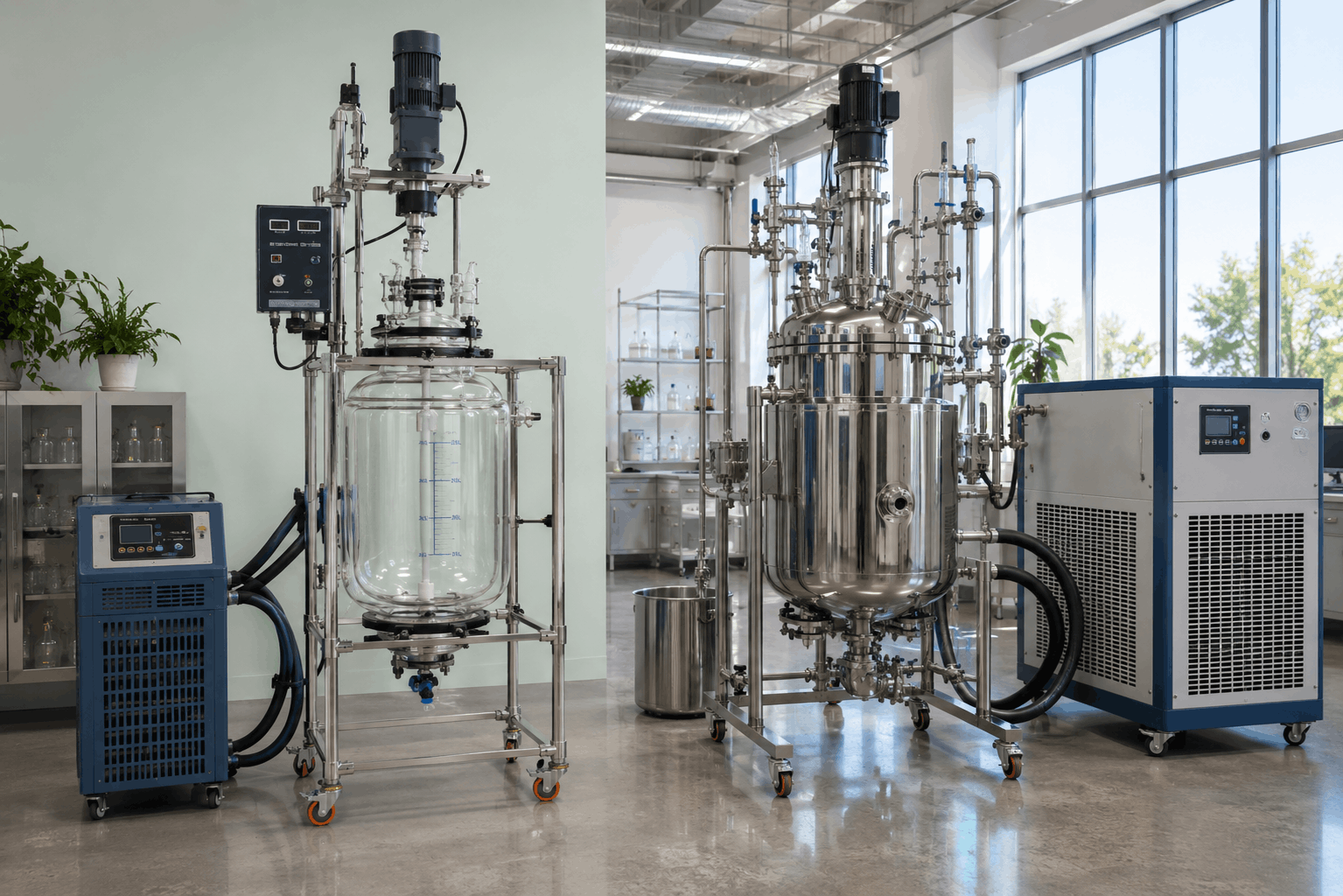
Choosing the right reactor system is one of the most important decisions a cannabis extraction lab can make. Reactor performance directly affects extraction consistency, temperature control, workflow efficiency, and long-term scalability. For processors building or upgrading a production environment, the debate often comes down to one major question: glass reactor vs stainless steel reactor?
Both reactor types are widely used in cannabis extraction and post-processing workflows, but they serve different operational needs. Some labs prioritize visibility and precision during small-batch processing, while others focus on durability and large-scale production capacity.
The right solution depends on:
- extraction goals
- throughput requirements
- processing methods
- facility scale
- workflow integration
At Green Lab Gear, our equipment lineup is designed to support scalable cannabis extraction environments with practical workflow integration and dependable processing performance.
Understanding the differences between glass and stainless steel reactor systems can help cannabis labs make smarter infrastructure investments and avoid costly operational bottlenecks later.
TLDR Guide
The glass reactor vs stainless steel reactor decision depends on your production goals, extraction scale, and workflow requirements.
Glass reactors are commonly preferred for:
- visibility during processing
- small to medium batch extraction
- research and formulation work
- terpene-sensitive applications
Stainless steel reactors are often better for:
- large-scale production
- durability
- industrial throughput
- long-term operational scalability
Both reactor systems benefit from integrated cooling systems and precise temperature control.
Cannabis labs should evaluate:
- batch size
- extraction method
- cleaning requirements
- pressure handling
- workflow scalability
- long-term operational efficiency
There is no universal “best” reactor. The ideal system depends on how the lab operates and where future production growth is heading.
Detailed Breakdown
What Is a Glass Reactor?
A Glass Reactor is a processing vessel commonly used in cannabis extraction, chemical synthesis, and post-processing workflows. These systems are typically built with jacketed borosilicate glass that allows processors to visually monitor reactions and temperature-sensitive operations in real time.
Glass reactors are highly popular in cannabis processing because they offer:
- strong chemical resistance
- excellent visibility
- precise temperature control
- flexible batch processing
In many extraction environments, visibility becomes a major operational advantage. Processors can observe:
- solvent behavior
- mixing consistency
- crystallization
- reaction progress
- separation stages
This level of transparency helps improve process control during formulation and cannabinoid refinement.
Glass reactor systems are often used for:
- ethanol extraction workflows
- terpene processing
- winterization
- cannabinoid isolation
- small to medium production batches
Labs focused on precision and flexibility often favor glass systems for research-driven workflows.
What Is a Stainless Steel Reactor?
A Stainless Steel Reactor is a heavy-duty processing vessel designed for large-scale industrial operations. These systems prioritize durability, pressure resistance, and high-throughput production.
Unlike glass systems, stainless steel reactors are built to handle:
- higher pressures
- demanding production cycles
- aggressive industrial environments
- larger processing volumes
Cannabis labs operating at commercial scale often choose stainless steel systems because they support:
- continuous production
- larger batch sizes
- long-term durability
- automated processing integration
Stainless steel reactors are commonly used for:
- large-scale extraction
- solvent recovery integration
- industrial mixing
- high-volume cannabinoid processing
For processors planning aggressive production expansion, stainless steel systems often provide stronger long-term scalability.
Visibility and Process Control
Why Glass Reactors Stand Out
One of the biggest advantages of glass reactors is process visibility. Operators can visually monitor extraction and refinement stages throughout the workflow.
This helps processors identify:
- foaming
- crystallization
- separation changes
- solvent behavior
- reaction irregularities
In cannabis extraction, visual feedback can significantly improve precision during:
- terpene preservation
- cannabinoid refinement
- formulation development
Labs focused on R&D and specialized processing often prefer glass reactors for this reason.
Where Stainless Steel Reactors Differ
Stainless steel reactors do not offer direct visibility into the vessel interior. Operators instead rely on:
- sensors
- pressure gauges
- automation controls
- temperature monitoring systems
While this reduces visual oversight, it allows industrial facilities to prioritize:
- durability
- throughput
- process automation
- operational efficiency
For high-volume commercial operations, this tradeoff is often worthwhile.
Durability and Long-Term Scalability
Stainless Steel Advantages
Stainless steel reactors are built for demanding industrial environments. These systems can withstand:
- repeated production cycles
- higher pressure conditions
- larger thermal loads
- aggressive cleaning procedures
Commercial cannabis labs often favor stainless steel because it supports:
- higher throughput
- long-term operational reliability
- larger production targets
As facilities scale, durability becomes increasingly important.
Glass Reactor Considerations
Glass reactors are highly durable for laboratory use but remain more fragile than stainless steel systems. While borosilicate glass offers excellent chemical resistance, improper handling or thermal shock can still create breakage risks.
However, many cannabis labs continue using glass systems because they provide:
- processing precision
- batch flexibility
- cleaner visibility
- simplified formulation development
For smaller operations and controlled lab environments, glass systems remain highly effective.
Temperature Control and Cooling Efficiency
Temperature stability is critical in cannabis extraction and post-processing workflows. Both reactor types rely heavily on integrated cooling systems to maintain consistent operating conditions.
This is where Recirculating Chillers become essential.
Recirculating chillers help regulate:
- reactor temperatures
- solvent cooling
- condensation stability
- thermal consistency
Stable cooling improves:
- extraction precision
- cannabinoid preservation
- terpene retention
- process repeatability
Whether using glass or stainless steel reactors, temperature control remains one of the most important factors in overall processing quality.
Cleaning and Maintenance
Glass Reactor Maintenance
Glass reactors are relatively easy to inspect and clean because operators can visually identify:
- residue buildup
- contamination
- solvent remnants
- processing inconsistencies
This visibility simplifies quality control during small-batch processing.
However, cleaning requires careful handling to avoid:
- scratches
- thermal shock
- accidental impact damage
Routine maintenance is essential for long-term reliability.
Stainless Steel Reactor Maintenance
Stainless steel systems are designed for industrial cleaning workflows and aggressive sanitation procedures.
These systems often support:
- automated cleaning systems
- high-pressure cleaning
- chemical sanitation
- continuous operation maintenance
For high-volume facilities, stainless steel systems usually reduce downtime associated with maintenance and cleaning.
Which Reactor Is Better for Cannabis Processing?
The answer depends entirely on operational priorities.
Glass Reactors Are Often Better For:
- small to medium extraction labs
- R&D workflows
- terpene-sensitive processing
- precision formulation
- visible reaction monitoring
Stainless Steel Reactors Are Often Better For:
- large-scale production
- industrial throughput
- long-term durability
- automation integration
- continuous processing environments
Many advanced cannabis facilities actually use both systems together.
For example:
- glass reactors for formulation and refinement
- stainless steel reactors for large-scale extraction
Choosing the right setup depends on how the lab plans to scale over time.
Common Reactor Selection Mistakes
Many cannabis processors make reactor decisions based only on upfront cost instead of workflow efficiency.
Common mistakes include:
- undersizing production capacity
- ignoring cooling requirements
- poor workflow integration
- overlooking scalability needs
- choosing visibility over throughput
- prioritizing durability without precision needs
These mistakes can create:
- processing bottlenecks
- inconsistent extraction quality
- workflow inefficiencies
- expensive future upgrades
Planning around long-term operational goals typically produces better results.
Key Takeaways
The glass reactor vs stainless steel reactor debate ultimately comes down to workflow priorities, production scale, and operational goals.
Glass reactors provide:
- excellent visibility
- precision control
- flexible batch processing
- strong formulation support
Stainless steel reactors offer:
- industrial durability
- large-scale throughput
- automation compatibility
- long-term production scalability
Both systems can play important roles in cannabis extraction and post-processing environments, especially when paired with dependable recirculating chillers for stable temperature management.
At Green Lab Gear, our reactor and processing equipment lineup is designed to support scalable cannabis workflows with practical integration and dependable operational performance.
FAQs
What is the main difference between glass reactors and stainless steel reactors?
Glass reactors provide visual monitoring during processing, while stainless steel reactors prioritize durability and industrial-scale production. Glass systems are often used for precision workflows and smaller batches. Stainless steel systems are typically preferred for large-scale extraction and continuous operation environments.
Are glass reactors safe for cannabis extraction?
Yes, glass reactors are widely used in cannabis extraction and post-processing workflows. High-quality borosilicate glass offers strong chemical resistance and reliable temperature performance. Proper handling and temperature management are important to prevent breakage or thermal shock.
Why are stainless steel reactors preferred for large-scale cannabis production?
Stainless steel reactors are built to handle higher pressures, larger batch volumes, and continuous production environments. Their durability makes them ideal for demanding commercial operations. Many large facilities also integrate automation systems with stainless steel processing equipment.
What role do recirculating chillers play in reactor systems?
Recirculating chillers help regulate reactor temperatures during extraction and post-processing. Stable cooling improves cannabinoid preservation, solvent management, and thermal consistency. Proper temperature control also supports more repeatable production outcomes.
Can a cannabis lab use both glass and stainless steel reactors?
Yes, many advanced cannabis facilities use both reactor types for different stages of production. Glass reactors are often used for formulation, research, and precision refinement. Stainless steel reactors are commonly used for large-scale extraction and industrial throughput workflows.