How to Choose a Biosafety Cabinet for Your Laboratory
Learn how to choose a biosafety cabinet based on protection level, cabinet class, airflow, size, certification, and laboratory needs.
Introduction
Choosing a biosafety cabinet isn't simply a matter of finding an enclosure that fits your available laboratory space. The right cabinet must match the biological hazards you're handling, the level of personnel and product protection required, your laboratory workflow, and applicable safety standards.
Understanding how to choose a biosafety cabinet is especially important for cannabis testing, pharmaceutical, biotechnology, clinical, and research laboratories. Selecting the wrong cabinet can create workflow problems, compromise sample integrity, or provide inadequate protection for the work being performed.
Green Lab Gear offers laboratory equipment for facilities with different testing and research requirements. Before purchasing a cabinet, however, laboratories should complete a risk assessment and understand the differences between cabinet classes, airflow configurations, sizes, and installation requirements.
This guide walks through the most important factors so you can narrow down the right biosafety cabinet for your laboratory.
TLDR – Quick Guide
- Start with a risk assessment before comparing cabinet models.
- Determine whether you need personnel, product, environmental protection, or a combination.
- Understand the differences between Class I, Class II, and Class III biosafety cabinets.
- Class II cabinets are commonly used when both personnel and product protection are needed.
- Choose cabinet size according to workflow, equipment, and available laboratory space.
- Evaluate exhaust, HVAC, electrical, and installation requirements before purchasing.
- Don't assume a biosafety cabinet is suitable for chemical fumes simply because it has HEPA filtration.
- Plan for certification, maintenance, cleaning, and future laboratory growth.
Detailed Breakdown
What Is a Biosafety Cabinet?
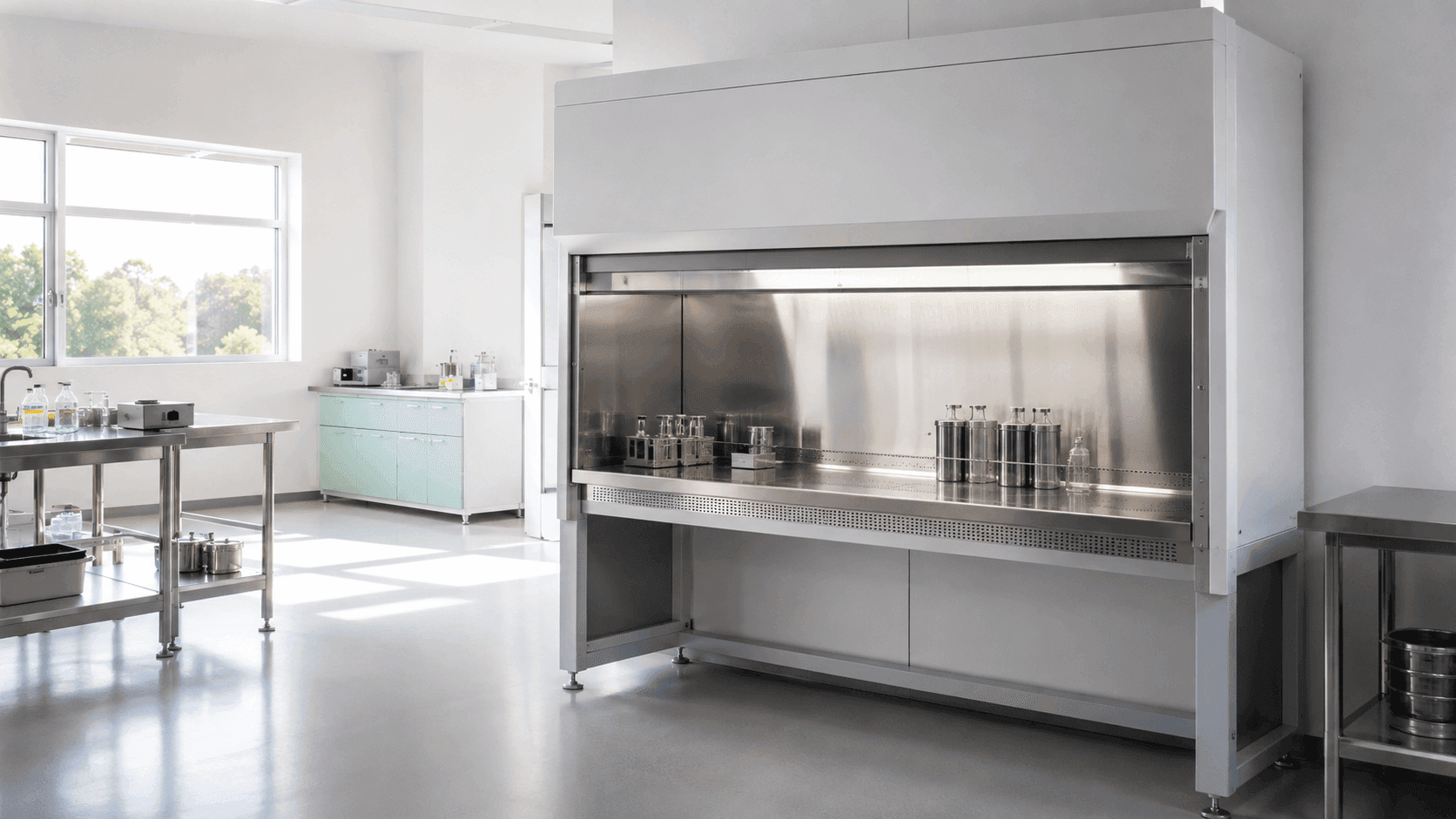
A biosafety cabinet, commonly called a BSC, is a ventilated laboratory enclosure designed to reduce exposure to biological aerosols and other potentially hazardous biological materials.
Depending on the class and configuration, a cabinet may provide three important forms of protection:
- Personnel protection: Helps reduce operator exposure to biological aerosols.
- Product protection: Helps protect samples from contamination.
- Environmental protection: Helps prevent biological contaminants from being released into the surrounding laboratory.
Modern Biosafety Cabinets use carefully controlled airflow, and many configurations incorporate HEPA filtration.
The key is selecting a cabinet designed for your particular procedures rather than assuming every BSC provides the same protection.
Step 1: Start With Your Laboratory's Risk Assessment
The first step in understanding how to choose a biosafety cabinet is identifying what will actually happen inside it.
Consider the biological materials, procedures, and equipment you'll use. Your assessment should account for the possibility of aerosols or splashes, the protection required for samples, and whether any chemicals are involved.
Questions worth answering include:
- What materials will technicians handle?
- Could procedures generate biological aerosols?
- Does the product or sample require contamination protection?
- What quantities will be handled?
- Will volatile or hazardous chemicals be used?
- What equipment must fit inside the cabinet?
For cannabis laboratories, the answer may depend heavily on whether the facility performs microbiological testing, research, sample preparation, or other contamination-sensitive procedures.
The hazard should determine the equipment—not the other way around.
Step 2: Understand Biosafety Cabinet Classes
The next major decision is cabinet class. Biosafety cabinets are generally categorized as Class I, Class II, or Class III, and those categories shouldn't be treated as interchangeable.
Class I cabinets provide personnel and environmental protection but generally don't provide the same product protection associated with Class II cabinets.
Class II cabinets are widely used in research, clinical, pharmaceutical, and testing laboratories. Their airflow and filtration are designed to provide personnel, product, and environmental protection when the cabinet is properly selected, installed, certified, and operated.
Class II cabinets also have different types and configurations. Those distinctions affect airflow and exhaust characteristics, so the specific model matters.
Class III cabinets provide a highly contained, enclosed work environment and are intended for applications requiring substantially greater biological containment.
For many routine laboratory applications, the decision centers on the appropriate Class II configuration—but the risk assessment should always drive that decision.
Step 3: Determine the Correct Cabinet Size
Bigger isn't automatically better.
A cabinet should provide sufficient working room without unnecessarily consuming valuable laboratory space or complicating airflow and installation.
Consider the dimensions of:
- Sample containers
- Laboratory instruments
- Waste containers
- Pipetting equipment
- Racks and holders
- Other materials required during procedures
Operators also need enough room to work without blocking critical airflow openings.
Don't choose cabinet width based solely on what fits against a wall. Think about what needs to happen inside the cabinet every day.
If you're building or expanding a laboratory, additional Laboratory Support Equipment should also be considered when planning the surrounding workspace.
Step 4: Evaluate Airflow and Exhaust Requirements
Airflow is fundamental to biosafety cabinet performance.
Depending on the cabinet, air may be recirculated through HEPA filters, exhausted into the room after filtration, or connected to an external exhaust system. The correct configuration depends on the cabinet type and laboratory application.
Facility considerations may include:
- Room airflow
- HVAC capacity
- Exhaust connections
- Door locations
- Personnel traffic
- Nearby air supply diffusers
- Space above and around the cabinet
Placing a biosafety cabinet next to a frequently opened door or strong air vent, for example, may interfere with airflow performance.
Installation planning should therefore happen before the cabinet arrives—not after someone discovers it doesn't work with the room.
Step 5: Understand HEPA Filtration and Chemical Limitations
HEPA filtration is one of the defining features of many biosafety cabinets, but its purpose is sometimes misunderstood.
HEPA filters are highly effective at capturing airborne particles. However, they aren't designed to remove chemical vapors simply because those vapors happen to be inside a biosafety cabinet.
That means a standard BSC should not automatically be used as a substitute for a chemical fume hood.
If your laboratory handles volatile or hazardous chemicals, verify whether the specific cabinet configuration is approved for the intended procedure and whether external exhaust is required.
This distinction is particularly important in cannabis laboratories where biological testing and chemical sample preparation may occur within the same facility.
Step 6: Plan for Cleaning, Decontamination, and Sterilization
A good cabinet should support practical cleaning and decontamination procedures.
When comparing models, consider interior surfaces, accessibility, removable components, spill containment, and how easily operators can perform routine cleaning without damaging critical components.
Biosafety cabinets may also be part of a broader contamination-control workflow. Sterilizers & Autoclaves can support decontamination of compatible reusable laboratory materials, while the BSC provides the controlled environment needed during biological procedures.
The objective is to create a workflow in which containment, cleaning, waste handling, and sterilization complement one another.
Step 7: Consider Certification and Long-Term Maintenance
Purchasing the cabinet is only the beginning.
Biosafety cabinets require proper installation, testing, maintenance, and certification to confirm that airflow and filtration systems are performing as intended. Certification schedules should follow applicable standards, institutional requirements, manufacturer guidance, and any relevant local rules.
Long-term costs can include:
- Certification
- HEPA filter replacement
- Repairs
- Preventive maintenance
- Cleaning and decontamination
- Energy consumption
When comparing models, total cost of ownership is often more useful than purchase price alone.
A cheaper cabinet that is difficult to service or poorly suited to your application can quickly become the expensive option.
Features Worth Comparing Before You Buy
Once you've determined the appropriate cabinet class and configuration, you can compare practical features.
Useful considerations include digital airflow monitoring, alarms, ergonomic sash design, interior lighting, accessible controls, energy-efficient blowers, work-surface construction, and serviceability.
Ergonomics deserves particular attention if technicians spend hours working at the cabinet. Poor working height, uncomfortable arm positioning, glare, and excessive noise can turn routine laboratory procedures into unnecessarily tiring work.
You can also visit the Green Lab Gear Showroom when evaluating laboratory equipment and comparing options for your facility.
Common Biosafety Cabinet Selection Mistakes
A surprisingly common mistake is choosing a cabinet by size and price before determining the required protection level.
Other mistakes include assuming all Class II cabinets are identical, overlooking facility exhaust requirements, positioning the cabinet where room airflow can interfere with containment, or using a standard BSC for chemical procedures it wasn't designed to handle.
Labs should also avoid filling the work area with unnecessary equipment. Excessive clutter can interfere with airflow and make proper cleaning more difficult.
Finally, don't forget future needs. If testing volume or laboratory capabilities are expected to grow, choosing equipment with reasonable flexibility can prevent premature replacement.
Key Takeaways
- Learning how to choose a biosafety cabinet starts with identifying your laboratory's actual hazards and procedures.
- Determine whether personnel, product, and environmental protection are required.
- Understand Class I, Class II, and Class III cabinets before comparing individual models.
- Cabinet size should reflect both workflow requirements and available facility space.
- Airflow, HVAC, exhaust, and room placement can directly affect cabinet performance.
- HEPA filtration controls particles but doesn't automatically make a cabinet appropriate for hazardous chemical vapors.
- Cleaning, sterilization, certification, and maintenance should be considered before purchasing.
- Total cost of ownership matters more than purchase price alone.
- Properly selected equipment should support both current laboratory needs and reasonable future growth.
FAQs
How do I choose the right biosafety cabinet?
Start by identifying the biological hazards, procedures, and level of protection required in your laboratory. Then compare cabinet classes, airflow configurations, work-area dimensions, facility requirements, and certification needs. A qualified risk assessment should guide the final selection.
What biosafety cabinet class is most commonly used in laboratories?
Class II biosafety cabinets are commonly used in research, testing, clinical, and similar laboratory environments because appropriate configurations provide personnel, product, and environmental protection. However, Class II includes multiple types with different airflow and exhaust characteristics. The correct cabinet depends on the specific application rather than popularity alone.
What size biosafety cabinet should I buy?
Choose a cabinet large enough to accommodate the equipment, samples, and procedures performed inside without blocking airflow openings. You should also consider available room space, operator ergonomics, service clearances, and future workload. Buying the largest available cabinet isn't necessarily the most efficient choice.
Can a biosafety cabinet protect against chemical fumes?
Standard HEPA filtration is intended to capture particles and shouldn't automatically be relied upon for controlling hazardous chemical vapors. Certain cabinet configurations may accommodate limited chemical applications when specifically designed and exhausted appropriately. Verify the exact equipment specifications and laboratory risk assessment before using volatile chemicals.
How often does a biosafety cabinet need certification?
Certification requirements depend on applicable standards, facility policies, manufacturer guidance, and local requirements. Cabinets are also commonly evaluated after installation, relocation, or certain repairs and filter changes. Your laboratory should establish a documented certification and maintenance schedule appropriate for its equipment and procedures.