Rotary Evaporator Maintenance: 10 Ways to Prevent Downtime and Repairs
Learn rotary evaporator maintenance best practices to prevent downtime, improve performance, and avoid costly repairs in your lab.
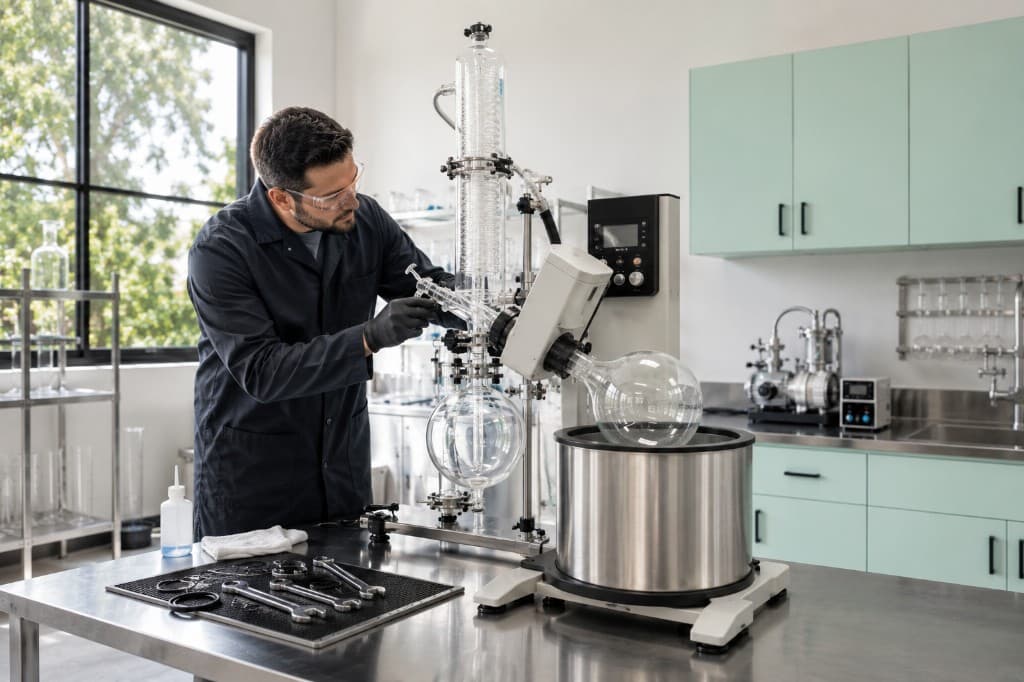
A rotary evaporator is one of the hardest-working pieces of equipment in many extraction labs, processing facilities, and research environments. When properly maintained, it can deliver years of reliable performance. However, neglecting routine rotary evaporator maintenance can lead to reduced efficiency, unexpected downtime, costly repairs, and even product loss.
Because rotary evaporators often operate as a critical part of extraction and solvent recovery workflows, even a single equipment failure can disrupt production schedules and create expensive bottlenecks. Fortunately, most common issues can be prevented with a proactive maintenance program.
Many operators rely on high-quality Rotary Evaporators and preventive maintenance practices to maximize equipment lifespan and maintain consistent production.
This guide covers ten essential rotary evaporator maintenance practices that can help reduce downtime, improve performance, and protect your investment.
TLDR – Quick Guide
- Inspect seals and gaskets regularly.
- Clean glassware after every production cycle.
- Monitor vacuum system performance.
- Maintain proper chiller operation.
- Check tubing and connections for leaks.
- Replace worn components before failure occurs.
- Follow manufacturer maintenance schedules.
- Train operators on proper equipment use.
- Keep spare parts readily available.
- Document maintenance activities consistently.
Detailed Breakdown
Why Rotary Evaporator Maintenance Matters
Rotary evaporators play a critical role in solvent recovery, concentration, purification, and post-processing operations.
Routine rotary evaporator maintenance helps:
- Improve equipment reliability
- Reduce unexpected downtime
- Extend equipment lifespan
- Maintain process efficiency
- Protect product quality
- Lower repair costs
Preventive maintenance is almost always less expensive than emergency repairs and production interruptions.
1. Inspect Seals and Gaskets Regularly
Vacuum integrity is essential for efficient rotary evaporation.
Over time, seals and gaskets can:
- Wear out
- Crack
- Become brittle
- Lose elasticity
Even small leaks can significantly reduce vacuum performance and slow solvent recovery.
During routine inspections:
- Check for visible damage
- Inspect for chemical degradation
- Replace worn components promptly
Many replacement components are available through Accessories & Parts suppliers.
2. Clean Glassware After Every Use
Residue buildup can negatively impact performance and product quality.
After each production run:
- Remove remaining product residues
- Clean receiving flasks
- Clean evaporation flasks
- Inspect glass components for contamination
Consistent cleaning helps prevent:
- Cross-contamination
- Reduced efficiency
- Product quality issues
It also makes routine inspections easier.
3. Monitor Vacuum Pump Performance
Vacuum systems are often the first source of performance issues.
Regularly inspect your Vacuum Pumps for:
- Oil condition (if applicable)
- Vacuum pressure consistency
- Unusual noises
- Excessive vibration
Common warning signs include:
- Longer processing times
- Difficulty reaching target vacuum levels
- Reduced solvent recovery efficiency
Addressing vacuum problems early can prevent larger system failures.
4. Maintain Proper Chiller Performance
Many rotary evaporators rely on Recirculating Chillers to efficiently condense solvent vapors.
Poor chiller performance can lead to:
- Reduced solvent recovery
- Longer processing times
- Increased operating costs
Routine chiller maintenance should include:
- Checking coolant levels
- Cleaning filters
- Monitoring operating temperatures
- Inspecting circulation pumps
Consistent cooling performance supports overall system efficiency.
5. Inspect Tubing and Connections
Tubing is often overlooked during maintenance inspections.
However, aging tubing can develop:
- Cracks
- Leaks
- Blockages
- Loose fittings
Regularly inspect:
- Vacuum tubing
- Cooling lines
- Solvent transfer lines
Replacing inexpensive tubing before failure occurs can prevent costly downtime.
6. Check Glass Components for Damage
Rotary evaporator glassware experiences repeated heating, cooling, and vacuum cycles.
Inspect all glass components for:
- Chips
- Cracks
- Stress marks
- Clouding
Damaged glass increases the risk of:
- Breakage
- Product loss
- Operator injury
- Production delays
Any compromised component should be replaced immediately.
7. Verify Temperature Sensor Accuracy
Temperature control directly impacts evaporation efficiency.
Over time, sensors may drift from their original calibration.
Regular verification helps ensure:
- Accurate process temperatures
- Consistent solvent recovery
- Product quality control
If readings appear inconsistent, recalibration may be necessary.
8. Follow a Preventive Maintenance Schedule
Reactive maintenance often results in more downtime than preventive maintenance.
Establish a maintenance schedule that includes:
Daily Tasks
- Visual inspections
- Glass cleaning
- Leak checks
Weekly Tasks
- Seal inspections
- Tubing inspections
- Vacuum performance verification
Monthly Tasks
- Chiller maintenance
- Component replacement reviews
- System performance audits
A documented maintenance schedule improves equipment reliability and accountability.
9. Keep Critical Spare Parts in Inventory
Waiting for replacement parts can turn a minor issue into a major production interruption.
Common spare parts include:
- Seals
- Gaskets
- Tubing
- Glass joints
- Vacuum fittings
Maintaining inventory of critical components minimizes downtime during repairs.
Many operators source backup components from dedicated Accessories & Parts inventories.
10. Train Operators Properly
Even the best maintenance program can be undermined by improper equipment operation.
Operator training should cover:
- Startup procedures
- Shutdown procedures
- Cleaning protocols
- Troubleshooting basics
- Maintenance reporting
Well-trained operators often identify potential problems before they become costly failures.
Training is one of the simplest ways to improve equipment longevity.
Common Rotary Evaporator Problems and Their Causes
Understanding common issues helps operators respond quickly.
Poor Vacuum Performance
Possible causes:
- Worn seals
- Vacuum leaks
- Pump issues
- Damaged tubing
Slow Solvent Recovery
Possible causes:
- Chiller problems
- Vacuum deficiencies
- Temperature inconsistencies
Excessive Noise or Vibration
Possible causes:
- Mechanical wear
- Loose components
- Pump issues
Glass Breakage
Possible causes:
- Existing cracks
- Improper handling
- Thermal shock
Routine maintenance significantly reduces the likelihood of these issues.
Building a Long-Term Maintenance Strategy
The most effective rotary evaporator maintenance programs focus on prevention rather than reaction.
Best practices include:
- Establishing maintenance schedules
- Tracking equipment performance
- Documenting inspections
- Training personnel
- Maintaining spare parts inventory
- Replacing worn components proactively
Facilities that adopt preventive maintenance programs typically experience lower operating costs and higher equipment availability.
Key Takeaways
- Rotary evaporator maintenance helps reduce downtime and extend equipment lifespan.
- Regular seal and gasket inspections help maintain vacuum performance.
- Clean glassware improves efficiency and product quality.
- Vacuum pumps and chillers should be routinely monitored and maintained.
- Tubing and connections should be inspected for leaks and wear.
- Damaged glass components should be replaced immediately.
- Preventive maintenance schedules improve equipment reliability.
- Keeping spare parts on hand minimizes production disruptions.
- Proper operator training helps prevent avoidable equipment issues.
- Proactive maintenance is significantly less expensive than emergency repairs.
FAQs
How often should rotary evaporator maintenance be performed?
Basic inspections and cleaning should be performed after every use. Weekly and monthly maintenance tasks should be scheduled based on equipment usage and operating conditions. Following a documented maintenance program helps maximize reliability.
What is the most common cause of rotary evaporator downtime?
Vacuum leaks are among the most common causes of performance issues and downtime. Worn seals, damaged tubing, and vacuum pump problems can all affect system performance. Regular inspections help identify these issues early.
Why is vacuum pump maintenance important?
Vacuum pumps play a critical role in achieving efficient solvent evaporation. Poor vacuum performance can increase processing times and reduce overall efficiency. Routine maintenance helps ensure consistent operation.
How do recirculating chillers affect rotary evaporator performance?
Recirculating chillers condense solvent vapors and support efficient solvent recovery. Inadequate cooling can reduce recovery rates and increase processing times. Proper chiller maintenance helps maintain overall system performance.
What spare parts should every rotary evaporator operator keep on hand?
Common spare parts include seals, gaskets, tubing, vacuum fittings, and replacement glassware. Keeping these items readily available can significantly reduce downtime during unexpected repairs. A well-stocked spare parts inventory supports continuous operation.