Solvent Recovery System Size Guide: How to Choose the Right Capacity
Learn how to choose the right solvent recovery system size for your extraction lab based on throughput, efficiency, and production goals.
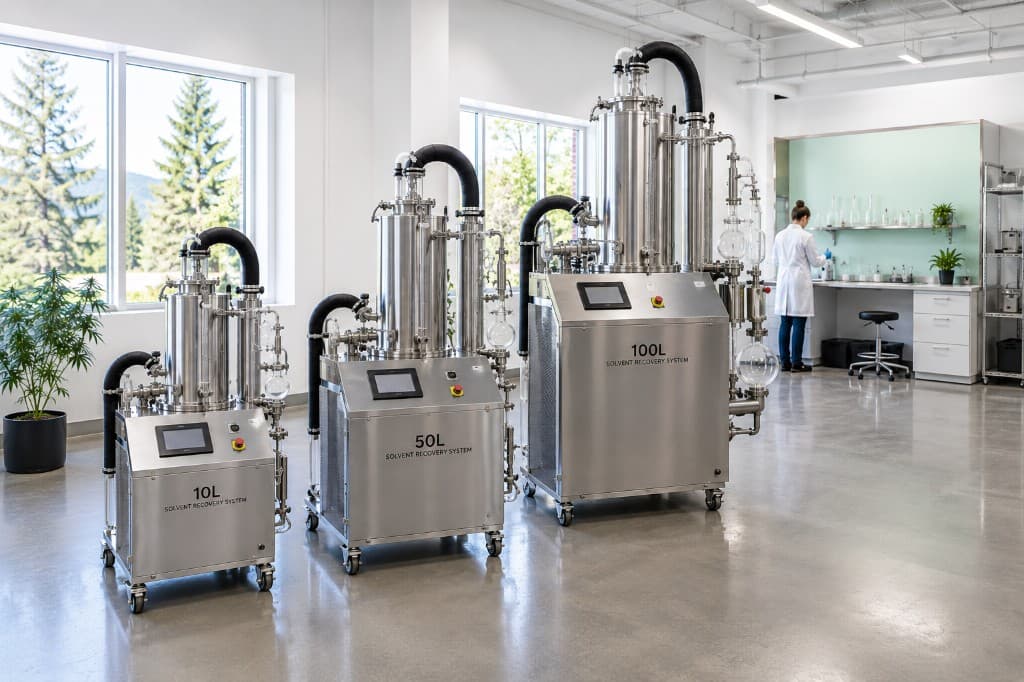
Choosing the correct solvent recovery system size is one of the most important decisions when designing or upgrading an extraction facility. An undersized system can create production bottlenecks, while an oversized unit may lead to unnecessary capital expenses and inefficient operations.
Whether you're processing ethanol, hydrocarbons, or other solvents, your recovery system plays a critical role in maximizing solvent reuse, reducing operating costs, and maintaining production efficiency. Selecting the right capacity requires more than simply matching equipment specifications—it requires understanding your workflow, production targets, and future growth plans.
Many operators work with trusted suppliers like GreenLabGear to evaluate equipment requirements and determine the ideal solvent recovery system size for their facility's needs.
This guide explains how solvent recovery systems are sized, the factors that impact capacity requirements, and how to choose equipment that supports both current and future production goals.
TLDR – Quick Guide
- Choose a solvent recovery system size based on daily processing volume.
- Calculate solvent usage before selecting equipment.
- Consider recovery rate, not just vessel size.
- Match recovery capacity to extraction throughput.
- Account for future expansion plans.
- Evaluate supporting equipment such as vacuum pumps and chillers.
- Avoid undersizing, which can create production bottlenecks.
- Focus on total system efficiency rather than equipment cost alone.
Detailed Breakdown
What Is a Solvent Recovery System?
A solvent recovery system removes and recovers solvents used during extraction and processing. Instead of discarding solvents after use, operators can recover, purify, and reuse them in future production cycles.
Benefits include:
- Reduced solvent costs
- Improved operational efficiency
- Lower waste generation
- Increased profitability
- Enhanced sustainability
Modern Solvent Recovery Systems are commonly used in ethanol extraction, hydrocarbon processing, pharmaceutical manufacturing, and botanical extraction facilities.
Why Solvent Recovery System Size Matters
Your solvent recovery system should support production demand without becoming a bottleneck.
If recovery takes longer than extraction, production slows.
If recovery capacity exceeds actual demand, capital resources may be wasted.
An appropriately sized solvent recovery system helps:
- Maintain continuous production
- Reduce equipment downtime
- Improve solvent recycling rates
- Increase overall facility throughput
- Support future scaling efforts
The goal is balancing recovery capacity with extraction volume.
Start With Daily Solvent Usage
The first step in determining the correct solvent recovery system size is understanding how much solvent your operation uses.
Ask:
- How much biomass is processed daily?
- How much solvent is used per batch?
- How many extraction cycles occur each day?
- What percentage of solvent is recovered?
For example:
Small Operation
- 50 gallons of solvent per day
- 90% recovery target
Required recovery volume:
- Approximately 45 gallons daily
Medium Operation
- 250 gallons per day
- Multiple production shifts
Required recovery volume:
- Approximately 225 gallons daily
Large Operation
- 1,000+ gallons per day
Required recovery volume:
- 900+ gallons daily
Understanding actual solvent demand provides the foundation for equipment selection.
Evaluate Recovery Rate, Not Just Tank Size
One of the most common mistakes is focusing exclusively on vessel capacity.
Recovery rate is often more important than tank volume.
Consider:
- Gallons recovered per hour
- Solvent evaporation rate
- Cycle completion times
- Operating efficiency
A smaller system with a faster recovery rate may outperform a larger but slower unit.
When comparing equipment, prioritize throughput performance rather than simply looking at vessel size.
Match Recovery Capacity to Extraction Throughput
Recovery systems should support overall production flow.
Example Workflow
Extraction Capacity:
- 200 gallons of solvent usage per day
Recovery Capacity:
- 50 gallons per hour
Recovery Time:
- 4 hours total
In this scenario, the recovery system easily keeps pace with production.
However, if recovery requires 12 hours to process the same volume, extraction operations may be delayed.
Proper equipment sizing ensures recovery never limits throughput.
Consider Supporting Equipment
A solvent recovery system does not operate in isolation.
Performance depends heavily on supporting equipment.
Vacuum Pumps
Many facilities use Vacuum Pumps to reduce boiling points and accelerate solvent recovery.
Benefits include:
- Faster processing
- Improved efficiency
- Lower heat exposure
- Better product quality
Vacuum pump performance directly impacts recovery speed.
Rotary Evaporators
Many labs integrate Rotary Evaporators into their solvent recovery workflows.
Rotovaps are commonly used for:
- Small-batch solvent recovery
- Laboratory-scale processing
- Product refinement
When selecting a solvent recovery system size, evaluate whether rotary evaporation will supplement larger-scale recovery operations.
Recirculating Chillers
Temperature management is critical for efficient solvent recovery.
Recirculating Chillers help:
- Improve condensation efficiency
- Increase solvent capture rates
- Maintain consistent performance
- Reduce processing times
An undersized chiller can significantly limit overall system performance.
Plan for Future Growth
Many operators size equipment based solely on current production.
This often leads to expensive upgrades later.
Ask:
- Will production double within two years?
- Are additional extraction systems planned?
- Will product lines expand?
Future growth should influence equipment selection.
Expansion Best Practices
- Build for projected demand, not just current demand.
- Leave utility capacity for additional equipment.
- Consider modular expansion options.
- Avoid purchasing systems that will quickly become obsolete.
Strategic planning reduces future capital expenditures.
Common Solvent Recovery Sizing Mistakes
Avoid these common errors when selecting a solvent recovery system size.
Choosing Based Only on Price
Lower-cost systems may struggle to support production growth.
Ignoring Recovery Rate
Recovery speed often matters more than vessel capacity.
Undersizing Supporting Equipment
Vacuum systems and chillers directly impact performance.
Overlooking Future Expansion
Facilities often outgrow equipment faster than expected.
Failing to Calculate Actual Solvent Usage
Accurate production data should guide equipment decisions.
Example Solvent Recovery System Sizing Scenarios
Small Laboratory
Daily Solvent Usage:
- Under 50 gallons
Recommended Focus:
- Compact recovery systems
- Rotary evaporators
- Smaller vacuum systems
Mid-Scale Extraction Facility
Daily Solvent Usage:
- 100–500 gallons
Recommended Focus:
- Dedicated solvent recovery systems
- Industrial vacuum pumps
- Larger chillers
Commercial Production Facility
Daily Solvent Usage:
- 500+ gallons
Recommended Focus:
- High-capacity solvent recovery systems
- Automated recovery workflows
- Redundant support equipment
Selecting equipment based on production volume helps maintain efficient operations.
Key Takeaways
- Choosing the right solvent recovery system size starts with understanding solvent usage.
- Recovery rate is often more important than vessel capacity alone.
- Recovery systems should match extraction throughput to prevent bottlenecks.
- Supporting equipment such as vacuum pumps and chillers significantly impacts performance.
- Future expansion should be factored into equipment selection.
- Oversized and undersized systems can both create operational inefficiencies.
- Strategic sizing improves productivity, solvent reuse, and profitability.
- Proper planning helps maximize long-term return on investment.
FAQs
What is the most important factor when selecting a solvent recovery system size?
The most important factor is your daily solvent usage volume. Recovery capacity should support extraction throughput without creating production delays. Understanding actual solvent consumption provides the foundation for selecting the right equipment.
How do I calculate the solvent recovery capacity I need?
Start by determining how much solvent your operation uses each day. Then calculate your target recovery percentage and required processing time. This information helps identify the appropriate recovery rate for your facility.
Can a solvent recovery system be too large?
Yes, oversized systems may increase upfront costs without providing meaningful operational benefits. Larger systems can also require more utilities and floor space. Equipment should be sized according to production needs and anticipated growth.
Why are vacuum pumps important for solvent recovery?
Vacuum pumps reduce pressure inside the system, allowing solvents to evaporate at lower temperatures. This improves recovery efficiency and can help preserve product quality. Faster recovery cycles also improve overall facility productivity.
Should I plan for future expansion when selecting a solvent recovery system?
Absolutely. Many facilities increase production within a few years of launching operations. Choosing equipment that supports future growth can reduce costly upgrades and operational disruptions later.