Why Is Your Vacuum Distillation Pump Losing Pressure?
Is your vacuum distillation pump losing vacuum? Learn the common causes, troubleshooting steps, maintenance tips, and when to replace your pump.
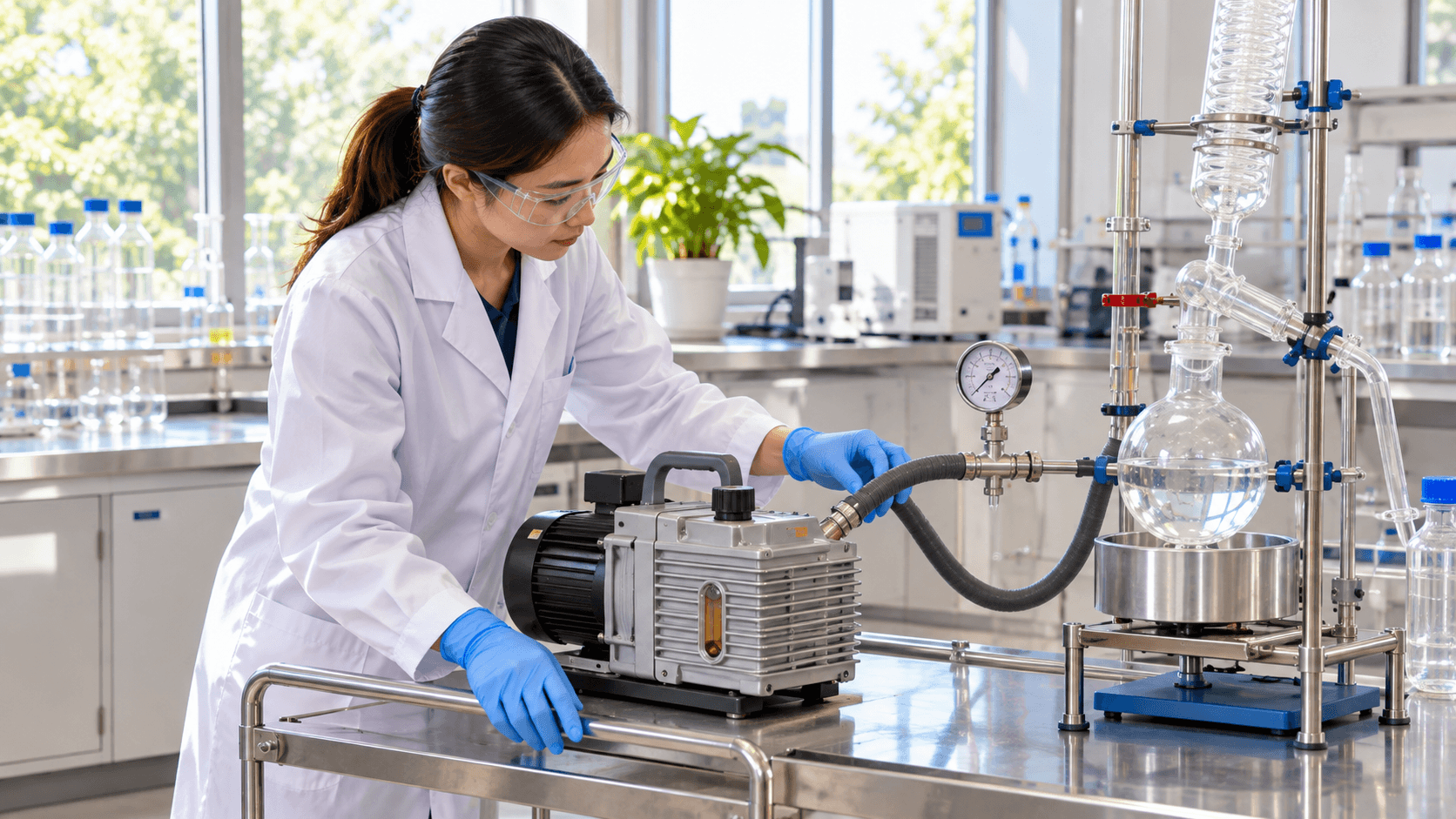
Introduction
Your distillation system is running. The vacuum pump is humming. Everything looks normal—until the pressure gauge starts climbing.
Suddenly, your process takes longer, temperature control becomes more challenging, and the vacuum level refuses to stabilize.
Sound familiar?
A vacuum distillation pump is responsible for removing gases and vapors from a connected system to establish and maintain reduced pressure. When vacuum performance deteriorates, it can affect distillation efficiency, product consistency, equipment reliability, and overall processing time.
Here's an important distinction: when laboratory operators say a pump is "losing pressure," they usually mean it's losing vacuum. In a vacuum system, a rising absolute pressure reading generally indicates a weaker vacuum.
The problem isn't always the pump itself.
Leaks, contaminated pump oil, damaged seals, excessive vapor loads, restricted tubing, and unsuitable equipment sizing can all contribute to poor vacuum performance.
At GreenLabGear, laboratories can explore vacuum equipment and accessories for distillation, extraction, and other processing applications.
Before replacing your pump, it's worth understanding what could be going wrong.
TLDR – Quick Guide
If your vacuum distillation pump isn't maintaining the required vacuum, check these common causes:
- System leaks: Loose fittings, damaged gaskets, and cracked glassware can allow air into the system.
- Contaminated pump oil: Oil-sealed pumps may lose performance when their oil becomes contaminated or deteriorates.
- Worn seals: Damaged O-rings and gaskets can compromise vacuum integrity.
- Excessive vapor load: Too much vapor entering the pump can prevent the system from reaching its target pressure.
- Restricted tubing: Narrow, excessively long, or obstructed lines can reduce effective pumping speed at the process vessel.
- Incorrect pump sizing: The pump may not provide adequate performance for the process conditions.
- Condenser problems: Inadequate condensation can increase vapor load on downstream equipment.
- Faulty gauges: Inaccurate pressure measurements can make vacuum performance appear worse than it is.
- Pump wear: Internal component deterioration may reduce pumping performance.
- Poor maintenance: Neglected oil changes, filters, and replacement parts can contribute to recurring problems.
Start with safe, noninvasive checks before investigating internal pump components.
Detailed Breakdown
1. Understand What Losing Vacuum Actually Means
Vacuum troubleshooting begins with understanding the pressure reading.
A vacuum pump reduces pressure by removing gas from a connected system.
As the absolute pressure decreases, the vacuum becomes stronger.
If absolute pressure begins increasing unexpectedly, the system is losing vacuum.
For example, a pressure increase from 10 mbar absolute to 50 mbar absolute represents a weaker vacuum.
However, not all vacuum gauges display pressure the same way.
Some show absolute pressure, while others indicate vacuum relative to atmospheric pressure.
That distinction matters when diagnosing a problem.
Before troubleshooting your vacuum distillation pump, confirm:
- What type of gauge you're using
- Whether it displays absolute or gauge pressure
- The units being displayed
- The expected operating pressure
- The pump's specified ultimate pressure
- The actual process pressure
A pump's ultimate vacuum rating is typically measured under defined test conditions and shouldn't automatically be treated as the pressure achievable during an active distillation process.
2. Check for Leaks in the Vacuum System
Leaks are among the most common causes of poor vacuum performance.
Even a small leak can introduce enough gas to prevent a system from reaching or maintaining its required pressure.
Potential leak locations include:
- Glass joints
- Vacuum tubing
- Hose connections
- Flanges
- O-rings
- Gaskets
- Valves
- Condenser connections
- Collection vessels
- Pump inlet fittings
For glass distillation systems, inspect components for cracks, significant chips, damaged joints, or other defects that could compromise vacuum integrity.
Do not operate damaged glassware under vacuum.
A safe troubleshooting approach begins with a visual inspection and manufacturer-approved leak-testing procedures.
Avoid improvised leak tests involving flammable gases, open flames, or unsuitable chemicals.
3. Inspect Vacuum Tubing and Connections
Vacuum tubing is easy to overlook.
But tubing diameter, length, material, and condition can significantly affect system performance.
Long or narrow tubing increases flow resistance and can reduce the effective pumping speed available at the distillation apparatus.
Flexible tubing may also collapse if it isn't rated for the intended vacuum conditions.
Check for:
- Kinks
- Cracks
- Loose connections
- Collapsed sections
- Chemical deterioration
- Incorrect tubing material
- Unnecessary restrictions
Use tubing and fittings rated for the intended vacuum, chemical exposure, and operating temperature.
For more information about compatible system components, see GreenLabGear's guide to Vacuum Pump Accessories.
4. Contaminated Pump Oil Can Reduce Performance
Oil-sealed rotary vane pumps depend on appropriate oil condition for lubrication and sealing.
If the oil becomes contaminated with process vapors, moisture, or other substances, pump performance can deteriorate.
Possible warning signs include:
- Discolored oil
- Unexpected changes in oil appearance
- Reduced vacuum performance
- Unusual pump noise
- Increased maintenance requirements
The exact symptoms depend on the pump and contaminant.
Oil changes should follow the manufacturer's service schedule and approved procedures.
Use only the specified oil type.
Don't assume that automotive oil or a generic lubricant is suitable for a laboratory vacuum pump.
Also, never open an oil reservoir or perform maintenance while the pump is running, hot, or otherwise unsafe to service.
5. Excessive Vapor Load May Be Overwhelming the Pump
A vacuum distillation pump must handle the gas and vapor load presented by the connected process.
During distillation, volatile materials may evaporate and enter the vacuum system.
If the vapor load exceeds what the pump and upstream condensation equipment can manage, operating pressure may rise.
This doesn't necessarily mean the pump is defective.
It may mean the process is demanding more pumping capacity than the system can deliver under those conditions.
Evaluate:
- Process vapor characteristics
- Condenser performance
- Expected gas load
- Operating pressure
- Pumping speed
- Chemical compatibility
- Vapor-management equipment
A vacuum pump should be selected according to its performance at the required operating pressure—not just its advertised ultimate vacuum.
6. Your Condenser May Not Be Removing Enough Vapor
Condensers play an important role in many vacuum distillation systems.
They remove heat from vapor so that condensable material can be collected before reaching downstream vacuum equipment.
If condenser performance is inadequate, more vapor may reach the pump.
Possible contributing factors include:
- Insufficient cooling capacity
- Inappropriate coolant temperature
- Poor coolant circulation
- Excessive vapor load
- Inadequate condenser surface area
- Fouling or other equipment problems
The appropriate condenser design depends on the process.
For laboratories using short-path systems, GreenLabGear's guide to Short Path Distillation Equipment provides additional equipment-selection context.
Don't assume that installing a larger vacuum pump will compensate for an undersized condenser.
Sometimes the real problem is upstream.
7. Check Traps and Filters
Vacuum traps and filters can protect pumps from certain contaminants when appropriately selected.
However, they can also introduce flow resistance.
A clogged filter, blocked trap, or improperly configured accessory can reduce effective pumping performance.
Depending on the system, warning signs may include:
- Increasing pressure drop
- Reduced pumping performance
- Unexpected condensate accumulation
- Contamination
- Restricted flow
Inspect and service accessories according to manufacturer instructions.
A trap that has collected hazardous or flammable material must be handled using appropriate chemical safety procedures.
Never open a potentially pressurized, hot, or contaminated component without following the required isolation and safety process.
8. The Vacuum Pump May Be Undersized
Pump sizing involves more than selecting the lowest advertised ultimate pressure.
Two pumps may have similar ultimate vacuum specifications but substantially different pumping speeds, vapor-handling capabilities, and operating characteristics.
Important specifications include:
Specification
Why It Matters
Ultimate pressure
Indicates the lowest pressure achievable under specified test conditions
Pumping speed
Describes gas-removal capacity under defined conditions
Operating pressure range
Indicates where the pump is intended to perform
Chemical compatibility
Determines suitability for process vapors
Pump technology
Influences maintenance, performance, and contamination considerations
Vapor tolerance
Affects operation with condensable gases
Power requirements
Must match laboratory infrastructure
GreenLabGear's guide to Vacuum Pump Size for Cannabis Extraction explains additional sizing considerations.
A properly sized pump must work with the complete vacuum system, including tubing, condensers, traps, and the process vessel.
9. Compare Different Vacuum Pump Technologies
Not every vacuum pump is designed for the same job.
GreenLabGear offers several technologies through its Laboratory Vacuum Pumps category.
Chemical-Resistant Diaphragm Vacuum Pumps
A Chemical-Resistant Diaphragm Vacuum Pump may be worth evaluating for compatible laboratory applications where oil-free operation and resistance to specified chemicals are priorities.
Diaphragm pumps use flexible membranes and valves to move gas.
Their achievable pressure and pumping speed depend on the model.
Chemical resistance must be verified for the actual vapors involved.
Two-Stage Rotary Vane Vacuum Pumps
A Two-Stage Rotary Vane Vacuum Pump represents a different pumping technology.
Oil-sealed rotary vane pumps can provide relatively deep vacuum under suitable conditions, but they require appropriate oil maintenance and protection from incompatible process vapors.
Performance depends on the exact model, oil condition, gas load, and system configuration.
Laboratory Circulating Water Vacuum Pumps
A Laboratory Circulating Water Vacuum Pump uses a different operating principle and may suit applications with less demanding vacuum requirements.
Achievable pressure can depend on factors including water temperature and the system's design.
These pumps shouldn't automatically be considered interchangeable with deep-vacuum rotary vane systems.
The correct choice depends on the actual application.
10. Check the Vacuum Gauge
Sometimes the pump isn't losing vacuum.
The measurement is wrong.
Vacuum gauges can produce inaccurate readings because of:
- Calibration problems
- Sensor contamination
- Damaged connections
- Incorrect installation
- Electrical faults
- Unsuitable gauge technology
- Incorrect unit interpretation
Gauge placement also matters.
A reading near the pump inlet may differ from the pressure inside the distillation vessel when there are significant flow restrictions or gas loads.
For accurate troubleshooting, verify the measurement method and use a suitable calibrated instrument.
Don't replace a pump based on one questionable gauge reading.
11. Worn Internal Components Can Reduce Vacuum Performance
Over time, mechanical vacuum pumps can experience component wear.
Depending on the design, this may involve seals, valves, vanes, bearings, or other internal parts.
Possible symptoms include:
- Gradually worsening vacuum performance
- Unusual vibration
- Abnormal noise
- Increased operating temperature
- Repeated service requirements
- Difficulty reaching expected pressure
Internal repairs should be performed by qualified technicians using manufacturer-approved procedures and components.
A pump that repeatedly fails performance checks after appropriate external troubleshooting may require professional evaluation.
How to Troubleshoot a Vacuum Distillation Pump
Use a structured process instead of replacing components at random.
Symptom
Possible Cause
What to Investigate
Vacuum deteriorates suddenly
Leak or connection failure
Tubing, seals, joints, valves
Pump works without process load but struggles during distillation
Excessive vapor load
Condenser, traps, pumping capacity
Vacuum performance declines gradually
Oil contamination or component wear
Maintenance history and service condition
Pump runs but vessel pressure remains high
Flow restriction or leak
Tubing, fittings, gauge location
Readings change unexpectedly
Gauge problem
Calibration and measurement setup
Pump becomes unusually noisy
Mechanical or operating fault
Manufacturer diagnostics and service
Oil changes appearance
Contamination
Oil condition and vapor management
Vacuum remains poor after maintenance
System mismatch or internal fault
Pump specifications and qualified service
A useful troubleshooting sequence is:
For equipment involving hazardous vapors, follow approved shutdown, isolation, and safety procedures before conducting tests.
How to Prevent Vacuum Loss
Preventive maintenance is usually less disruptive than an unexpected pump failure.
A practical maintenance program should include:
- Routine visual inspection
- Vacuum performance trend monitoring
- Oil checks and changes where applicable
- Inspection of seals and gaskets
- Tubing and fitting checks
- Trap and filter maintenance
- Condenser performance reviews
- Gauge calibration
- Manufacturer-specified service intervals
- Documentation of recurring problems
Keep critical replacement parts available where appropriate.
GreenLabGear's guide to Laboratory Equipment Replacement Parts explains how to prioritize spare components based on downtime risk, compatibility, and replacement lead times.
Small maintenance problems are generally easier to manage before they interrupt an entire production schedule.
Vacuum Pump Safety in Cannabis Processing
Vacuum equipment used in cannabis-processing facilities may encounter volatile or flammable process materials.
A standard laboratory vacuum pump should not automatically be considered suitable for flammable vapor service.
Equipment selection must account for:
- Process chemistry
- Vapor exposure
- Chemical compatibility
- Hazardous-location requirements
- Ventilation
- Exhaust management
- Condensation and trapping
- Electrical safety
- Applicable facility codes
Vacuum pumps potentially exposed to flammable vapors must be appropriate for the intended service and installation.
Do not bypass safety controls or substitute incompatible pumps, tubing, or accessories.
When Should You Replace Your Vacuum Distillation Pump?
Not every vacuum problem requires a new pump.
Leaks, damaged seals, contaminated oil, unsuitable tubing, and condenser problems may be correctable.
However, replacement may be justified when:
- The pump cannot meet process pressure requirements.
- Pumping speed is inadequate for the actual gas load.
- Internal wear repeatedly affects performance.
- Repair costs become excessive.
- Replacement components are unavailable.
- Chemical compatibility is inadequate.
- Production requirements exceed the pump's capacity.
Evaluate the complete system before purchasing a replacement.
A larger pump won't automatically solve poor condenser performance or leaking connections.
Key Takeaways
- A vacuum distillation pump creates reduced pressure by removing gas from a connected system.
- A rising absolute pressure reading generally indicates vacuum loss.
- Leaks are among the most common causes of poor vacuum performance.
- Damaged tubing, worn seals, and loose connections can compromise system integrity.
- Contaminated oil can reduce performance in oil-sealed rotary vane pumps.
- Excessive vapor loads can prevent the system from maintaining its target pressure.
- Condensers and traps help manage vapors but must be appropriately selected and maintained.
- Pump sizing should consider pumping speed at operating pressure, not ultimate vacuum alone.
- Gauge placement and calibration can affect troubleshooting results.
- Different pump technologies offer different performance and maintenance characteristics.
- Preventive maintenance and compatible replacement parts help reduce unexpected downtime.
FAQs
Why is my vacuum distillation pump losing vacuum?
A vacuum distillation pump may lose vacuum because of system leaks, damaged seals, contaminated oil, excessive vapor load, or internal component wear. Restricted tubing and inadequate condenser performance can also prevent the process vessel from reaching the required pressure. Check the complete vacuum system before assuming the pump itself has failed.
Can a vacuum leak affect distillation performance?
Yes, a vacuum leak allows additional gas into the system and can increase operating pressure. This may affect process conditions, distillation efficiency, and the ability to maintain stable vacuum. Inspect connections, seals, tubing, and glassware using manufacturer-approved procedures.
How do I know if my vacuum pump oil needs changing?
Oil-sealed pumps require oil maintenance according to the manufacturer's schedule and operating conditions. Discoloration, contamination, or declining vacuum performance may indicate that inspection or service is necessary. Use only the specified oil and follow approved maintenance procedures.
Is a diaphragm pump better than a rotary vane pump for distillation?
Neither technology is universally better because diaphragm and rotary vane pumps have different operating characteristics. Diaphragm pumps can offer oil-free operation and model-specific chemical resistance, while suitable rotary vane pumps can achieve deeper vacuum under appropriate conditions. Choose according to required operating pressure, pumping speed, vapor compatibility, maintenance, and process requirements.
When should I replace a vacuum distillation pump?
Replacement may be appropriate when the pump repeatedly fails to meet required vacuum conditions, becomes uneconomical to repair, or is unsuitable for the process chemistry. First investigate leaks, vapor loads, tubing restrictions, condenser performance, and maintenance-related problems. Compare replacement options using actual operating requirements rather than maximum specifications alone.