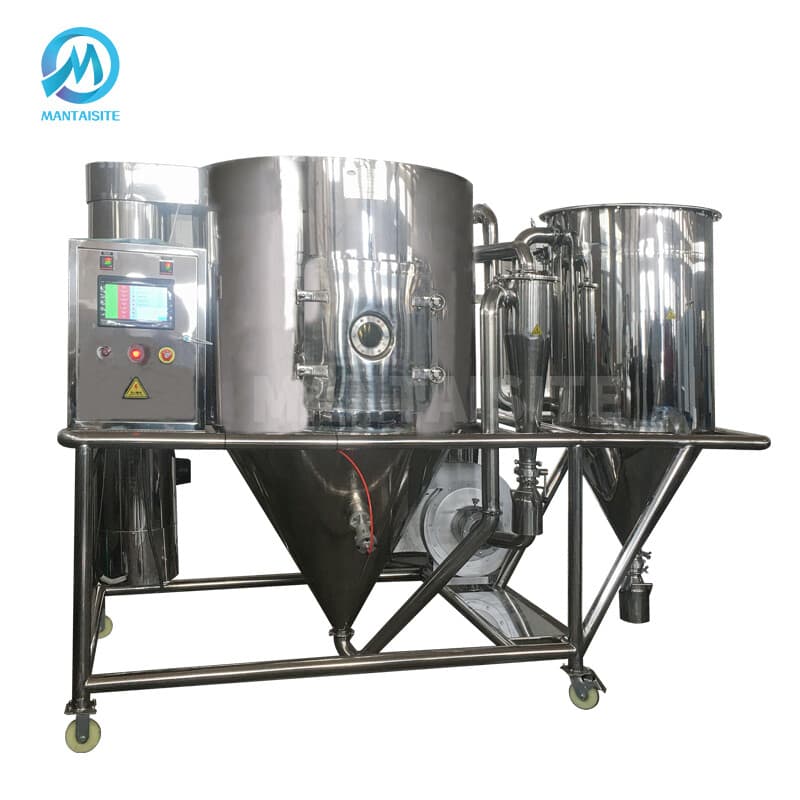
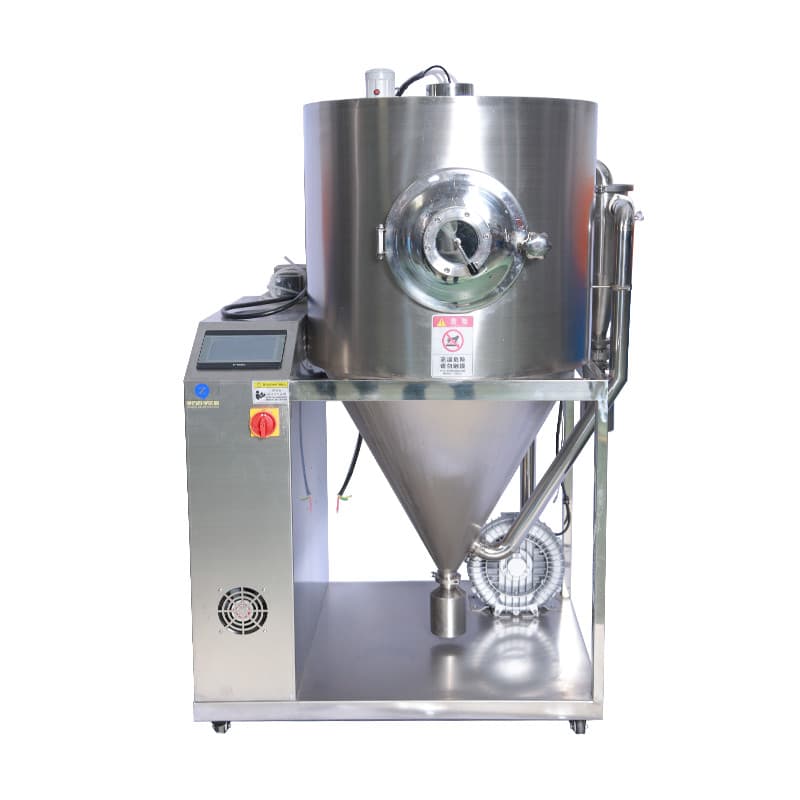
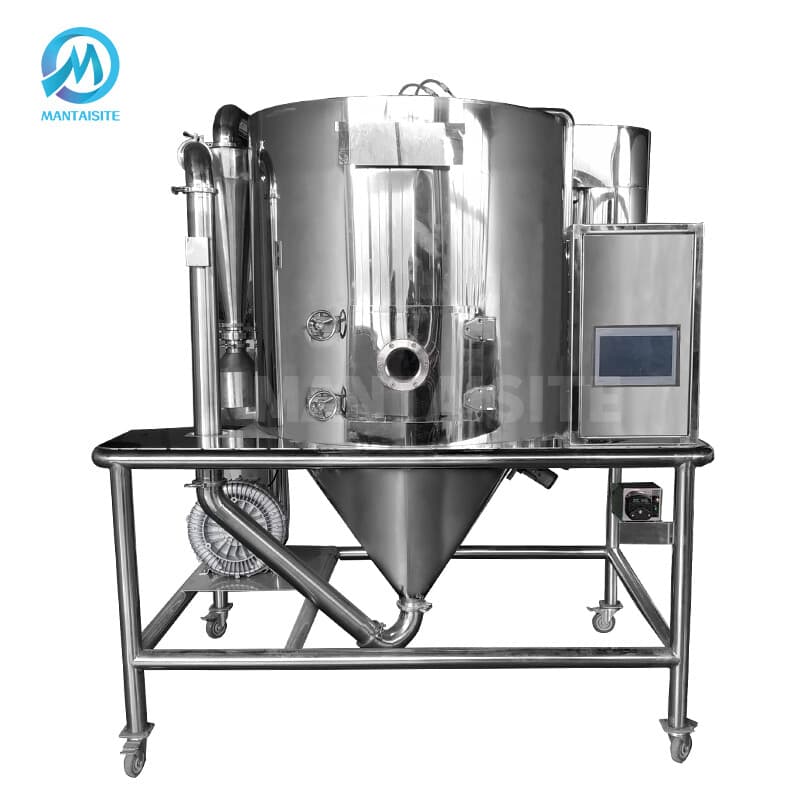
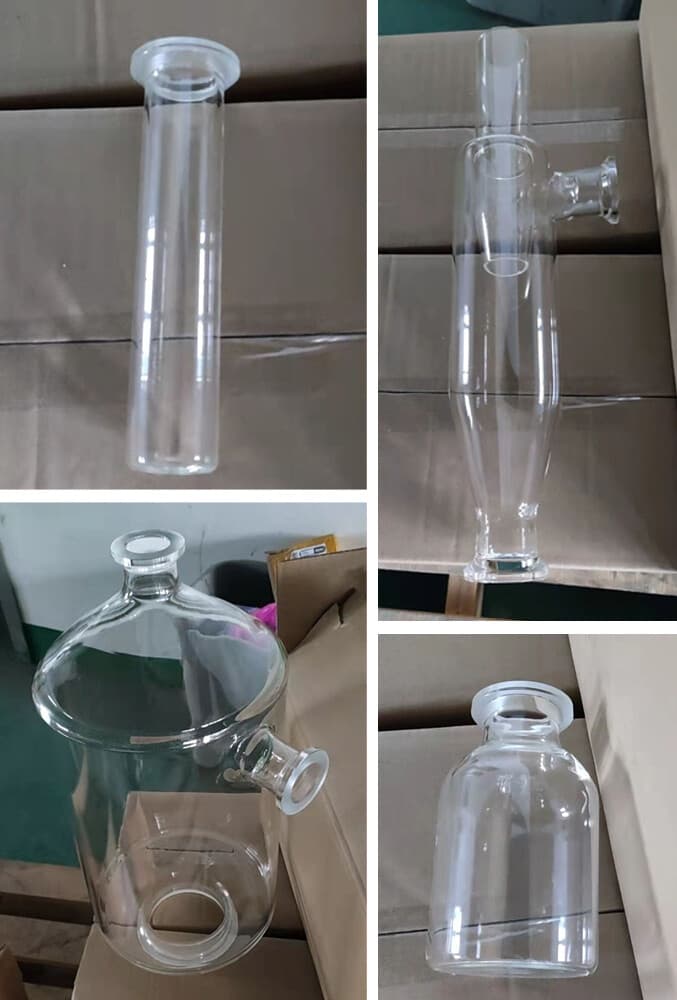
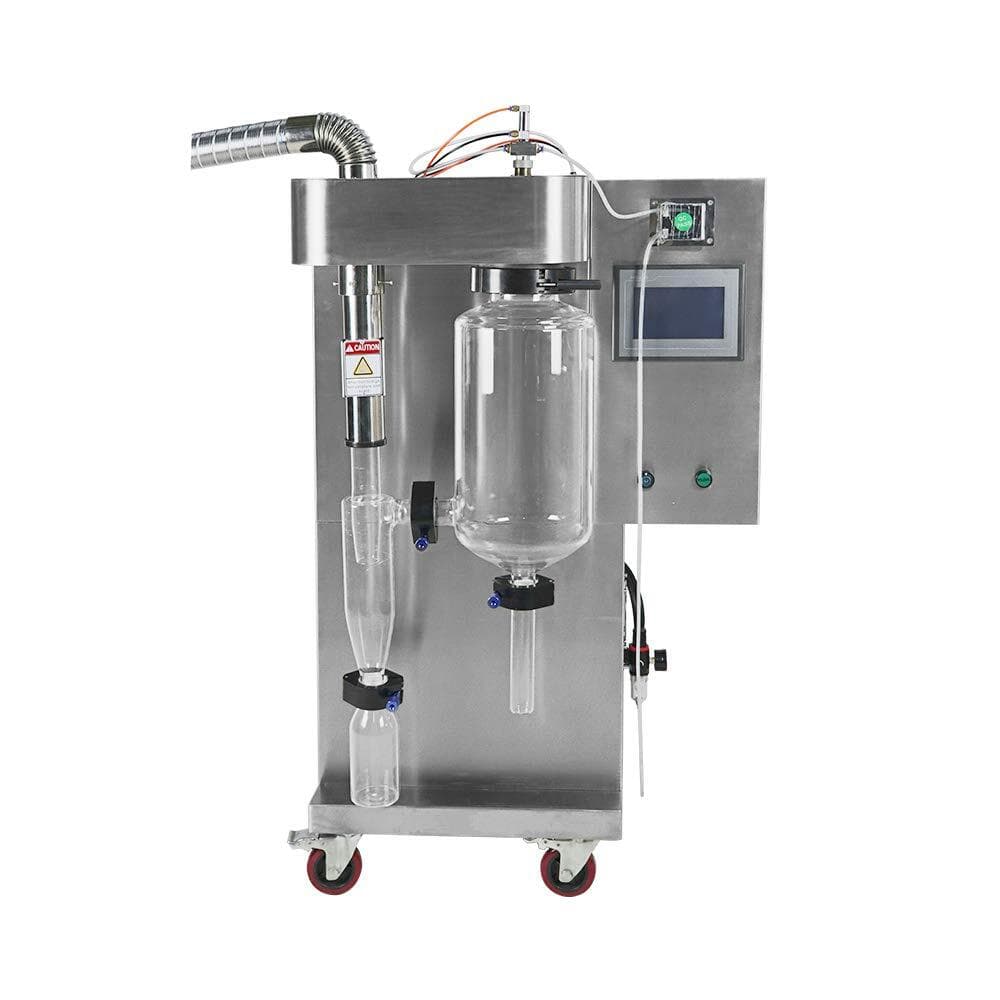
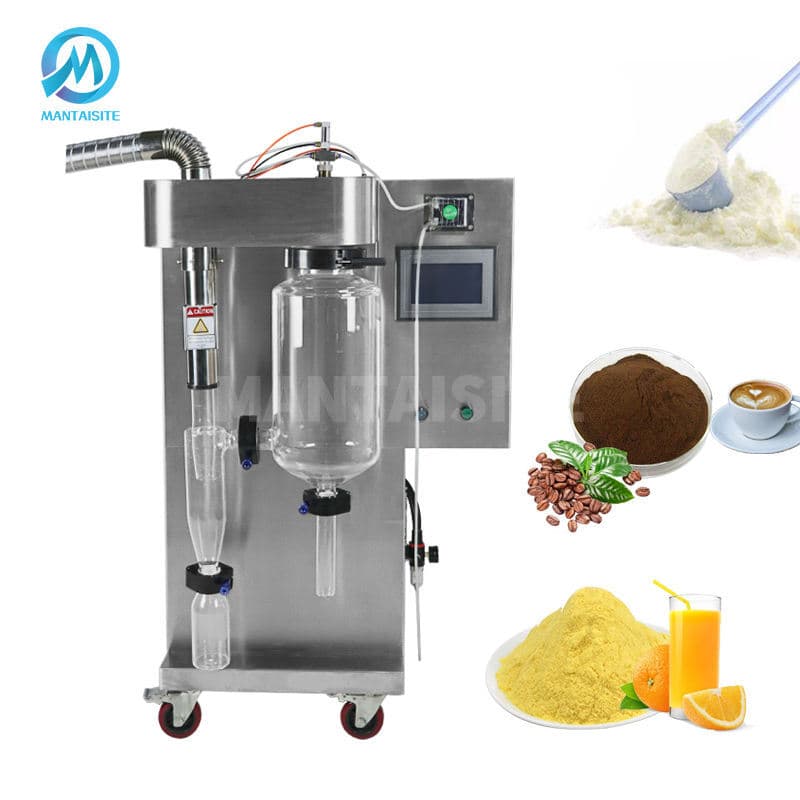
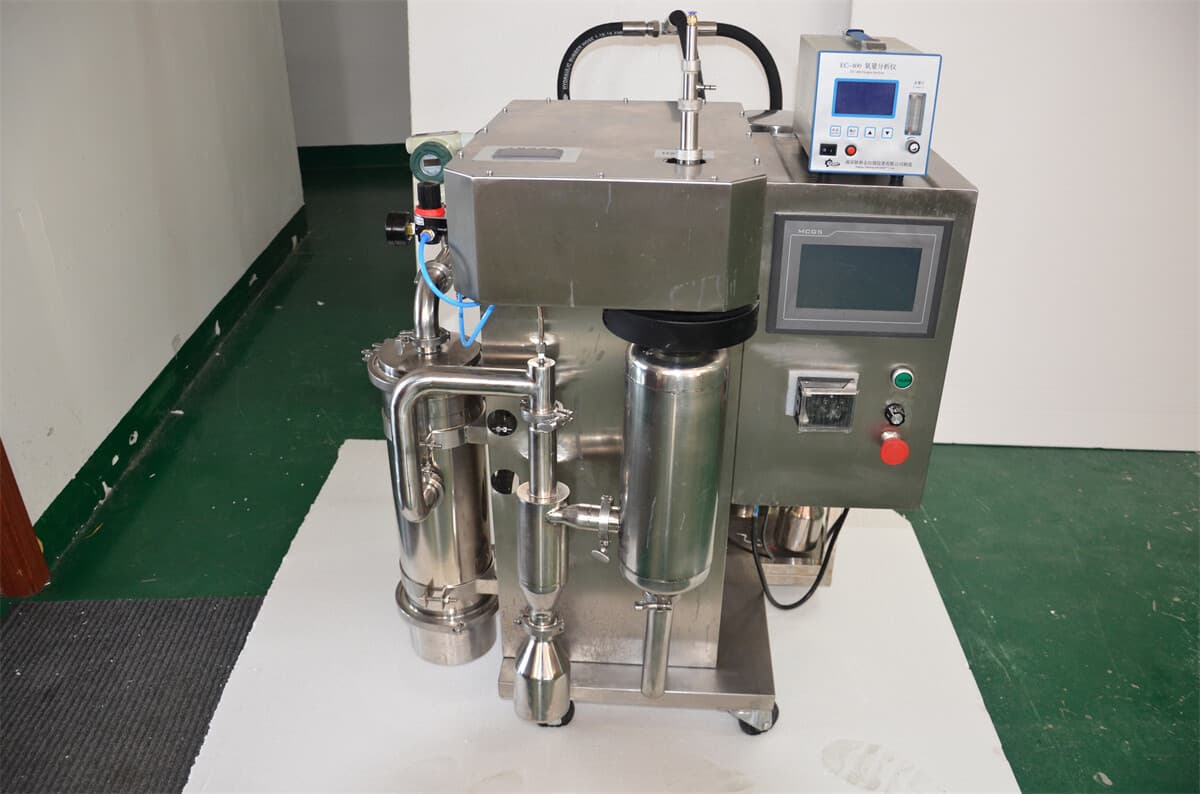
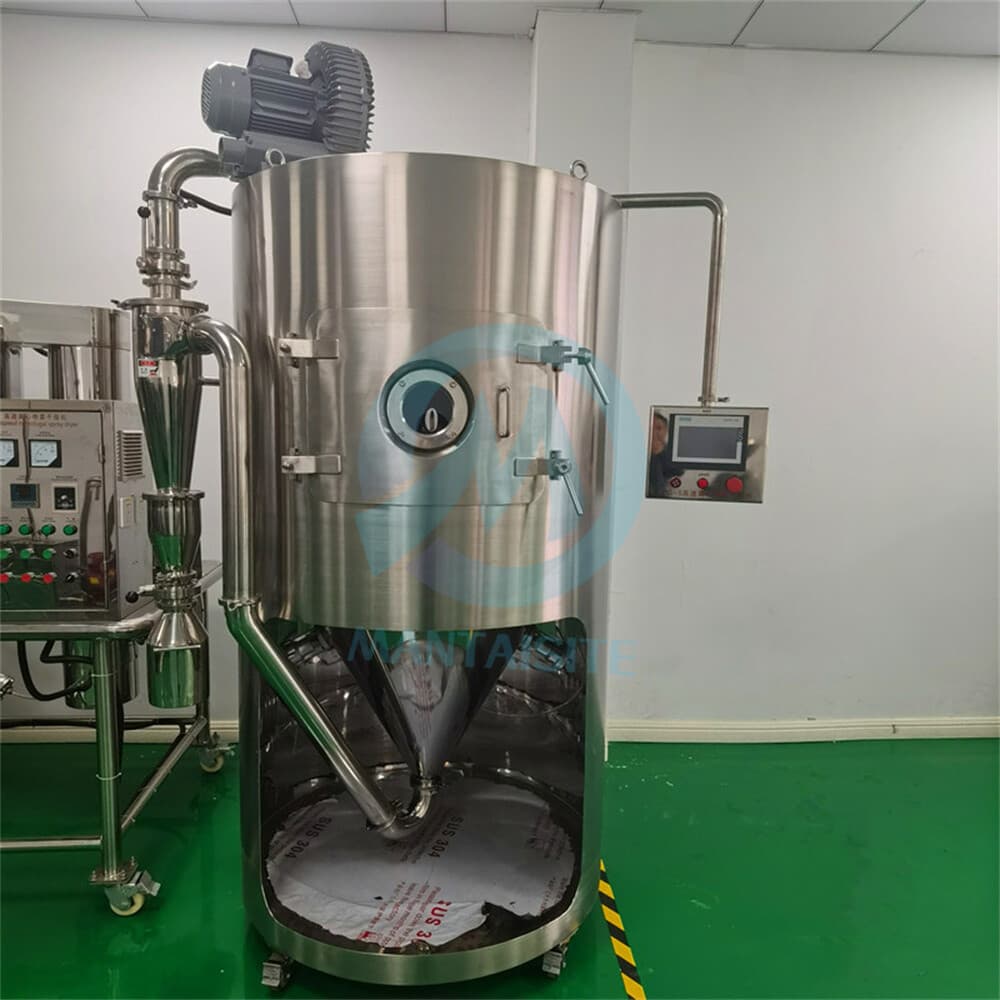
Lab and industrial scale spray drying equipment for powder production.
8
Products
Spray dryers turn a liquid feed (a solution, suspension, or emulsion) into a dry powder by atomizing it into fine droplets and contacting them with a hot gas stream. The huge droplet surface area drives near-instant solvent evaporation, and the resulting particles are recovered downstream, usually in a cyclone. Lab units almost always use a two-fluid nozzle, while higher-throughput industrial systems often use a rotary (centrifugal disc) atomizer.
Drying is defined by inlet and outlet temperature. Most lab work runs co-current, where feed and hot gas enter the same end and flow together, so wet droplets meet the hottest gas while evaporative cooling keeps particle temperature down. Typical aqueous inlets run roughly 120-220 C with outlets near 60-100 C. Co-current operation and tuned excipients protect heat-sensitive actives, which is why it suits cannabinoid and terpene formulation work.
Size a lab spray dryer by water evaporation capacity, stated in kg/h or mL/h. Start from your batch size and feed solids: drying 1 kg of solid from a 10% solution means evaporating about 9 kg of water, so a 1 kg/h unit needs ~9 hours while a 4 kg/h unit finishes in ~2. Then check feed-pump range, viscosity handling, cyclone recovery, and whether flammable solvents require an inert-gas loop and explosion protection.